Makkar Mahima, Viswanatha Ranjani
New Chemistry Unit, Jawaharlal Nehru Centre for Advanced Scientific Research Jakkur Bangalore 560064 India
International Centre for Materials Science, Jawaharlal Nehru Centre for Advanced Scientific Research Jakkur Bangalore 560064 India
RSC Adv. 2018 Jun 18;8(39):22103-22112. doi: 10.1039/c8ra03530j. eCollection 2018 Jun 13.
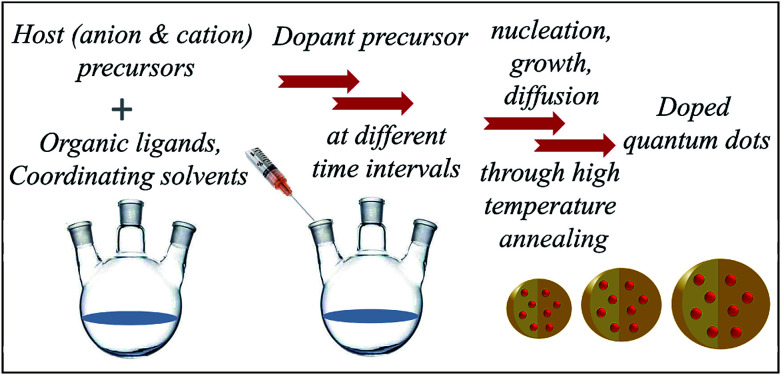
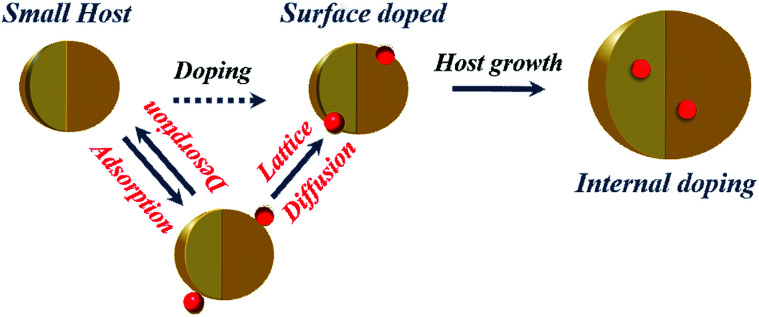
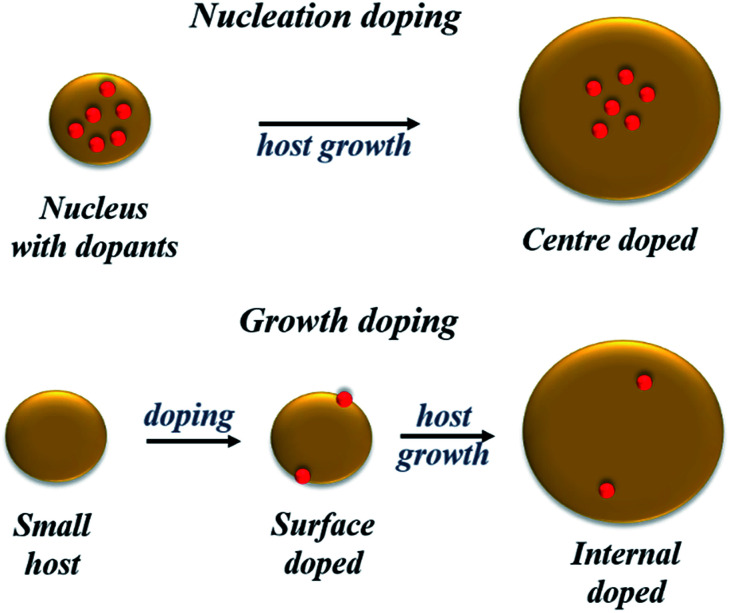
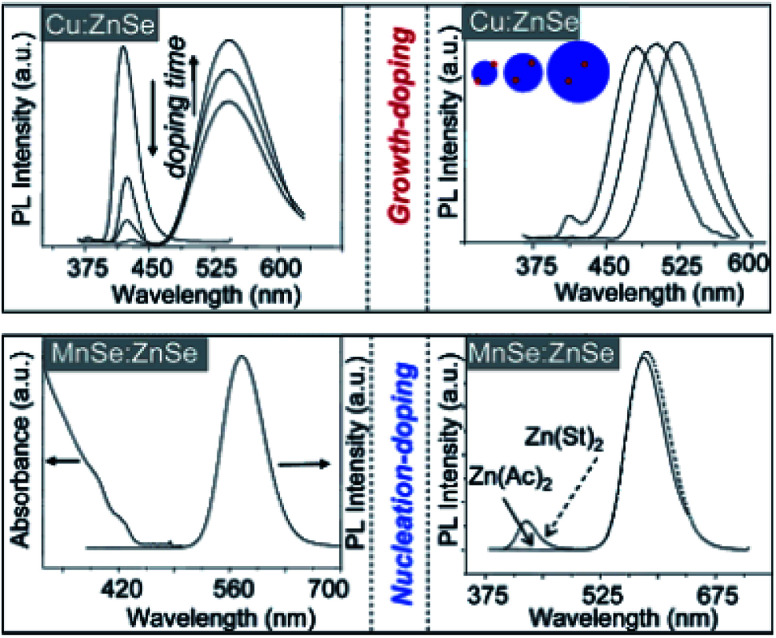
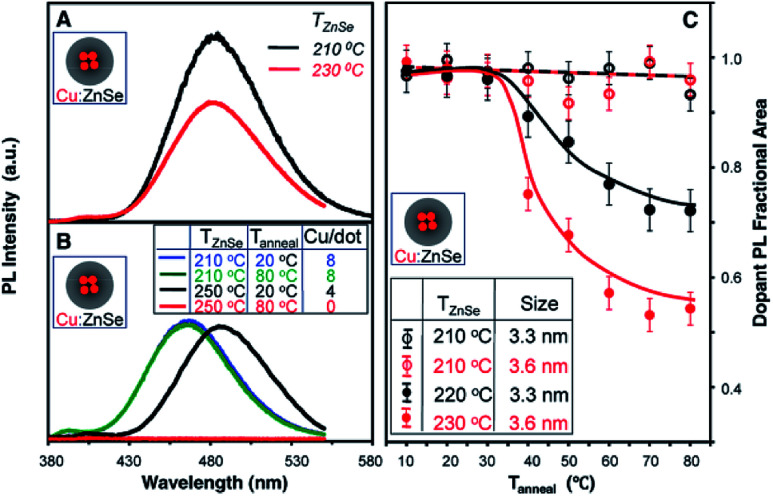
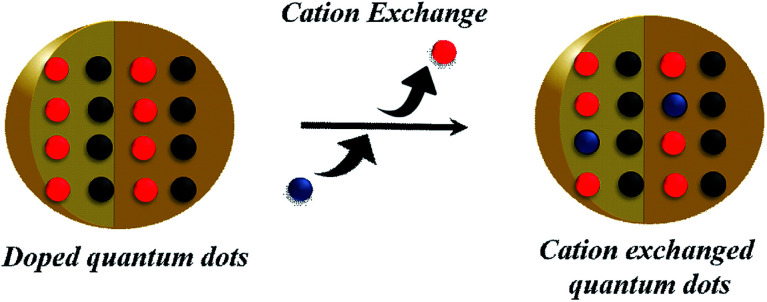
Impurity doping in semiconductor quantum dots (QDs) has numerous prospects in implementing and altering their properties and technologies. Herein, we review the state-of-the-art doping techniques arising from colloidal synthesis methods. We first discuss the advantages and challenges involved in doping; we then discuss various doping techniques, including clustering of dopants as well as expulsion out of the lattice due to self-purification. Some of these techniques have been shown to open up a new generation of robust doped semiconductor quantum dots with cluster-free doping which will be suitable for various spin-based solid-state device technologies and overcome the longstanding challenges of controlled impurity doping. Further, we discuss inhibitors such as defects, clustering and interfaces, followed by current open questions. These include pathways to obtain uniform doping in the required radial position with unprecedented control over the dopant concentration and the size of the QDs.
半导体量子点(QDs)中的杂质掺杂在实现和改变其性质及技术方面具有众多前景。在此,我们回顾了源自胶体合成方法的最新掺杂技术。我们首先讨论掺杂所涉及的优势和挑战;接着讨论各种掺杂技术,包括掺杂剂的聚集以及由于自净化而从晶格中排出。其中一些技术已被证明能开创出新一代具有无团簇掺杂的稳健掺杂半导体量子点,这将适用于各种基于自旋的固态器件技术,并克服可控杂质掺杂长期存在的挑战。此外,我们讨论了诸如缺陷、聚集和界面等抑制剂,随后是当前存在的开放性问题。这些问题包括在所需径向位置获得均匀掺杂的途径,同时要以前所未有的方式控制掺杂剂浓度和量子点的尺寸。