Xu Hongbo, Zhou Shenghai, Liu Jinyu, Wei Yajun
College of Chemistry and Chemical Engineering, Hebei Normal University for Nationalities Chengde 067000 China
RSC Adv. 2018 Jan 31;8(10):5500-5508. doi: 10.1039/c7ra13001e. eCollection 2018 Jan 29.
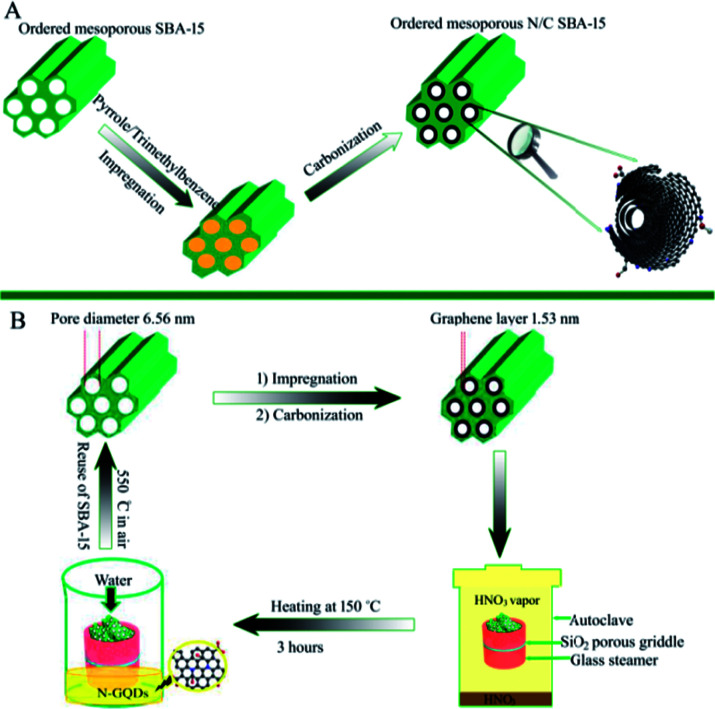
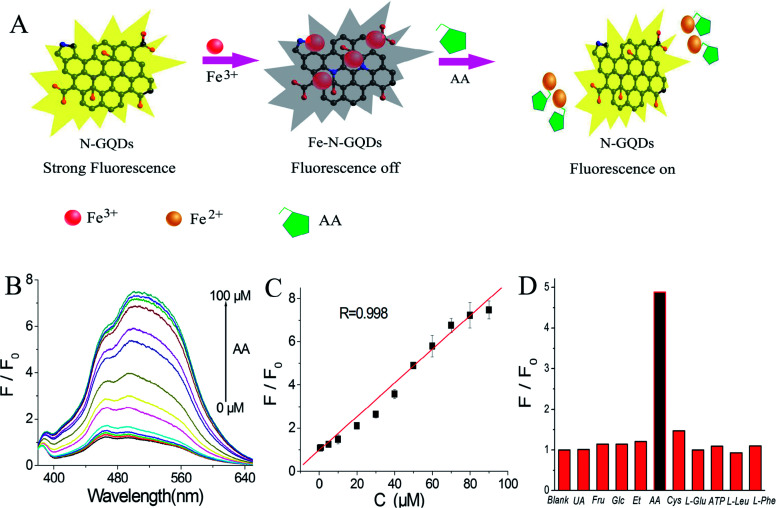
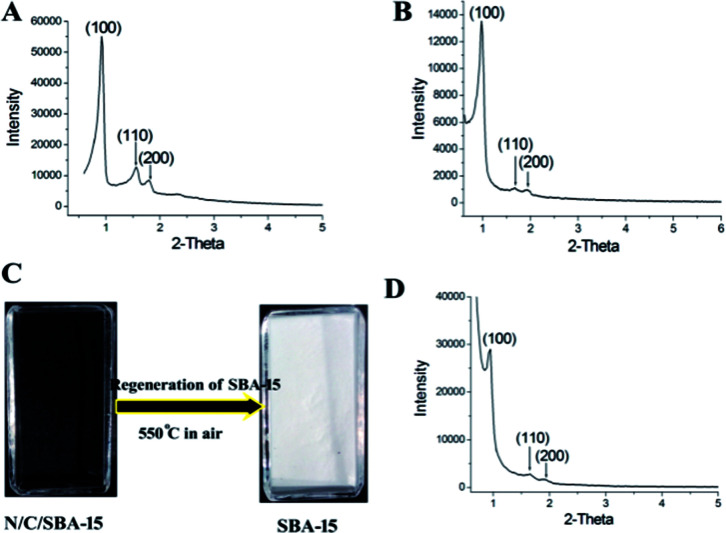
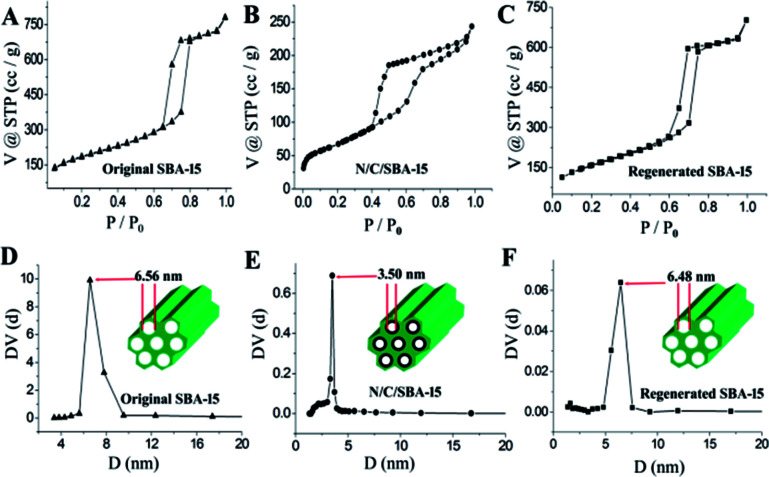
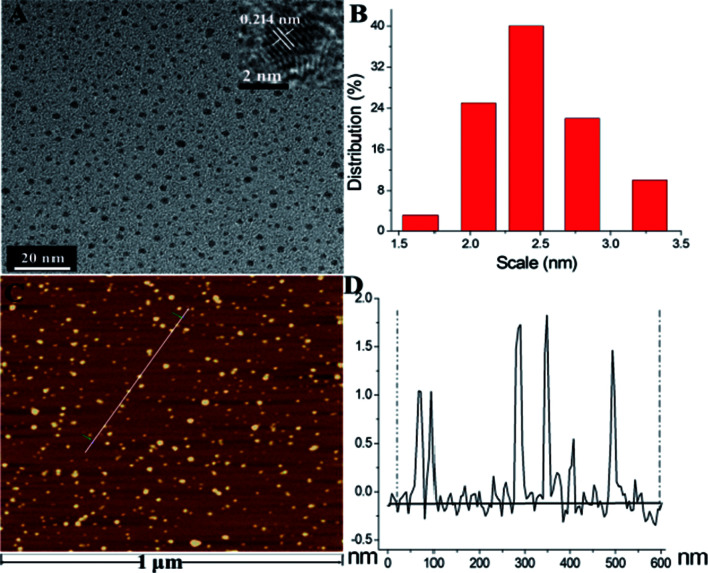
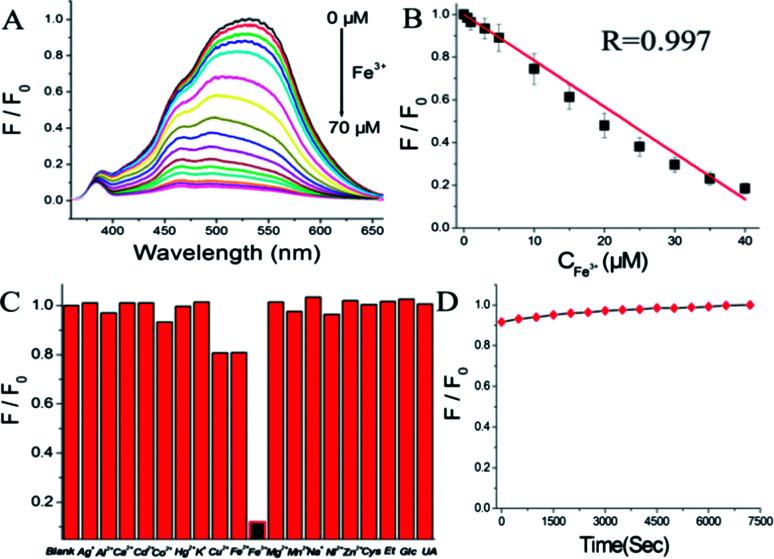
N-Doped graphene quantum dots (N-GQDs) combine the advantages of N-doped carbon and quantum dot materials, displaying enhanced performance in electrocatalysis, drug delivery, sensing and so on. In this work, novel hydrotropic N-GQDs with controlled size are obtained for the first time a nanospace-confined preparation strategy, in which HNO vapour serves as scissors for quickly cutting the N-doped carbon nanolayer in the confined nanospace of reusable mesoporous molecular sieves. The as-prepared N-GQDs exhibit a uniform lateral size of about 2.4 nm, high photostability and yellow fluorescence, which is strongly quenched upon addition of ferric ions due to the coordination between ferric ions and N/O-rich groups of the N-GQDs surface. Significantly, the fluorescence response to Fe is linear in the 0.5 to 40 μM concentration range and the N-GQDs showed good selectivity and satisfying recovery for ferric ion detection in tap water. Noteworthily, the quenched fluorescence by Fe can be recovered by adding ascorbic acid (AA), which efficiently destroyed the coordination between Fe and N-GQDs. Based on this principle, the N-GQDs were used to successfully construct an AA sensor, exhibiting a wide linearity range (between 0.5 and 90 μM) with a low detection of limit (80 nM at S/N = 3) and better selectivity towards AA compared with other common physiological substances. Finally, the constructed fluorescence sensor was employed successfully for AA determination in fish blood with satisfactory recovery ranging from 95.3 to 106.2%. The results indicate that N-GQDs synthesized by the nanospace-confined strategy are promising in biosensor fabrication.
氮掺杂石墨烯量子点(N-GQDs)结合了氮掺杂碳材料和量子点材料的优点,在电催化、药物递送、传感等方面表现出增强的性能。在这项工作中,首次通过一种纳米空间受限的制备策略获得了尺寸可控的新型水溶助长型N-GQDs,其中HNO蒸汽充当剪刀,用于在可重复使用的介孔分子筛的受限纳米空间中快速切割氮掺杂碳纳米层。所制备的N-GQDs表现出约2.4 nm的均匀横向尺寸、高光稳定性和黄色荧光,由于铁离子与N-GQDs表面富含N/O的基团之间的配位作用,加入铁离子后荧光会强烈猝灭。值得注意的是,对Fe的荧光响应在0.5至40 μM浓度范围内呈线性,并且N-GQDs对自来水中铁离子的检测显示出良好的选择性和令人满意的回收率。值得注意的是,加入抗坏血酸(AA)可以恢复被Fe猝灭的荧光,因为AA有效地破坏了Fe与N-GQDs之间的配位。基于这一原理,N-GQDs被成功用于构建AA传感器,该传感器具有宽线性范围(0.5至90 μM之间)、低检测限(S/N = 3时为80 nM),并且与其他常见生理物质相比,对AA具有更好的选择性。最后,所构建的荧光传感器成功用于鱼血中AA的测定,回收率令人满意,在95.3%至106.2%之间。结果表明,通过纳米空间受限策略合成的N-GQDs在生物传感器制造方面具有广阔前景。