Zhao Yu, Ma Yan, Li Ting, Dong Zhishuai, Wang Yuxue
College of Chemistry and Chemical Engineering, Taiyuan University of Technology Taiyuan 030024 PR China
RSC Adv. 2018 Jan 9;8(4):2059-2064. doi: 10.1039/c7ra12923h. eCollection 2018 Jan 5.
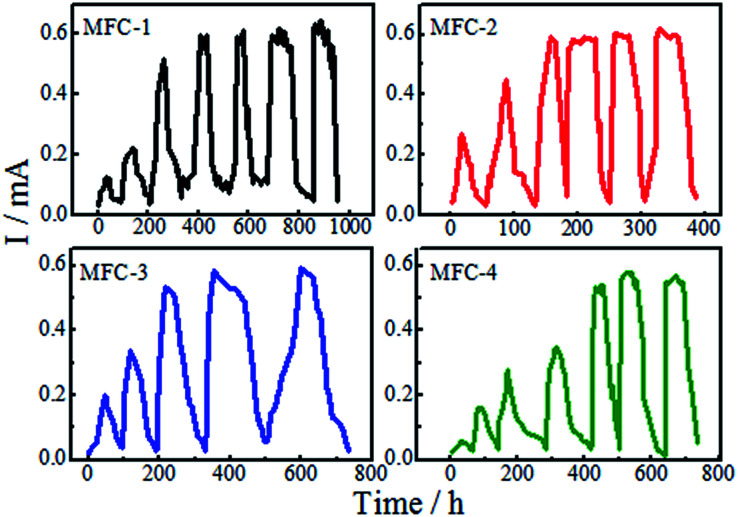
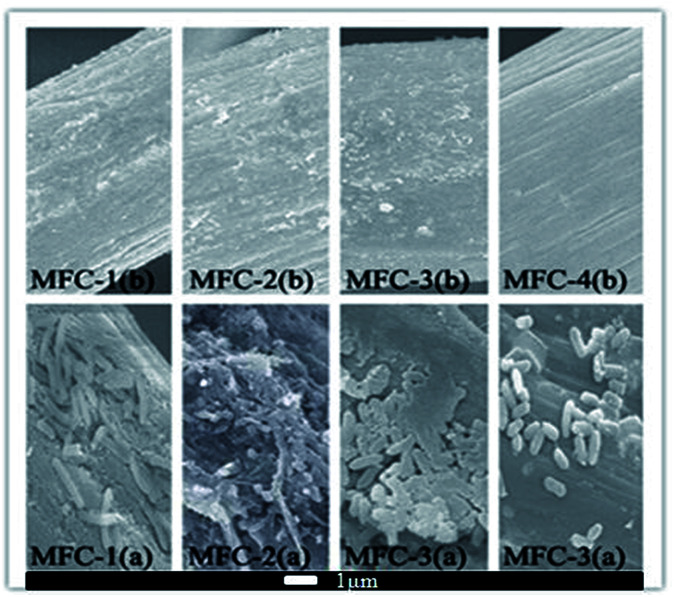
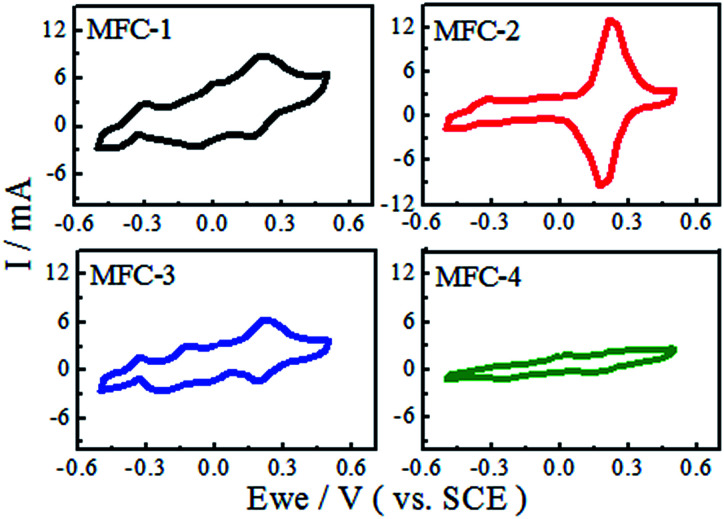
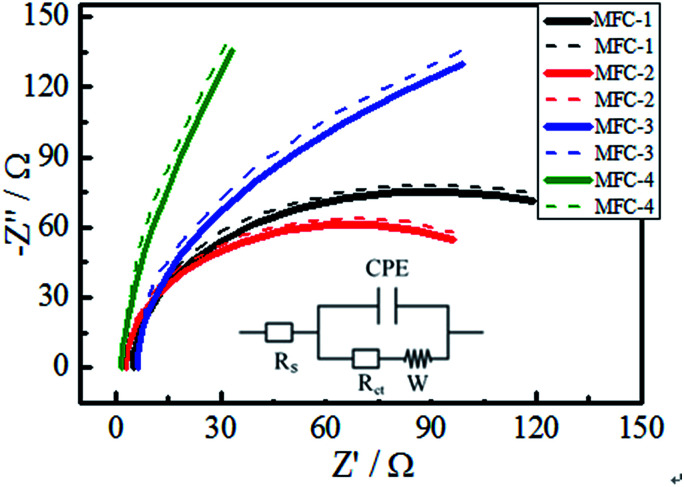
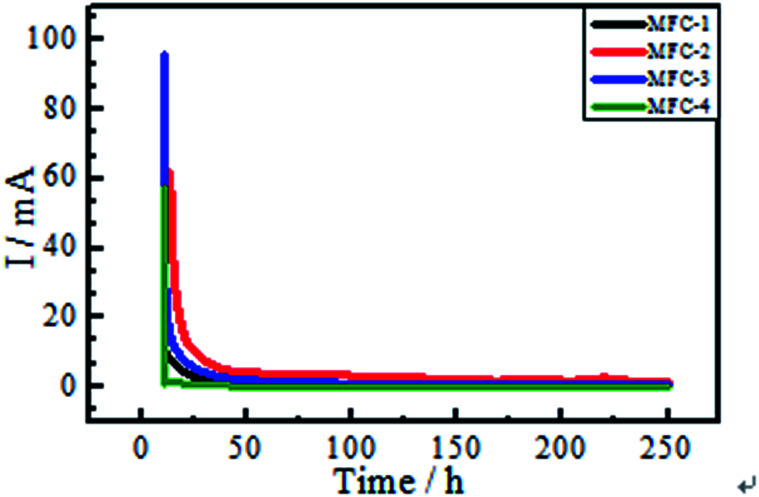
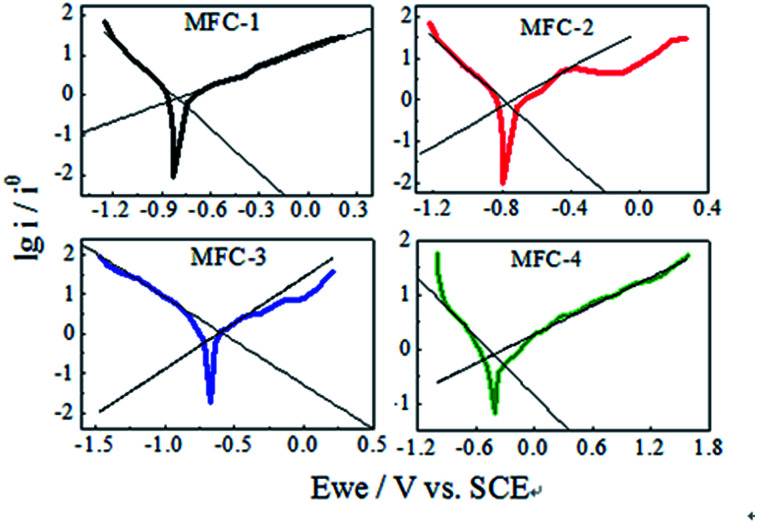
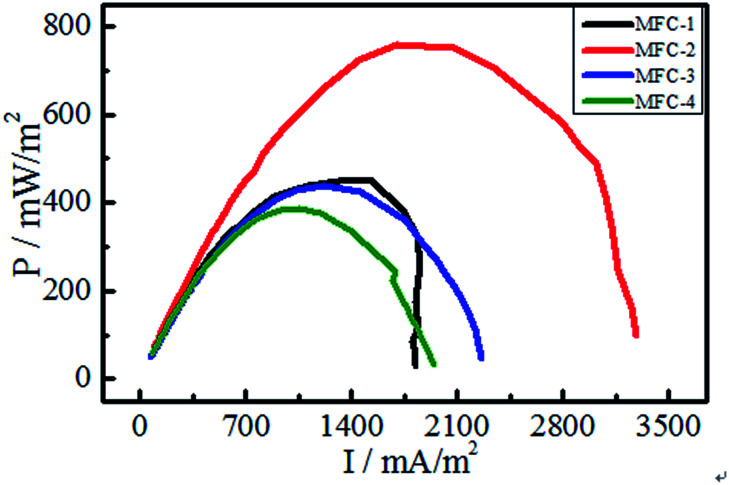
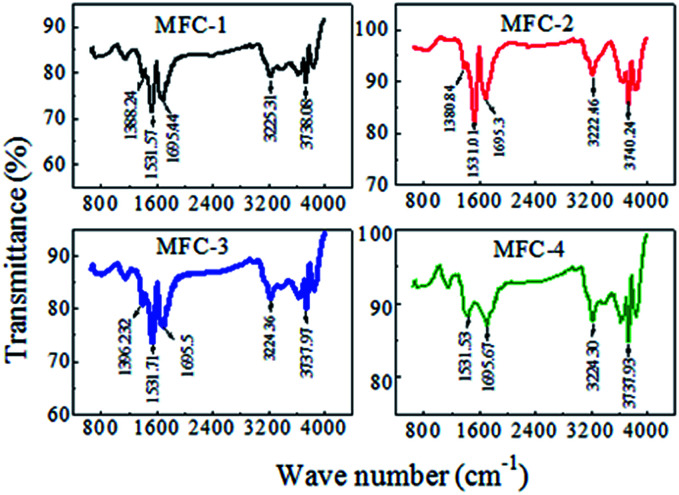
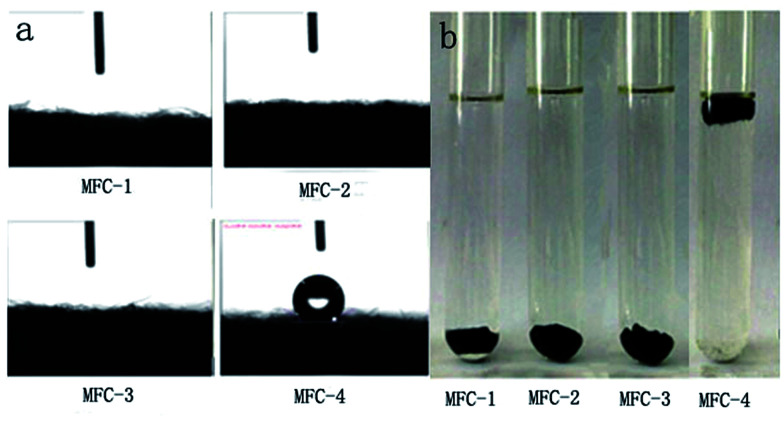
Carbon felt is widely used as an anode material in microbial fuel cells (MFCs) because of its high specific surface area, low cost, good electrical conductivity, and biocompatibility. In this paper, carbon felt samples were thermally treated with a mixed solution of concentrated HNO and 30% HO with different volume ratios of 1 : 3 (MFC-1), 1 : 1 (MFC-2), and 3 : 1 (MFC-3). The electrochemical performance of the resulting MFCs were investigated by cyclic voltammetry, electrochemical impedance spectroscopy, chronoamperometry and polarization curve measurement. Fourier transform infrared spectroscopy and scanning electron microscopy were conducted to characterize the functional groups and the morphology of the carbon felts. After modification, the number of oxygen-containing functional groups in MFC-1, MFC-2, and MFC-3 increased compared with MFC-4 (bare anode MFC), the start-up time of the obtained MFCs was markedly shortened, and the charge transfer resistance of the bioanode was decreased. In MFC-2, the maximum power density was 758.2 mW m, which was 51.1% higher than MFC-4. Increases of oxygen-containing functional groups on the modified anodes favored the adsorption and growth of bacteria and acceleration of electron transport between the electrode and bacteria. Thus, the electrochemical characteristics of MFCs employing these anodes were improved.
碳毡因其高比表面积、低成本、良好的导电性和生物相容性,在微生物燃料电池(MFC)中被广泛用作阳极材料。本文采用体积比分别为1:3(MFC-1)、1:1(MFC-2)和3:1(MFC-3)的浓硝酸和30%过氧化氢混合溶液对碳毡样品进行热处理。通过循环伏安法、电化学阻抗谱、计时电流法和极化曲线测量研究了所得MFC的电化学性能。采用傅里叶变换红外光谱和扫描电子显微镜对碳毡的官能团和形貌进行了表征。改性后,MFC-1、MFC-2和MFC-3中含氧官能团的数量比MFC-4(裸阳极MFC)有所增加,所得MFC的启动时间明显缩短,生物阳极的电荷转移电阻降低。在MFC-2中,最大功率密度为758.2 mW/m²,比MFC-4高51.1%。改性阳极上含氧官能团的增加有利于细菌的吸附和生长,以及电极与细菌之间电子传输的加速。因此,采用这些阳极的MFC的电化学特性得到了改善。