Taubert Hilde, Schroeter Matthias L, Sander Christian, Kluge Michael
Department of Psychiatry and Psychotherapy, University of Leipzig, Leipzig, Germany.
Department of Neurology, Max Planck Institute for Human Cognitive and Brain Sciences, Leipzig, Germany.
Nat Sci Sleep. 2022 May 5;14:877-890. doi: 10.2147/NSS.S358352. eCollection 2022.
Handedness has been linked to various physiological and pathological phenomena including memory function and psychiatric disorders. Also for sleep, several studies have reported associations. However, large-scale studies including a broad age span of participants and studies analyzing women and men separately are lacking.
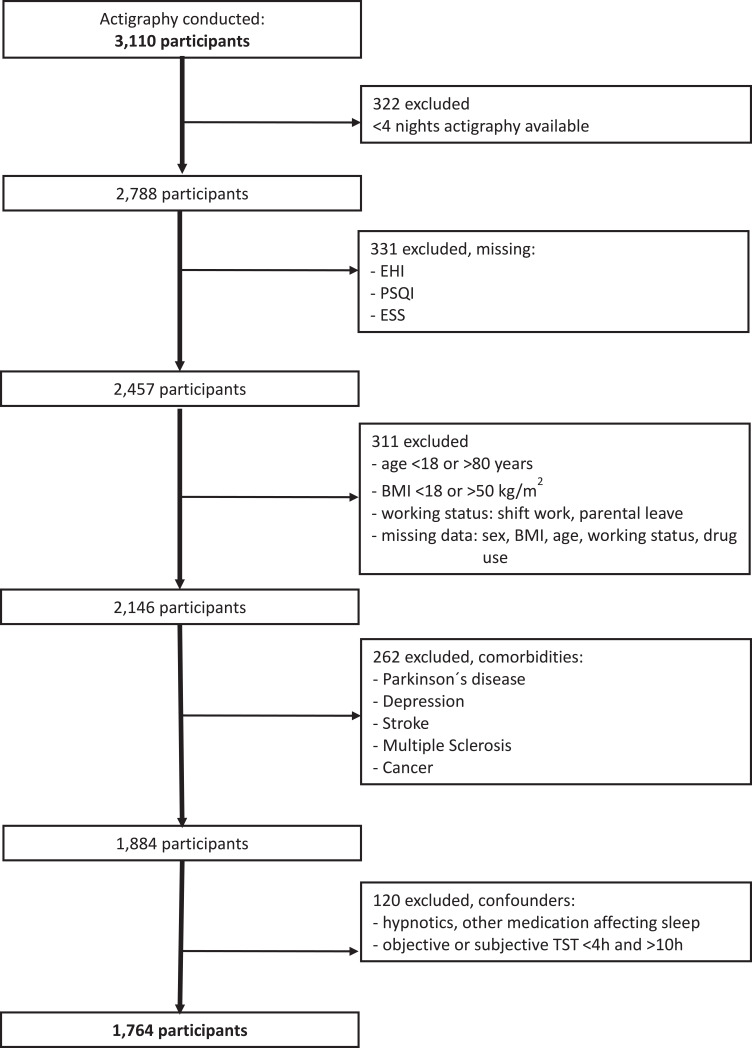
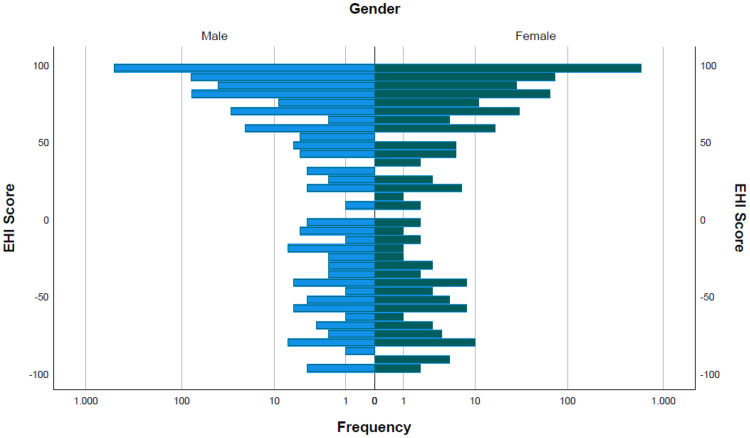
Therefore, objective sleep data were determined using at-home actigraphy from 1764 healthy participants (18 to 80 years, 908 women), averaging five consecutive nights. In addition, subjective sleep-related data were captured by self-report diaries, the Pittsburgh Sleep Quality Index (PSQI), the Epworth Sleepiness Scale (ESS) and the Morningness-Eveningness-Questionnaire (MEQ). Handedness was determined with the Edinburgh Handedness Inventory (EHI) providing information on the (left vs right) and the of handedness (strong vs weak). To address the potential endocrine effects, premenopausal women (≤45 years) and postmenopausal women (≥55 years) were analyzed separately. This was also done for men.
The degree and direction of handedness were correlated with "wake after sleep onset" (WASO) in the total sample and all women (the more right-handed/lateralized the shorter WASO). In postmenopausal women, additionally, time in bed (TIB) and total sleep time (TST) were correlated. There were no other significant associations between an sleep variable and handedness. In both premenopausal women and >55-year-old men quality of sleep (PSQI) was correlated with direction and degree of handedness (the more right-handed/lateralized the better). In the total sample and postmenopausal women, the degree and direction of handedness were negatively correlated with daytime sleepiness. The chronotype was not associated with handedness in any group.
While associations were not consistent in all groups, overall, right-handedness tended to be associated with better sleep and less daytime sleepiness. Handedness and sleep seemed to be differentially associated in women and men, being in line with endocrine interactions.
利手与包括记忆功能和精神障碍在内的各种生理和病理现象有关。对于睡眠,也有几项研究报告了相关性。然而,缺乏涵盖广泛年龄范围参与者的大规模研究以及分别分析女性和男性的研究。
因此,使用居家活动记录仪从1764名健康参与者(18至80岁,908名女性)中获取客观睡眠数据,平均连续记录五个晚上。此外,通过自我报告日记、匹兹堡睡眠质量指数(PSQI)、爱泼华嗜睡量表(ESS)和晨型-夜型问卷(MEQ)收集主观睡眠相关数据。用爱丁堡利手量表(EHI)确定利手情况,该量表提供关于利手的 (左利手与右利手)和利手程度(强利手与弱利手)的信息。为了研究潜在的内分泌影响,对绝经前女性(≤45岁)和绝经后女性(≥55岁)分别进行了分析。男性也进行了同样的分析。
在总样本和所有女性中,利手的程度和方向与“睡眠起始后觉醒”(WASO)相关(右利手/利手程度越高,WASO越短)。此外,在绝经后女性中,卧床时间(TIB)和总睡眠时间(TST)也相关。其他睡眠变量与利手之间没有其他显著关联。在绝经前女性和55岁以上男性中,睡眠质量(PSQI)与利手的方向和程度相关(右利手/利手程度越高,睡眠质量越好)。在总样本和绝经后女性中,利手的程度和方向与白天嗜睡呈负相关。在任何组中,昼夜节律类型与利手均无关联。
虽然并非在所有组中相关性都一致,但总体而言,右利手往往与更好的睡眠和更少的白天嗜睡相关。利手和睡眠在女性和男性中的关联似乎存在差异,这与内分泌相互作用一致。