Essghaier Badiaa, Toukabri Nourchéne, Dridi Rihab, Hannachi Hédia, Limam Inès, Mottola Filomena, Mokni Mourad, Zid Mohamed Faouzi, Rocco Lucia, Abdelkarim Mohamed
Department of Biology, Faculty of Sciences, University of Tunis El-Manar II, Tunis 2092, Tunisia.
Unité de Mycologie, Laboratoire de Recherche Infections et Santé Publique LR18SP01, Service de Dermatologie et de Vénéréologie, Hôpital La Rabta Jebbari, Tunis 1007, Tunisia.
Nanomaterials (Basel). 2022 May 7;12(9):1585. doi: 10.3390/nano12091585.
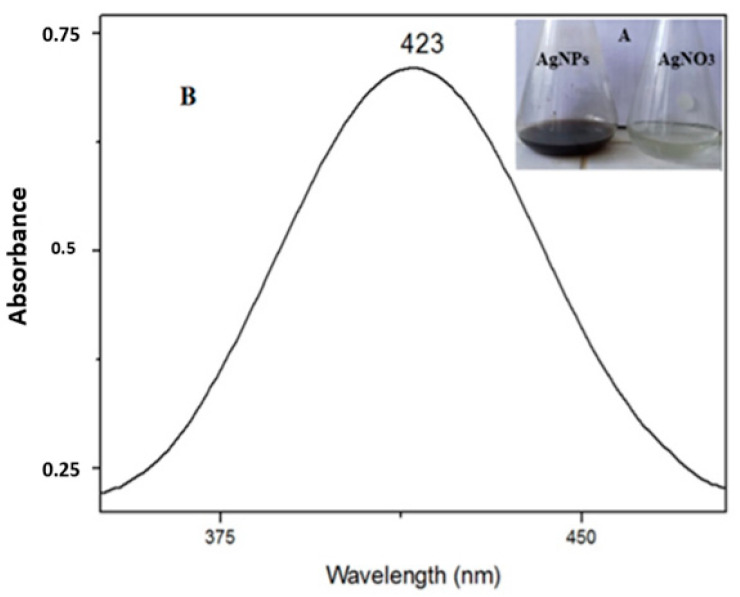
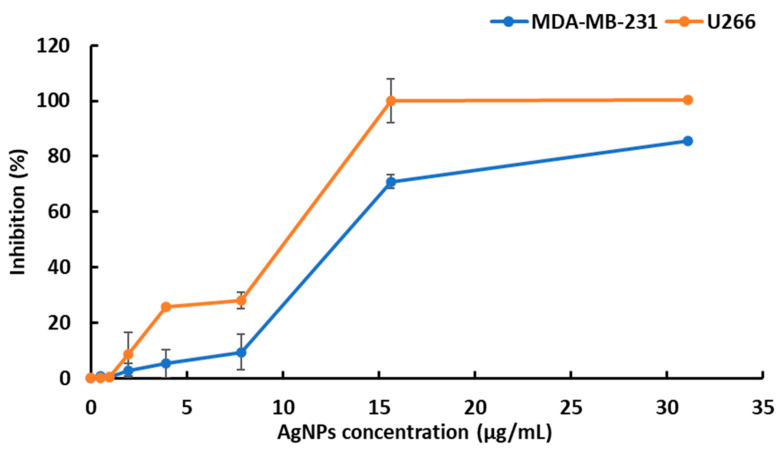
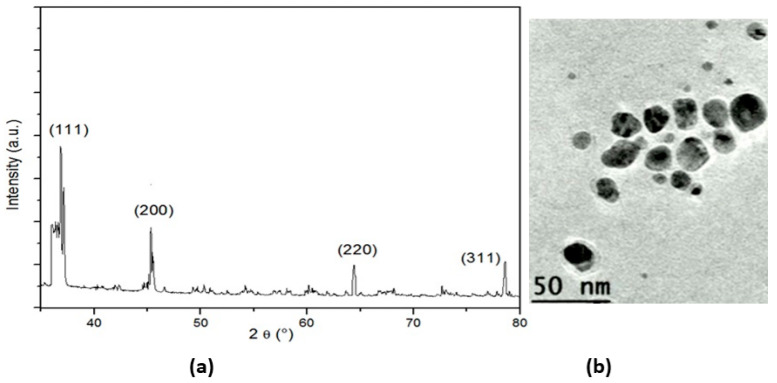
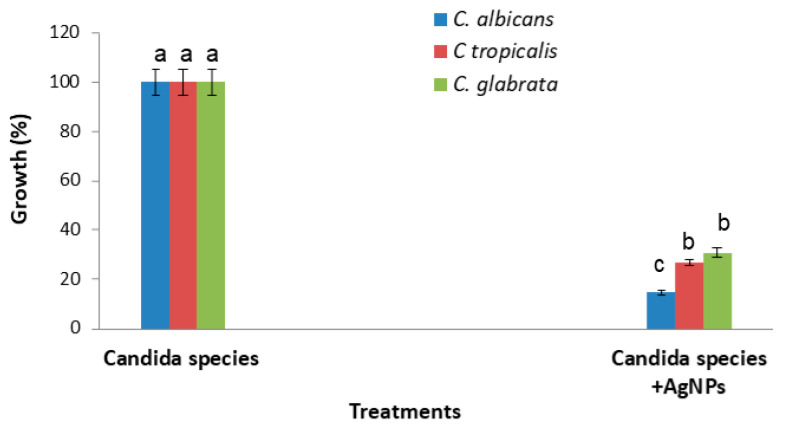
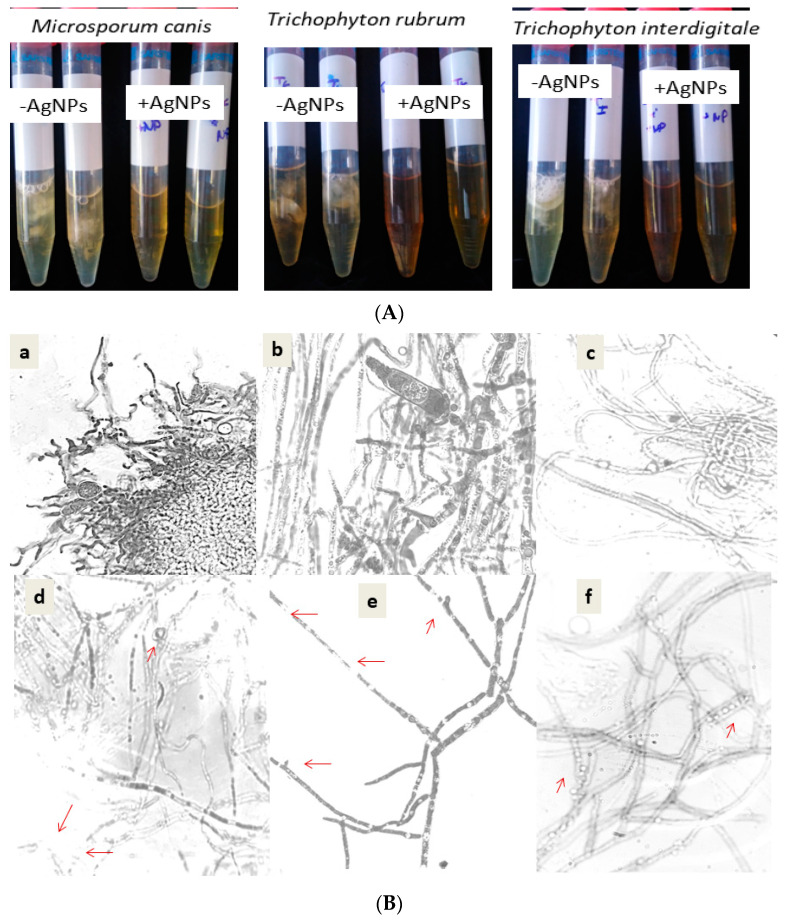
and dermatophyte infections are difficult to treat due to increasing antifungal drugs resistance such as fluconazole, as well as the emergence of multi-resistance in clinical bacteria. Here, we first synthesized silver nanoparticles using aqueous fruit extracts from subsp. (L.). The characterization of the AgNPs by means of UV, XRD, FTIR, and TEM showed that the AgNPs had a uniform spherical shape with average sizes of 40-50 nm. The biosynthesized AgNPs showed high antioxidant activity when investigated using 1,1-diphenyl-2-picryl-hydrazyl (DPPH) and ferric reducing antioxidant power (FRAP) assays. The AgNPs displayed strong antibacterial potential expressed by the maximum zone inhibition and the lowest MIC and MBC values. The AgNPs revealed a significant antifungal effect against the growth and biofilm of species. In fact, the AgNPs were efficient against and . The antifungal mechanisms of action of the AgNPs seem to be due to the disruption of membrane integrity and a reduction in virulence factors (biofilm and hyphae formation and a reduction in germination). Finally, the silver nanoparticles also showed important cytotoxic activity against the human multiple myeloma U266 cell line and the human breast cancer cell line MDA-MB-231. Therefore, we describe new silver nanoparticles with promising biomedical application in the development of novel antimicrobial and anticancer agents.
由于抗真菌药物耐药性增加,如氟康唑,以及临床细菌中多重耐药性的出现,皮肤癣菌感染难以治疗。在此,我们首先使用亚种(L.)的水果水提取物合成了银纳米颗粒。通过紫外可见光谱、X射线衍射、傅里叶变换红外光谱和透射电子显微镜对银纳米颗粒进行表征,结果表明银纳米颗粒呈均匀的球形,平均尺寸为40-50纳米。使用1,1-二苯基-2-苦基肼(DPPH)和铁还原抗氧化能力(FRAP)测定法研究时,生物合成的银纳米颗粒显示出高抗氧化活性。银纳米颗粒表现出强大的抗菌潜力,表现为最大抑菌圈以及最低的最低抑菌浓度(MIC)和最低杀菌浓度(MBC)值。银纳米颗粒对物种的生长和生物膜显示出显著的抗真菌作用。事实上,银纳米颗粒对和有效。银纳米颗粒的抗真菌作用机制似乎是由于膜完整性的破坏以及毒力因子(生物膜和菌丝形成以及发芽减少)的降低。最后,银纳米颗粒对人多发性骨髓瘤U266细胞系和人乳腺癌细胞系MDA-MB-231也显示出重要的细胞毒性活性。因此,我们描述了具有在新型抗菌和抗癌药物开发中具有前景的生物医学应用的新型银纳米颗粒。