• 文献检索
  • 文档翻译
  • 深度研究
  • 学术资讯
  • Suppr Zotero 插件Zotero 插件
  • 邀请有礼
  • 套餐&价格
  • 历史记录
应用&插件
Suppr Zotero 插件Zotero 插件浏览器插件Mac 客户端Windows 客户端微信小程序
定价
高级版会员购买积分包购买API积分包
服务
文献检索文档翻译深度研究API 文档MCP 服务
关于我们
关于 Suppr公司介绍联系我们用户协议隐私条款
关注我们

Suppr 超能文献

核心技术专利:CN118964589B侵权必究
粤ICP备2023148730 号-1Suppr @ 2026

文献检索

告别复杂PubMed语法,用中文像聊天一样搜索,搜遍4000万医学文献。AI智能推荐,让科研检索更轻松。

立即免费搜索

文件翻译

保留排版,准确专业,支持PDF/Word/PPT等文件格式,支持 12+语言互译。

免费翻译文档

深度研究

AI帮你快速写综述,25分钟生成高质量综述,智能提取关键信息,辅助科研写作。

立即免费体验

网络成瘾障碍:风险和韧性方法的证据。

Internet Gaming Disorder: Evidence for a Risk and Resilience Approach.

机构信息

School of Psychological Sciences, Macquarie University, Sydney 2109, Australia.

出版信息

Int J Environ Res Public Health. 2022 May 4;19(9):5587. doi: 10.3390/ijerph19095587.

DOI:10.3390/ijerph19095587
PMID:35564981
原文链接:https://pmc.ncbi.nlm.nih.gov/articles/PMC9103383/
Abstract

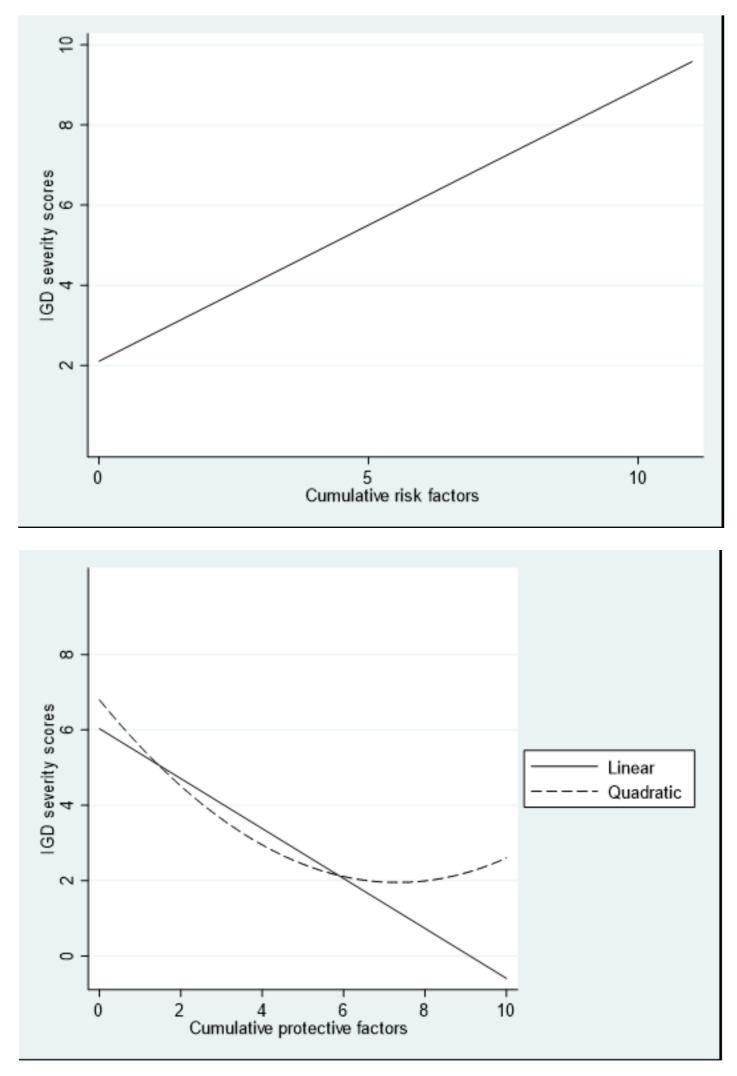
Although previous research has noted a range of factors that predict developing Problematic Video Game Use (PVGU) and Internet Gaming Disorder (IGD), few studies have looked at risk and protective factors together, and there is scant empirical evidence examining whether risk for PVGU or IGD increases or decreases as risk or protective factors accumulate in the individual. The aim of the current study was to examine both issues using predictors from three demonstrated PVGU and IGD risk categories: executive dysfunction, unmet needs in everyday life, and unhelpful family environment. In a survey of N = 866 12-17-year-old school students, the risk/protective factors that most strongly predicted severity of IGD symptomology and meeting IGD diagnostic criteria were self-control and social exclusion. Other significant predictors included impulsivity, self-esteem, mastery, control of one's external environment, and better parent-child attachment quality. Trend analyses revealed a linear increase in the risk of PVGU as risk and net-risk factors accumulated, and a decrease as protective and net-protective factors accumulated. Thus, a net accumulation of issues around impulse control and unmet needs in everyday life may predispose adolescents to PVGU or IGD. Results support a 'risk and resilience' approach to adolescent screen-based disorders and suggest potential benefits to a risk factor focus in treatment.

摘要

虽然之前的研究已经注意到一系列可以预测发展成问题性电子游戏使用(PVGU)和网络成瘾障碍(IGD)的因素,但很少有研究同时关注风险和保护因素,也几乎没有实证证据表明随着个体中风险或保护因素的积累,PVGU 或 IGD 的风险是否会增加或减少。本研究的目的是使用三个已证明的 PVGU 和 IGD 风险类别(执行功能障碍、日常生活中未满足的需求和无益的家庭环境)中的预测因子来同时研究这两个问题。在对 866 名 12-17 岁的在校学生进行的一项调查中,最强烈预测 IGD 症状严重程度和符合 IGD 诊断标准的风险/保护因素是自我控制和社会排斥。其他重要的预测因素包括冲动性、自尊心、掌握感、对外部环境的控制感以及更好的亲子依恋质量。趋势分析显示,随着风险和净风险因素的积累,PVGU 的风险呈线性增加,而随着保护和净保护因素的积累,PVGU 的风险呈下降趋势。因此,围绕冲动控制和日常生活中未满足的需求的问题的净积累可能使青少年易患 PVGU 或 IGD。研究结果支持针对青少年屏幕相关障碍的“风险和韧性”方法,并表明在治疗中关注风险因素可能会带来潜在的益处。
https://cdn.ncbi.nlm.nih.gov/pmc/blobs/4aee/9103383/215b41074190/ijerph-19-05587-g001a.jpg

相似文献

1
Internet Gaming Disorder: Evidence for a Risk and Resilience Approach.网络成瘾障碍:风险和韧性方法的证据。
Int J Environ Res Public Health. 2022 May 4;19(9):5587. doi: 10.3390/ijerph19095587.
2
Impulsivity, Self-control, Interpersonal Influences, and Maladaptive Cognitions as Factors of Internet Gaming Disorder Among Adolescents in China: Cross-sectional Mediation Study.冲动性、自我控制、人际影响和适应不良认知是中国青少年网络游戏障碍的因素:横断面中介研究。
J Med Internet Res. 2021 Oct 27;23(10):e26810. doi: 10.2196/26810.
3
Internet Gaming Disorder in adolescence: investigating profiles and associated risk factors.青少年网络成瘾障碍:探索其特征及相关风险因素。
BMC Public Health. 2021 Aug 12;21(1):1547. doi: 10.1186/s12889-021-11394-4.
4
Factors associated with severity, incidence or persistence of internet gaming disorder in children and adolescents: a 2-year longitudinal study.与儿童和青少年网络游戏障碍严重程度、发生率或持续性相关的因素:一项为期 2 年的纵向研究。
Addiction. 2021 Jul;116(7):1828-1838. doi: 10.1111/add.15366. Epub 2021 Jan 28.
5
Study protocol of the internet user Cohort for Unbiased Recognition of gaming disorder in Early adolescence (iCURE), Korea, 2015-2019.韩国2015 - 2019年青少年游戏障碍无偏识别互联网用户队列研究方案(iCURE)
BMJ Open. 2017 Oct 5;7(10):e018350. doi: 10.1136/bmjopen-2017-018350.
6
Problematic Video Gaming in a Young Spanish Population: Association with Psychosocial Health.年轻西班牙人群中的问题性电子游戏行为:与心理健康的关联。
Cyberpsychol Behav Soc Netw. 2018 Jun;21(6):388-394. doi: 10.1089/cyber.2017.0599. Epub 2018 May 24.
7
Internet gaming disorder and psychosocial well-being: A longitudinal study of older-aged adolescents and emerging adults.网络成瘾障碍与心理社会幸福感:一项针对大龄青少年和新兴成年人的纵向研究。
Addict Behav. 2020 Nov;110:106530. doi: 10.1016/j.addbeh.2020.106530. Epub 2020 Jun 27.
8
Comorbidity of Internet gaming disorder and alcohol use disorder: A focus on clinical characteristics and gaming patterns.网络游戏障碍与酒精使用障碍的共病:聚焦临床特征与游戏模式
Am J Addict. 2017 Jun;26(4):326-334. doi: 10.1111/ajad.12528. Epub 2017 Mar 22.
9
Awareness and Potential Impacts of the Medicalization of Internet Gaming Disorder: Cross-sectional Survey Among Adolescents in China.互联网游戏障碍医学化的认知和潜在影响:中国青少年横断面调查。
J Med Internet Res. 2021 Feb 24;23(2):e22393. doi: 10.2196/22393.
10
Parent-adolescent attachment and peer attachment associated with Internet Gaming Disorder: A longitudinal study of first-year undergraduate students.青少年与父母和同伴的依恋与网络成瘾障碍的关系:对一年级本科生的纵向研究。
J Behav Addict. 2020 Apr 1;9(1):116-128. doi: 10.1556/2006.2020.00011.

引用本文的文献

1
Prevalence and factors associated with resilience in Peruvian adolescent schoolchildren during the early post-pandemic context: a cross-sectional study.疫情后初期秘鲁青少年学生心理韧性的患病率及相关因素:一项横断面研究
Front Psychiatry. 2025 Jul 25;16:1609190. doi: 10.3389/fpsyt.2025.1609190. eCollection 2025.
2
Internet gaming disorder (IGD) and smartphone addiction: parent intervention trial.网络成瘾障碍(IGD)与智能手机成瘾:家长干预试验。
Aust J Psychol. 2024 Sep 8;76(1):2396961. doi: 10.1080/00049530.2024.2396961. eCollection 2024.
3
Sleep Quality as a Mediator of Internet Gaming Disorder and Executive Dysfunction in Adolescents: Cross-Sectional Questionnaire Study.

本文引用的文献

1
Global prevalence of gaming disorder: A systematic review and meta-analysis.全球游戏障碍患病率的系统评价和荟萃分析。
Aust N Z J Psychiatry. 2021 Jun;55(6):553-568. doi: 10.1177/0004867420962851. Epub 2020 Oct 7.
2
Internet gaming disorder and psychosocial well-being: A longitudinal study of older-aged adolescents and emerging adults.网络成瘾障碍与心理社会幸福感:一项针对大龄青少年和新兴成年人的纵向研究。
Addict Behav. 2020 Nov;110:106530. doi: 10.1016/j.addbeh.2020.106530. Epub 2020 Jun 27.
3
Pathological video game symptoms from adolescence to emerging adulthood: A 6-year longitudinal study of trajectories, predictors, and outcomes.
睡眠质量作为青少年网络游戏障碍与执行功能障碍之间的中介因素:横断面问卷调查研究
J Med Internet Res. 2025 Jul 9;27:e68571. doi: 10.2196/68571.
4
The association between a stress-is-enhancing mindset and internet gaming disorder was mediated by behavioral disengagement among medical undergraduate students: a multi-center survey in China.应激增强心态与网络成瘾障碍之间的关联在医学本科生中通过行为脱离来介导:一项中国多中心调查
BMC Psychiatry. 2025 May 12;25(1):472. doi: 10.1186/s12888-025-06910-4.
5
Understanding the interplay between video game design features and dysregulated gaming patterns: A call to anchor future research directions in interactionist frameworks.理解电子游戏设计特征与失调游戏模式之间的相互作用:呼吁将未来研究方向锚定在互动主义框架中。
Addict Behav Rep. 2025 Apr 17;21:100609. doi: 10.1016/j.abrep.2025.100609. eCollection 2025 Jun.
6
Gaming time and impulsivity as independent yet complementary predictors of gaming disorder risk.游戏时间和冲动性作为游戏障碍风险的独立但互补的预测因素。
Sci Rep. 2025 Jan 22;15(1):2854. doi: 10.1038/s41598-024-81359-1.
7
Evaluation of a multicomponent positive psychology program to prevent gaming disorder and enhance mental wellness in primary pupils: A randomized controlled trial.评估一个多成分积极心理学方案,以预防小学生游戏障碍和增强心理健康:一项随机对照试验。
J Behav Addict. 2024 Sep 30;13(3):871-883. doi: 10.1556/2006.2024.00052. Print 2024 Oct 4.
8
Towards an automated approach for understanding problematic gaming.迈向一种理解问题游戏行为的自动化方法。
Front Sports Act Living. 2024 Aug 9;6:1407848. doi: 10.3389/fspor.2024.1407848. eCollection 2024.
9
Self-Esteem and Risk Behaviours in Adolescents: A Systematic Review.青少年的自尊与风险行为:一项系统综述
Behav Sci (Basel). 2024 May 22;14(6):432. doi: 10.3390/bs14060432.
10
Social intelligence and pathological gaming: a longitudinal study of the associations among negative emotions, social intelligence, aggression, and pathological gaming in adolescents.社交智力与病理性游戏:青少年负面情绪、社交智力、攻击性和病理性游戏之间关联的纵向研究
Front Psychiatry. 2024 Jun 6;15:1353969. doi: 10.3389/fpsyt.2024.1353969. eCollection 2024.
从青春期到成年早期的病理性电子游戏症状:一项 6 年纵向研究轨迹、预测因素和结果。
Dev Psychol. 2020 Jul;56(7):1385-1396. doi: 10.1037/dev0000939. Epub 2020 Apr 30.
4
Screening and assessment tools for gaming disorder: A comprehensive systematic review.游戏障碍筛查和评估工具:全面系统综述。
Clin Psychol Rev. 2020 Apr;77:101831. doi: 10.1016/j.cpr.2020.101831. Epub 2020 Feb 11.
5
Bio-psychosocial factors of children and adolescents with internet gaming disorder: a systematic review.患有网络游戏障碍的儿童和青少年的生物心理社会因素:一项系统综述。
Biopsychosoc Med. 2019 Feb 14;13:3. doi: 10.1186/s13030-019-0144-5. eCollection 2019.
6
Neurobiological Correlates in Internet Gaming Disorder: A Systematic Literature Review.网络成瘾障碍的神经生物学关联:一项系统文献综述。
Front Psychiatry. 2018 May 8;9:166. doi: 10.3389/fpsyt.2018.00166. eCollection 2018.
7
Internet gaming disorder in children and adolescents: a systematic review.儿童和青少年网络成瘾障碍:系统综述。
Dev Med Child Neurol. 2018 Jul;60(7):645-659. doi: 10.1111/dmcn.13754. Epub 2018 Apr 6.
8
Functional and structural neural alterations in Internet gaming disorder: A systematic review and meta-analysis.网络成瘾障碍的功能和结构神经改变:系统综述和荟萃分析。
Neurosci Biobehav Rev. 2017 Dec;83:313-324. doi: 10.1016/j.neubiorev.2017.10.029. Epub 2017 Nov 2.
9
Scholars' open debate paper on the World Health Organization ICD-11 Gaming Disorder proposal.学者关于世界卫生组织 ICD-11 游戏障碍提案的公开辩论文件。
J Behav Addict. 2017 Sep 1;6(3):267-270. doi: 10.1556/2006.5.2016.088. Epub 2016 Dec 30.
10
Internet addiction and problematic Internet use: A systematic review of clinical research.网络成瘾和问题性互联网使用:临床研究的系统综述。
World J Psychiatry. 2016 Mar 22;6(1):143-76. doi: 10.5498/wjp.v6.i1.143.