Sugaya Nagisa, Shirasaka Tomohiro, Takahashi Kenzo, Kanda Hideyuki
1Unit of Public Health and Preventive Medicine, School of Medicine, Yokohama City University, 3-9 Fukuura, Kanazawa-ku, Yokohama, 236-0004 Japan.
2Department of Psychiatry, Teine Keijinkai Hospital, 1-12-1-40 Maeda, Teine-ku, Sapporo, Hokkaido 006-8555 Japan.
Biopsychosoc Med. 2019 Feb 14;13:3. doi: 10.1186/s13030-019-0144-5. eCollection 2019.
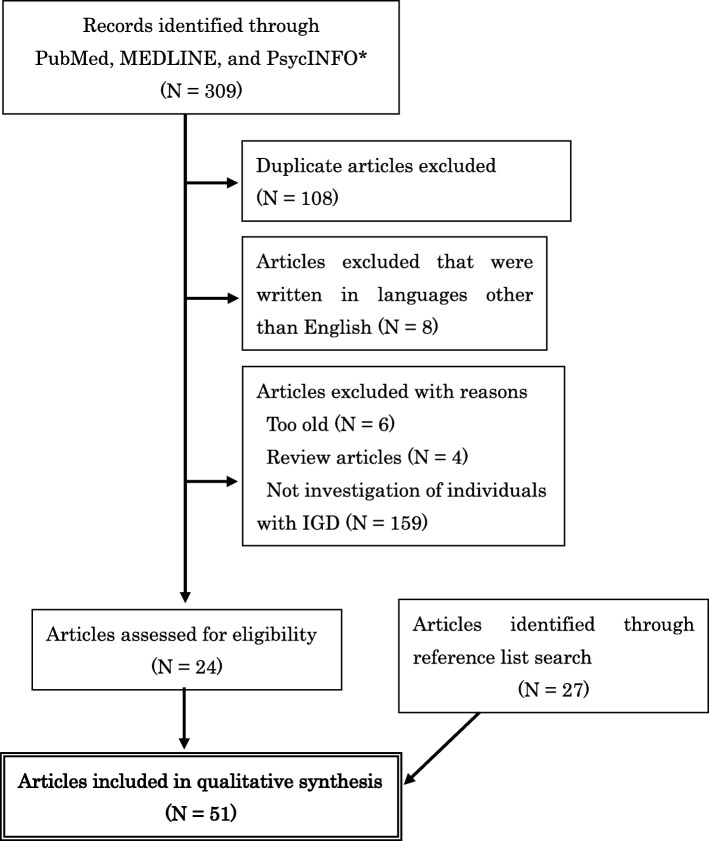
Previous large-scale studies suggest that internet gaming disorder (IGD) among children and adolescents has become an important public concern. Minors are known to be particularly susceptible to problematic internet gaming use owing to age-related underdevelopment of cognitive control. It has been shown that precursors of addictions appear during adolescence; therefore, prevention efforts must be established targeting minors who have their first experience with addictive substances and behaviors during pubescence. Since the DSM-5 classification of IGD in 2013, studies on IGD have drastically increased in number. Thus, we performed an updated review of studies of IGD in children and adolescents to assess the clinical implications of IGD. The search included all publication years, using PubMed, MEDLINE, and PsycINFO. Across studies, the presence of IGD had a negative effect on sleep and schoolwork in minors. Additionally, family factors, including the quality of parent-child relationships, were important social factors in minors with IGD. Brain imaging studies indicate that impaired cognitive control in minors with IGD is associated with abnormal function in the prefrontal cortex and striatum. Persistent pathological online game use from childhood may aggravate abnormal brain function; therefore, preventive care and early intervention are increasingly important. Although extant research supports the effectiveness of cognitive behavioral therapy for minors with IGD, effective psychological intervention for minors with IGD is an urgent issue that requires further research. This review, which presents updated findings of IGD in minors, is expected to contribute to the development of future research and be useful in clinical practice in the field of child and adolescent psychiatry.
以往的大规模研究表明,儿童和青少年中的网络游戏障碍(IGD)已成为一个重要的公共关注点。由于认知控制方面与年龄相关的发育不足,未成年人尤其容易出现有问题的网络游戏使用情况。研究表明,成瘾的先兆在青春期出现;因此,必须针对那些在青春期首次接触成瘾物质和行为的未成年人开展预防工作。自2013年《精神疾病诊断与统计手册》第五版(DSM-5)对IGD进行分类以来,关于IGD的研究数量急剧增加。因此,我们对儿童和青少年IGD的研究进行了更新综述,以评估IGD的临床意义。检索范围包括使用PubMed、MEDLINE和PsycINFO数据库的所有出版年份的文献。在各项研究中,IGD的存在对未成年人的睡眠和学业有负面影响。此外,家庭因素,包括亲子关系质量,是患有IGD的未成年人的重要社会因素。脑成像研究表明,患有IGD的未成年人认知控制受损与前额叶皮质和纹状体的功能异常有关。儿童期持续的病理性网络游戏使用可能会加重脑功能异常;因此,预防保健和早期干预变得越来越重要。尽管现有研究支持认知行为疗法对患有IGD的未成年人的有效性,但对患有IGD的未成年人进行有效的心理干预是一个迫切需要进一步研究的问题。本综述呈现了未成年人IGD的最新研究结果,有望为未来研究的发展做出贡献,并在儿童和青少年精神病学领域的临床实践中发挥作用。