Maliszewska Irena, Czapka Tomasz
Department of Organic and Medicinal Chemistry, Wrocław University of Science and Technology, 50-370 Wrocław, Poland.
Department of Electrical Engineering Fundamentals, Wrocław University of Science and Technology, 50-370 Wrocław, Poland.
Polymers (Basel). 2022 Apr 20;14(9):1661. doi: 10.3390/polym14091661.
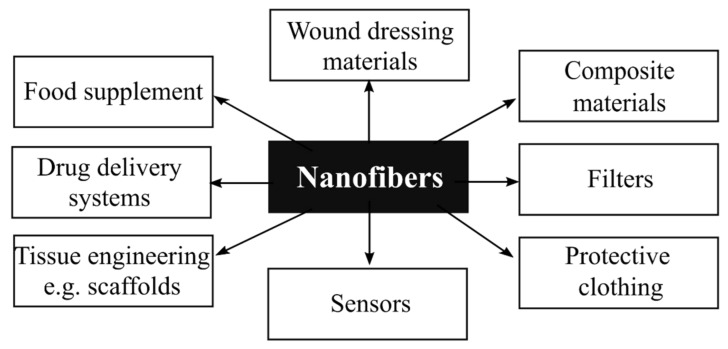
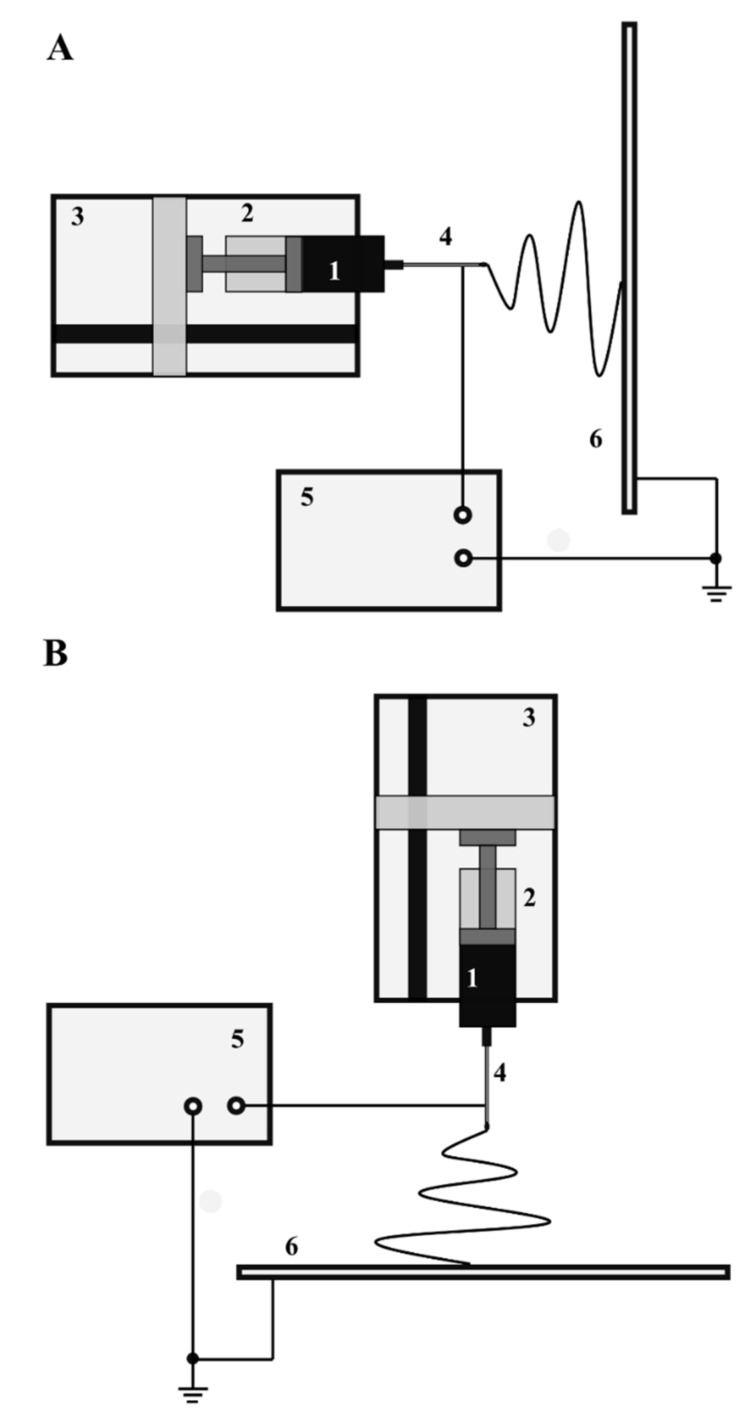
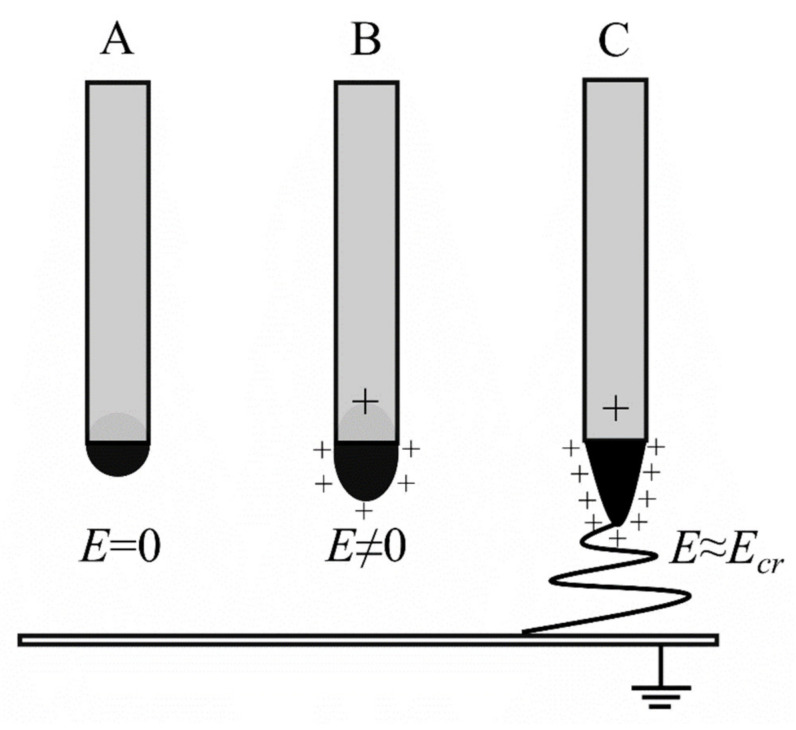
Nowadays, nanofibers with antimicrobial activity are of great importance due to the widespread antibiotic resistance of many pathogens. Electrospinning is a versatile method of producing ultrathin fibers with desired properties, and this technique can be optimized by controlling parameters such as solution/melt viscosity, feeding rate, and electric field. High viscosity and slow feeding rate cause blockage of the spinneret, while low viscosity and high feeding rate result in fiber discontinuities or droplet formation. The electric field must be properly set because high field strength shortens the solidification time of the fluid streams, while low field strength is unable to form the Taylor cone. Environmental conditions, temperature, and humidity also affect electrospinning. In recent years, significant advances have been made in the development of electrospinning methods and the engineering of electrospun nanofibers for various applications. This review discusses the current research on the use of electrospinning to fabricate composite polymer fibers with antimicrobial properties by incorporating well-defined antimicrobial nanoparticles (silver, titanium dioxide, zinc dioxide, copper oxide, etc.), encapsulating classical therapeutic agents (antibiotics), plant-based bioactive agents (crude extracts, essential oils), and pure compounds (antimicrobial peptides, photosensitizers) in polymer nanofibers with controlled release and anti-degradation protection. The analyzed works prove that the electrospinning process is an effective strategy for the formation of antimicrobial fibers for the biomedicine, pharmacy, and food industry.
如今,由于许多病原体普遍存在抗生素耐药性,具有抗菌活性的纳米纤维变得极为重要。静电纺丝是一种生产具有所需特性的超细纤维的通用方法,并且可以通过控制诸如溶液/熔体粘度、进料速率和电场等参数来优化该技术。高粘度和低进料速率会导致喷丝头堵塞,而低粘度和高进料速率会导致纤维不连续或形成液滴。必须正确设置电场,因为高场强会缩短流体流的凝固时间,而低场强则无法形成泰勒锥。环境条件、温度和湿度也会影响静电纺丝。近年来,在静电纺丝方法的开发以及用于各种应用的电纺纳米纤维的工程方面取得了重大进展。本综述讨论了当前关于通过将明确的抗菌纳米颗粒(银、二氧化钛、氧化锌、氧化铜等)、封装经典治疗剂(抗生素)、植物基生物活性剂(粗提物、精油)和纯化合物(抗菌肽、光敏剂)掺入具有控释和抗降解保护的聚合物纳米纤维中来使用静电纺丝制造具有抗菌性能的复合聚合物纤维的研究。分析的工作证明,静电纺丝过程是一种为生物医学、制药和食品工业形成抗菌纤维的有效策略。