Menzies School of Health Research, Charles Darwin University, Darwin, Northern Territory, Australia
Department of Endocrinology, Royal Darwin Hospital, Darwin, Northern Territory, Australia.
BMJ Open. 2022 May 15;12(5):e059716. doi: 10.1136/bmjopen-2021-059716.
To assess the prevalence and incidence of diabetes among Aboriginal peoples in remote communities of the Northern Territory (NT), Australia.
Retrospective cohort analysis of linked clinical and administrative data sets from 1 July 2012 to 30 June 2019.
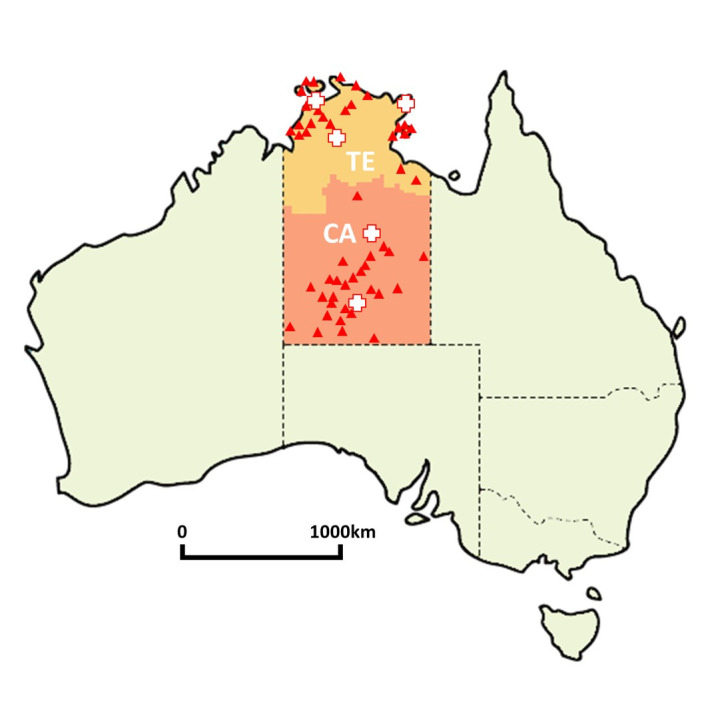
Remote health centres using the NT Government Primary Care Information System (51 out of a total of 84 remote health centres in the NT).
All Aboriginal clients residing in remote communities serviced by these health centres (N=21 267).
Diabetes diagnoses were established using hospital and primary care coding, biochemistry and prescription data.
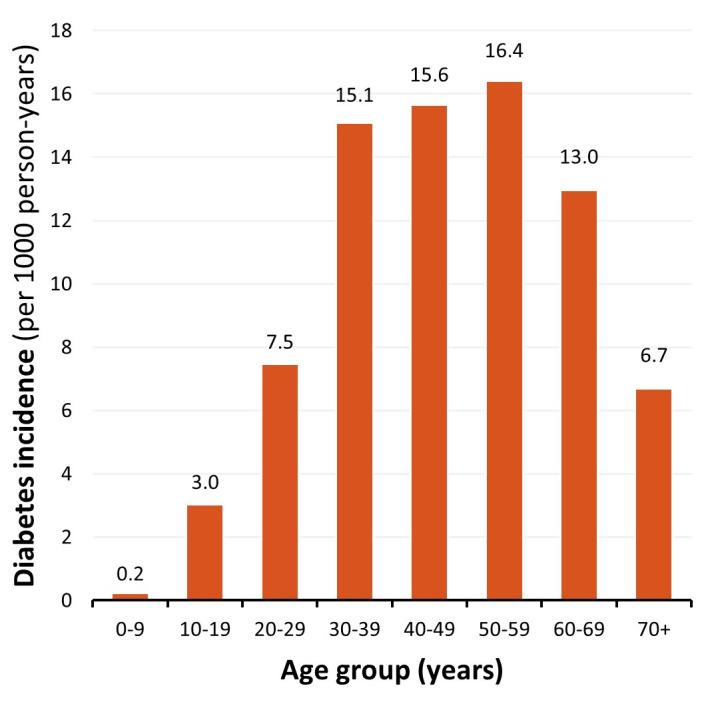
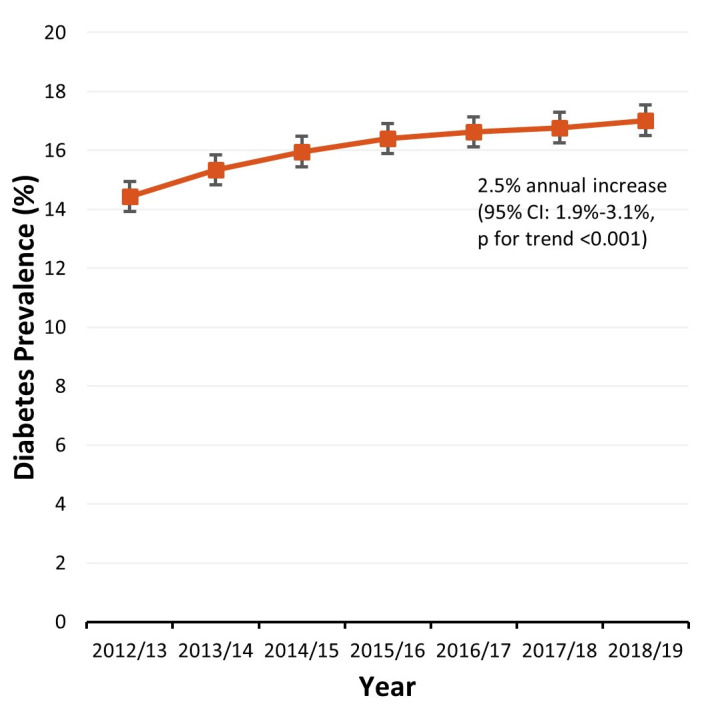
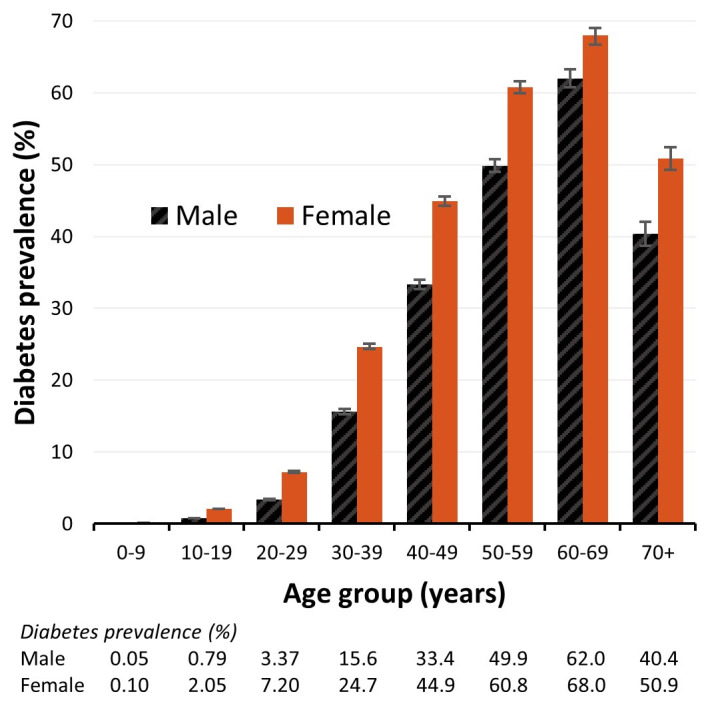
Diabetes prevalence across all ages increased from 14.4% (95% CI: 13.9% to 14.9%) to 17.0% (95% CI: 16.5% to 17.5%) over 7 years. Among adults (≥20 years), the 2018/2019 diabetes prevalence was 28.6% (95% CI: 27.8% to 29.4%), being higher in Central Australia (39.5%, 95% CI: 37.8% to 41.1%) compared with the Top End region (24.2%, 95% CI: 23.3% to 25.1%, p<0.001). Between 2016/2017 and 2018/2019, diabetes incidence across all ages was 7.9 per 1000 person-years (95% CI: 7.3 to 8.7 per 1000 person-years). The adult incidence of diabetes was 12.6 per 1000 person-years (95% CI: 11.5 to 13.8 per 1000 person-years).
The burden of diabetes in the remote Aboriginal population of the NT is among the highest in the world. Strengthened systems of care and public health prevention strategies, developed in partnership with Aboriginal communities, are needed.
评估澳大利亚北领地(NT)偏远社区原住民人群的糖尿病患病率和发病率。
对 2012 年 7 月 1 日至 2019 年 6 月 30 日期间的临床和行政数据集进行回顾性队列分析。
使用北领地政府初级保健信息系统(NT 共 84 个偏远保健中心中的 51 个)的偏远医疗中心。
所有居住在这些医疗中心服务的偏远社区的原住民客户(N=21267)。
通过医院和初级保健编码、生物化学和处方数据确定糖尿病诊断。
在 7 年期间,所有年龄段的糖尿病患病率从 14.4%(95%可信区间:13.9%至 14.9%)增加到 17.0%(95%可信区间:16.5%至 17.5%)。在成年人(≥20 岁)中,2018/2019 年糖尿病患病率为 28.6%(95%可信区间:27.8%至 29.4%),在中澳大利亚地区(39.5%,95%可信区间:37.8%至 41.1%)高于北部地区(24.2%,95%可信区间:23.3%至 25.1%,p<0.001)。在 2016/2017 年至 2018/2019 年期间,所有年龄段的糖尿病发病率为每 1000 人年 7.9 例(95%可信区间:每 1000 人年 7.3 至 8.7 例)。成年人的糖尿病发病率为每 1000 人年 12.6 例(95%可信区间:每 1000 人年 11.5 至 13.8 例)。
北领地偏远地区原住民人群的糖尿病负担位居世界前列。需要与原住民社区合作制定强化的护理系统和公共卫生预防策略。