Ceyhun Hacer Akgül, Gürbüzer Nilifer
Department of Psychiatry, Ataturk University School of Medicine, Atatürk University, 25 240 Erzurum, Turkey.
Department of Psychiatry, Regional Training and Research Hospital, University of Health Sciences, Erzurum, Turkey.
Adv Neurodev Disord. 2022;6(2):211-223. doi: 10.1007/s41252-022-00258-6. Epub 2022 May 11.
The potential role of neuroinflammation in adult attention deficit hyperactivity disorder (ADHD) patients has been investigated with peripheral hemogram-related inflammatory markers. Systemic immune inflammation index (SII) is defined as a new index that has been developed for the balance of inflammatory and immune status.
Our study was based on a prospective routine complete blood count(CBC) analysis of 74 Adult ADHD patients and 70 healthy participants. The DSM-5-Clinician version and Barratt impulsivity scale-11 were used to evaluate the participants.
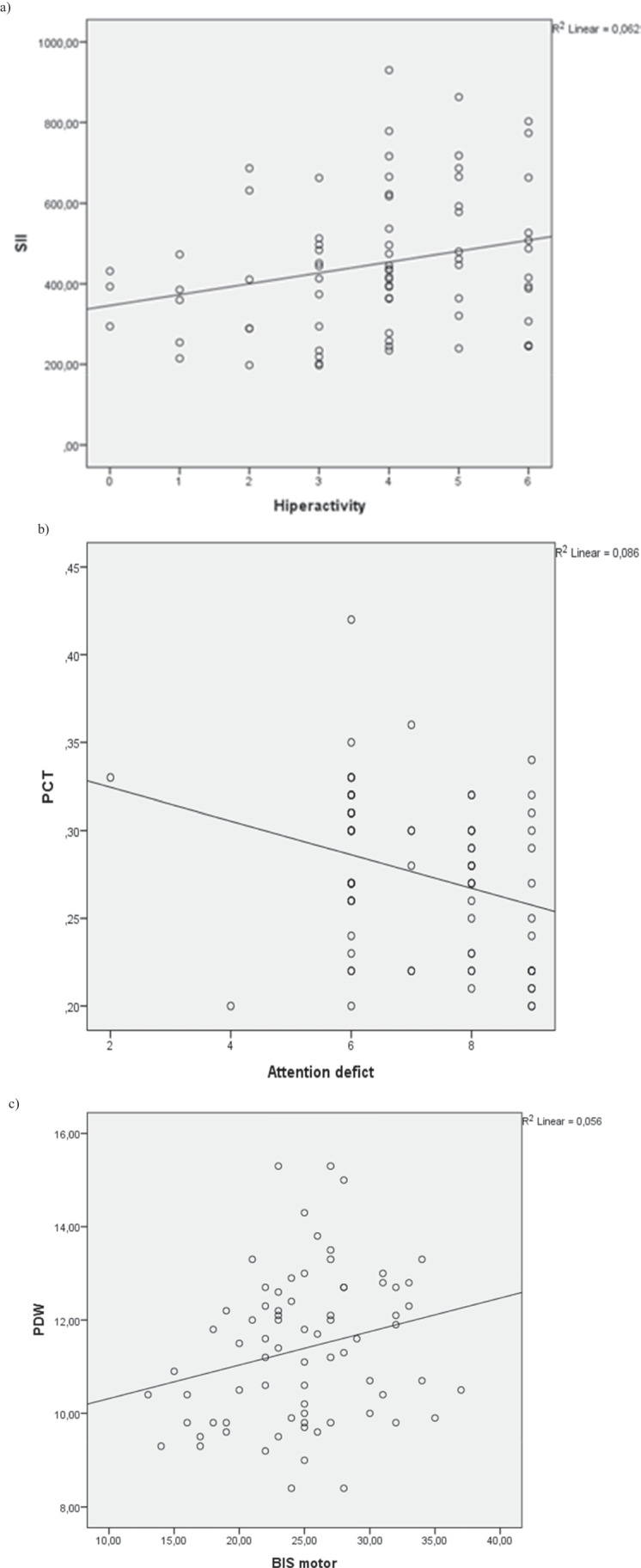
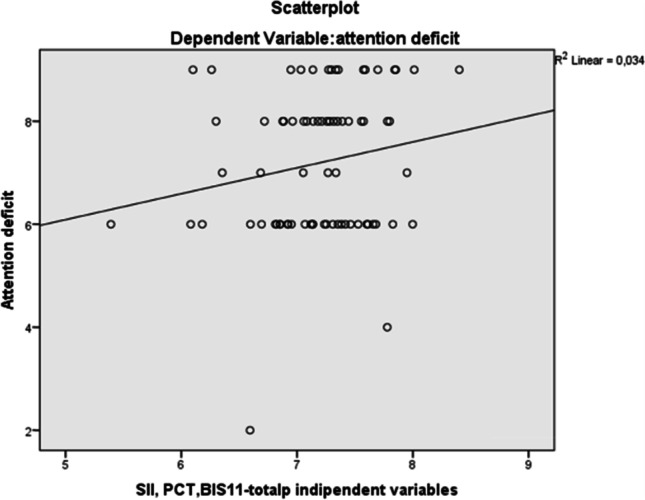
There was no statistical difference in the comparison of the SII ratios, platelet distribution width (PDW), and plateretritis (PCT) (>0.05 for each) in a group of a young adults with ADHD and in a comparison control group. These inflammatory indicators were found to be similar between patients newly diagnosed with ADHD (=40) and patients using methylphenidate (=34) (>0.05 for each). The relationship between ADHD clinical symptoms and severity and inflammation was evaluated. A significant negative correlation was observed between attention deficit scores and PCT (=-0.301, =0.009). A positive significant correlation was found between hyperactivity scores and SII (=0.247, =0.034). A significant positive correlation was found between Barrat motor scores and PDW(=241, =0.038). In the regression analysis, the PCT variable changed the attention deficit variable (=.33, (70)= -2.703, =.009, = .094) predicted negatively and significantly.
We demonstrated the association of SII, which is independently associated with adverse outcomes in many diseases, and the severity of hyperactivity symptoms in adult ADHD. The fact that PCT predicts attention deficit negatively and decisively shows the importance of inflammatory assessments specific to clinical presentations. The critical importance of platelets in inflammatory processes in ADHD has been demonstrated once again with inflammatory markers such as SII, PLT, and PDW, which can be accessed by an easily applicable complete blood count method.
已通过外周血常规相关炎症标志物研究神经炎症在成人注意力缺陷多动障碍(ADHD)患者中的潜在作用。全身免疫炎症指数(SII)被定义为一种新的指标,用于评估炎症和免疫状态的平衡。
我们的研究基于对74例成人ADHD患者和70名健康参与者进行的前瞻性常规全血细胞计数(CBC)分析。使用《精神疾病诊断与统计手册》第5版临床版和巴拉特冲动性量表-11对参与者进行评估。
在一组患有ADHD的年轻成年人与对照组的比较中,SII比值、血小板分布宽度(PDW)和血小板比容(PCT)的比较无统计学差异(每项均>0.05)。新诊断为ADHD的患者(n = 40)和使用哌甲酯的患者(n = 34)之间的这些炎症指标相似(每项均>0.05)。评估了ADHD临床症状和严重程度与炎症之间的关系。注意力缺陷评分与PCT之间存在显著负相关(r = -0.301,p = 0.009)。多动评分与SII之间存在显著正相关(r = 0.247,p = 0.034)。巴拉特运动评分与PDW之间存在显著正相关(r = 0.241,p = 0.038)。在回归分析中,PCT变量对注意力缺陷变量有显著的负向预测作用(β = -0.33,t(70)= -2.703,p = 0.009,R² = 0.094)。
我们证明了SII与成人ADHD多动症状严重程度之间的关联,SII在许多疾病中都与不良预后独立相关。PCT对注意力缺陷有负面且决定性的预测作用,这表明针对临床表现进行炎症评估的重要性。通过易于应用的全血细胞计数方法获得的SII、PLT和PDW等炎症标志物,再次证明了血小板在ADHD炎症过程中的关键重要性。