• 文献检索
  • 文档翻译
  • 深度研究
  • 学术资讯
  • Suppr Zotero 插件Zotero 插件
  • 邀请有礼
  • 套餐&价格
  • 历史记录
应用&插件
Suppr Zotero 插件Zotero 插件浏览器插件Mac 客户端Windows 客户端微信小程序
定价
高级版会员购买积分包购买API积分包
服务
文献检索文档翻译深度研究API 文档MCP 服务
关于我们
关于 Suppr公司介绍联系我们用户协议隐私条款
关注我们

Suppr 超能文献

核心技术专利:CN118964589B侵权必究
粤ICP备2023148730 号-1Suppr @ 2026

文献检索

告别复杂PubMed语法,用中文像聊天一样搜索,搜遍4000万医学文献。AI智能推荐,让科研检索更轻松。

立即免费搜索

文件翻译

保留排版,准确专业,支持PDF/Word/PPT等文件格式,支持 12+语言互译。

免费翻译文档

深度研究

AI帮你快速写综述,25分钟生成高质量综述,智能提取关键信息,辅助科研写作。

立即免费体验

了解老年哮喘和慢性阻塞性肺疾病患者疾病管理中的线上和线下社交网络:采用定量社交网络评估和定性分析的混合方法研究

Understanding Online and Offline Social Networks in Illness Management of Older Patients With Asthma and Chronic Obstructive Pulmonary Disease: Mixed Methods Study Using Quantitative Social Network Assessment and Qualitative Analysis.

作者信息

Andreou Andreas, Dhand Amar, Vassilev Ivaylo, Griffiths Chris, Panzarasa Pietro, De Simoni Anna

机构信息

Wolfson Institute of Population Health, Asthma UK Centre of Applied Research, Queen Mary University of London, London, United Kingdom.

Department of Neurology, Brigham & Women's Hospital, Harvard Medical School, Boston, MA, United States.

出版信息

JMIR Form Res. 2022 May 17;6(5):e35244. doi: 10.2196/35244.

DOI:10.2196/35244
PMID:35579933
原文链接:https://pmc.ncbi.nlm.nih.gov/articles/PMC9157321/
Abstract

BACKGROUND

Individuals' social networks and social support are fundamental determinants of self-management and self-efficacy. In chronic respiratory conditions, social support can be promoted and optimized to facilitate the self-management of breathlessness.

OBJECTIVE

This study aimed to identify how online and offline social networks play a role in the health management of older patients with chronic respiratory conditions, explore the role of support from online peers in patients' self-management, and understand the barriers to and potential benefits of digital social interventions.

METHODS

We recruited participants from a hospital-run singing group to a workshop in London, the United Kingdom, and adapted PERSNET, a quantitative social network assessment tool. The second workshop was replaced by telephone interviews because of the COVID-19 lockdown. The transcripts were analyzed using thematic analysis.

RESULTS

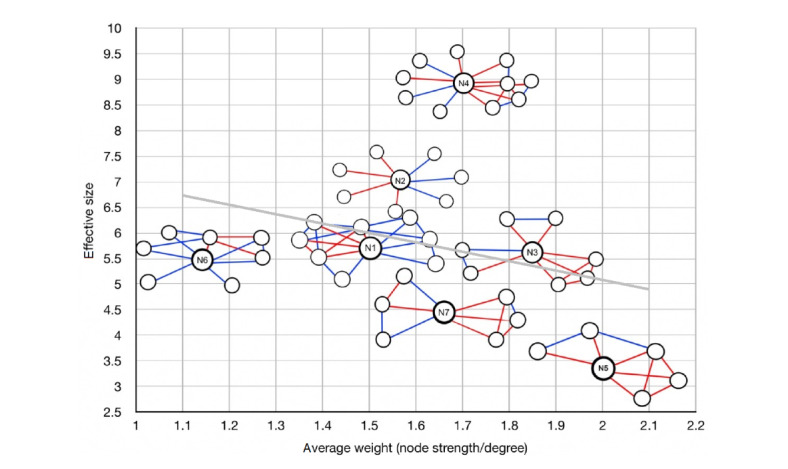
A total of 7 participants (2/7, 29%, men and 5/7, 71%, women), with an age range of 64 to 81 years, produced network maps that comprised between 5 and 10 individuals, including family members, health care professionals, colleagues, activity groups, offline and online friends, and peers. The visual maps facilitated reflections and enhanced participants' understanding of the role of offline and online social networks in the management of chronic respiratory conditions. It also highlighted the work undertaken by the networks themselves in the self-management support. Participants with small, close-knit networks received physical, health, and emotional support, whereas those with more diverse and large networks benefited from accessing alternative and complementary sources of information. Participants in the latter type of network tended to communicate more openly and comfortably about their illness, shared the impact of their illness on their day-to-day life, and demonstrated distinct traits in terms of identity and perception of chronic disease. Participants described the potential benefits of expanding their networks to include online peers as sources of novel information, motivation, and access to supportive environments. Lack of technological skills, fear of being scammed, or preference for keeping illness-related problems for themselves and immediate family were reported by some as barriers to engaging with online peer support.

CONCLUSIONS

In this small-scale study, the social network assessment tool proved feasible and acceptable. These data show the value of using a social network tool as a research tool that can help assess and understand network structure and engagement in the self-management support and could be developed into an intervention to support self-management. Patients' preferences to share illness experiences with their online peers, as well as the contexts in which this can be acceptable, should be considered when developing and offering digital social interventions. Future studies can explore the evolution of the social networks of older people with chronic illnesses to understand whether their willingness to engage with online peers can change over time.
https://cdn.ncbi.nlm.nih.gov/pmc/blobs/7c18/9157321/937809a527e9/formative_v6i5e35244_fig4.jpg
https://cdn.ncbi.nlm.nih.gov/pmc/blobs/7c18/9157321/01b21c3f6fa1/formative_v6i5e35244_fig1.jpg
https://cdn.ncbi.nlm.nih.gov/pmc/blobs/7c18/9157321/91d9fae02f4c/formative_v6i5e35244_fig2.jpg
https://cdn.ncbi.nlm.nih.gov/pmc/blobs/7c18/9157321/f429804a2896/formative_v6i5e35244_fig3.jpg
https://cdn.ncbi.nlm.nih.gov/pmc/blobs/7c18/9157321/937809a527e9/formative_v6i5e35244_fig4.jpg
https://cdn.ncbi.nlm.nih.gov/pmc/blobs/7c18/9157321/01b21c3f6fa1/formative_v6i5e35244_fig1.jpg
https://cdn.ncbi.nlm.nih.gov/pmc/blobs/7c18/9157321/91d9fae02f4c/formative_v6i5e35244_fig2.jpg
https://cdn.ncbi.nlm.nih.gov/pmc/blobs/7c18/9157321/f429804a2896/formative_v6i5e35244_fig3.jpg
https://cdn.ncbi.nlm.nih.gov/pmc/blobs/7c18/9157321/937809a527e9/formative_v6i5e35244_fig4.jpg
摘要

背景

个人的社交网络和社会支持是自我管理和自我效能的基本决定因素。在慢性呼吸道疾病中,可以促进和优化社会支持,以促进呼吸困难的自我管理。

目的

本研究旨在确定线上和线下社交网络如何在老年慢性呼吸道疾病患者的健康管理中发挥作用,探讨线上同伴支持在患者自我管理中的作用,并了解数字社交干预的障碍和潜在益处。

方法

我们从一家医院运营的歌唱小组招募参与者,参加在英国伦敦举办的一个工作坊,并对定量社交网络评估工具PERSNET进行了改编。由于新冠疫情封锁,第二个工作坊改为电话访谈。使用主题分析法对访谈记录进行分析。

结果

共有7名参与者(2/7,29%为男性,5/7,71%为女性),年龄在64至81岁之间,绘制了包含5至10个人的网络图,其中包括家庭成员、医护人员、同事、活动小组、线下和线上朋友以及同伴。这些可视化地图有助于反思,并增强了参与者对线下和线上社交网络在慢性呼吸道疾病管理中作用的理解。它还突出了社交网络自身在自我管理支持方面所做的工作。社交网络小且紧密的参与者获得了身体、健康和情感支持,而社交网络更多样化且庞大的参与者则受益于获取其他和补充性的信息来源。后一种网络类型的参与者在谈论自己的疾病时往往更开放、更自在,分享了疾病对其日常生活的影响,并在慢性病的身份认同和认知方面表现出明显特征。参与者描述了扩大社交网络以纳入线上同伴作为新信息、动力和获得支持性环境来源的潜在益处。一些人报告称,缺乏技术技能、害怕被骗或倾向于将与疾病相关的问题留给自己和直系亲属是参与线上同伴支持的障碍。

结论

在这项小规模研究中,社交网络评估工具被证明是可行且可接受的。这些数据显示了将社交网络工具用作研究工具的价值,该工具可帮助评估和理解网络结构以及在自我管理支持中的参与情况,并可发展成为一种支持自我管理的干预措施。在开发和提供数字社交干预措施时,应考虑患者与线上同伴分享疾病经历的偏好以及这种分享可被接受的背景。未来的研究可以探索患有慢性病的老年人社交网络的演变,以了解他们与线上同伴互动的意愿是否会随时间而改变。

相似文献

1
Understanding Online and Offline Social Networks in Illness Management of Older Patients With Asthma and Chronic Obstructive Pulmonary Disease: Mixed Methods Study Using Quantitative Social Network Assessment and Qualitative Analysis.了解老年哮喘和慢性阻塞性肺疾病患者疾病管理中的线上和线下社交网络:采用定量社交网络评估和定性分析的混合方法研究
JMIR Form Res. 2022 May 17;6(5):e35244. doi: 10.2196/35244.
2
Promoting and supporting self-management for adults living in the community with physical chronic illness: A systematic review of the effectiveness and meaningfulness of the patient-practitioner encounter.促进和支持社区中患有慢性身体疾病的成年人进行自我管理:对医患互动的有效性和意义的系统评价。
JBI Libr Syst Rev. 2009;7(13):492-582. doi: 10.11124/01938924-200907130-00001.
3
Palliative care experiences of adult cancer patients from ethnocultural groups: a qualitative systematic review protocol.不同种族文化群体成年癌症患者的姑息治疗体验:一项定性系统评价方案
JBI Database System Rev Implement Rep. 2015 Jan;13(1):99-111. doi: 10.11124/jbisrir-2015-1809.
4
How Online Communities of People With Long-Term Conditions Function and Evolve: Network Analysis of the Structure and Dynamics of the Asthma UK and British Lung Foundation Online Communities.患有长期疾病的人群在线社区如何运作与演变:对英国哮喘与英国肺脏基金会在线社区的结构和动态的网络分析
J Med Internet Res. 2018 Jul 11;20(7):e238. doi: 10.2196/jmir.9952.
5
A web-based, peer-supported self-management intervention to reduce distress in relatives of people with psychosis or bipolar disorder: the REACT RCT.一项基于网络的、由同行支持的自我管理干预措施,旨在减轻精神病或双相情感障碍患者亲属的痛苦:REACT RCT。
Health Technol Assess. 2020 Jun;24(32):1-142. doi: 10.3310/hta24320.
6
Long-Term Condition Self-Management Support in Online Communities: A Meta-Synthesis of Qualitative Papers.在线社区中的长期病症自我管理支持:定性研究论文的元综合分析
J Med Internet Res. 2016 Mar 10;18(3):e61. doi: 10.2196/jmir.5260.
7
The future of mental health care: peer-to-peer support and social media.心理健康照护的未来:朋辈支持和社交媒体。
Epidemiol Psychiatr Sci. 2016 Apr;25(2):113-22. doi: 10.1017/S2045796015001067. Epub 2016 Jan 8.
8
Older Patients' Perspectives of Online Health Approaches in Chronic Obstructive Pulmonary Disease.老年患者对慢性阻塞性肺疾病在线健康方法的看法
Telemed J E Health. 2019 Sep;25(9):840-846. doi: 10.1089/tmj.2018.0098. Epub 2018 Nov 5.
9
Peer-to-Peer Health Communication in Older Adults' Online Communities: Protocol for a Qualitative Netnographic Study and Co-Design Approach.老年人在线社区中的对等健康交流:定性网络民族志研究与协同设计方法方案
JMIR Res Protoc. 2020 Sep 14;9(9):e19834. doi: 10.2196/19834.
10
Implementing a social network intervention designed to enhance and diversify support for people with long-term conditions. A qualitative study.实施一项旨在加强和多样化对慢性病患者支持的社交网络干预措施。一项定性研究。
Implement Sci. 2016 Feb 29;11:27. doi: 10.1186/s13012-016-0384-8.

引用本文的文献

1
Support and Its Effect for Persons Affected by COPD and Their Next of Kin - an Systematic Integrative Review.对慢性阻塞性肺疾病患者及其近亲的支持及其影响——一项系统综合综述
Int J Chron Obstruct Pulmon Dis. 2025 Jul 18;20:2459-2480. doi: 10.2147/COPD.S507905. eCollection 2025.
2
Current status of older people with chronic diseases adopting digital health technologies: A scoping review.患有慢性病的老年人采用数字健康技术的现状:一项范围综述。
Digit Health. 2025 Jun 4;11:20552076251348578. doi: 10.1177/20552076251348578. eCollection 2025 Jan-Dec.
3
Effect of a WeChat-Based Hybrid Intervention on the Adaptation Outcomes of People Living With HIV/AIDS: Pilot Randomized Controlled Trial.

本文引用的文献

1
Behavioural interventions delivered through interactive social media for health behaviour change, health outcomes, and health equity in the adult population.通过互动社交媒体进行的行为干预,以改变成年人的健康行为、健康结果和健康公平。
Cochrane Database Syst Rev. 2021 May 31;5(5):CD012932. doi: 10.1002/14651858.CD012932.pub2.
2
Using self-determination theory to understand the social prescribing process: a qualitative study.运用自我决定理论理解社会处方过程:一项定性研究。
BJGP Open. 2021 Apr 26;5(2). doi: 10.3399/BJGPO.2020.0153. Print 2021 Apr.
3
Self-management interventions to reduce healthcare use and improve quality of life among patients with asthma: systematic review and network meta-analysis.
基于微信的混合干预对艾滋病毒/艾滋病感染者适应结果的影响:试点随机对照试验
J Med Internet Res. 2025 Apr 3;27:e65268. doi: 10.2196/65268.
4
Development of the face-to-face component and recruitment strategy of a primary care digital social intervention for patients with asthma: Qualitative focus groups and interviews with stakeholders.面访环节的开发和针对哮喘患者的初级保健数字社交干预措施的招募策略:与利益相关者的定性焦点小组和访谈。
Eur J Gen Pract. 2024 Dec;30(1):2407594. doi: 10.1080/13814788.2024.2407594. Epub 2024 Sep 27.
5
Preferences, Needs, and Values of Patients With Chronic Obstructive Pulmonary Disease Attending a Telehealth Service: Qualitative Interview Study.慢性阻塞性肺疾病患者对远程医疗服务的偏好、需求和价值观:定性访谈研究。
JMIR Hum Factors. 2024 Jun 21;11:e53131. doi: 10.2196/53131.
6
Motivating factors for physical activity participation among individuals with chronic obstructive pulmonary disease: A qualitative study applying the motivation, opportunity, and ability model.激励慢性阻塞性肺疾病患者参与身体活动的因素:应用动机、机会和能力模型的定性研究。
PLoS One. 2024 May 23;19(5):e0303858. doi: 10.1371/journal.pone.0303858. eCollection 2024.
7
Non-randomised feasibility study testing a primary care intervention to promote engagement in an online health community for adults with troublesome asthma: protocol.一项针对初级保健干预措施的非随机可行性研究,旨在促进有麻烦的哮喘成年人参与在线健康社区:方案。
BMJ Open. 2023 Jul 11;13(7):e073503. doi: 10.1136/bmjopen-2023-073503.
8
Implementation of digital home monitoring and management of respiratory disease.实施呼吸疾病的数字家庭监测和管理。
Curr Opin Pulm Med. 2023 Jul 1;29(4):302-312. doi: 10.1097/MCP.0000000000000965. Epub 2023 May 2.
9
Sharing intention of electronic health records in online health communities: Patients' behavioral decisions in the context of privacy protection measures.在线健康社区中电子健康记录的共享意愿:隐私保护措施背景下患者的行为决策
Front Psychol. 2022 Dec 22;13:1047980. doi: 10.3389/fpsyg.2022.1047980. eCollection 2022.
自我管理干预措施可减少哮喘患者的医疗保健使用并提高其生活质量:系统评价和网络荟萃分析。
BMJ. 2020 Aug 18;370:m2521. doi: 10.1136/bmj.m2521.
4
Social Medical Capital: How Patients and Caregivers Can Benefit From Online Social Interactions.社会医疗资本:患者及护理人员如何从在线社交互动中获益
J Med Internet Res. 2020 Jul 28;22(7):e16337. doi: 10.2196/16337.
5
Findings from a pilot randomised trial of a social network self-management intervention in COPD.一项 COPD 社会网络自我管理干预的初步随机试验结果。
BMC Pulm Med. 2020 Jun 8;20(1):162. doi: 10.1186/s12890-020-1130-1.
6
Mediating engagement in a social network intervention for people living with a long-term condition: A qualitative study of the role of facilitation.中介参与社交网络干预对慢性病患者的影响:促进作用的定性研究。
Health Expect. 2020 Jun;23(3):681-690. doi: 10.1111/hex.13048. Epub 2020 Mar 11.
7
The work and relatedness of ties mediated online in supporting long-term condition self-management.在线支持长期疾病自我管理的关系纽带的工作和相关性。
Sociol Health Illn. 2020 Mar;42(3):579-595. doi: 10.1111/1467-9566.13042. Epub 2019 Nov 25.
8
A novel exploration of the support needs of people initiating insulin pump therapy using a social network approach: a longitudinal mixed-methods study.一种采用社交网络方法探索起始胰岛素泵治疗人群支持需求的新方法:一项纵向混合方法研究。
Diabet Med. 2020 Feb;37(2):298-310. doi: 10.1111/dme.14155. Epub 2019 Nov 7.
9
The role of collective efficacy in long-term condition management: A metasynthesis.集体效能在慢性病管理中的作用:元综合分析。
Health Soc Care Community. 2019 Sep;27(5):e588-e603. doi: 10.1111/hsc.12779. Epub 2019 Jun 24.
10
Identifying the processes of change and engagement from using a social network intervention for people with long-term conditions. A qualitative study.确定使用社交网络干预措施对慢性病患者的改变和参与过程。一项定性研究。
Health Expect. 2019 Apr;22(2):173-182. doi: 10.1111/hex.12839. Epub 2018 Oct 14.