School of Electrical Engineering and Automation, Jiangxi University of Science and Technology, Ganzhou 341000, China.
Computer and Intelligent Robot Program for Bachelor Degree, National Pingtung University, Pingtung 90004, Taiwan.
Sensors (Basel). 2018 Jul 10;18(7):2220. doi: 10.3390/s18072220.
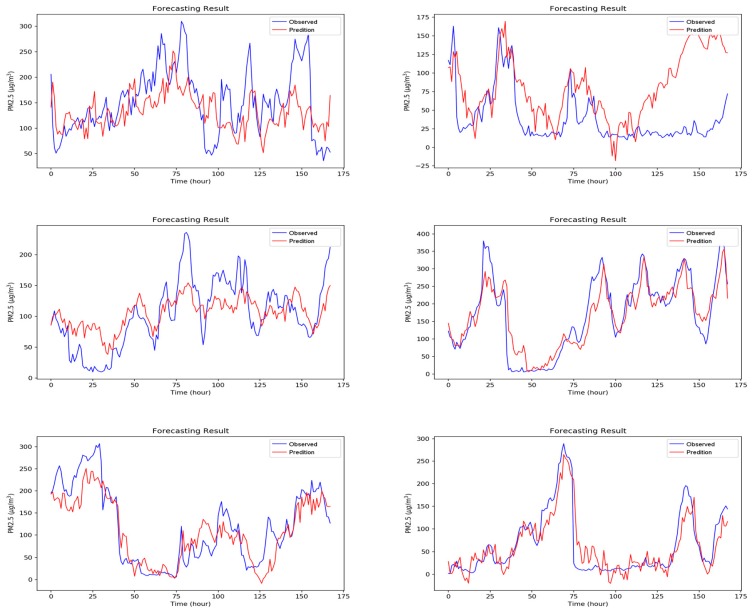
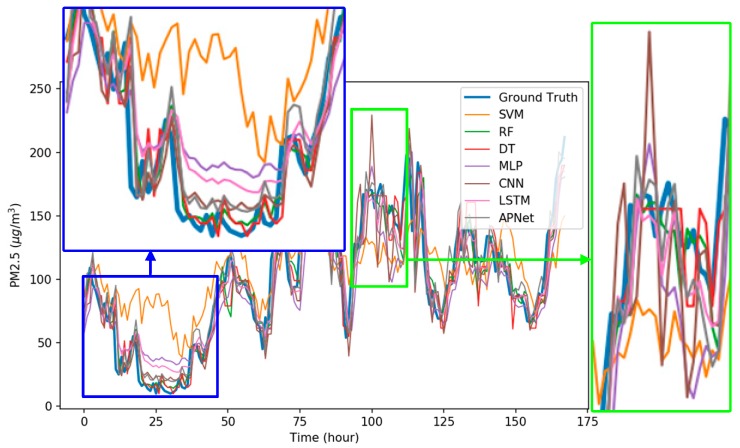
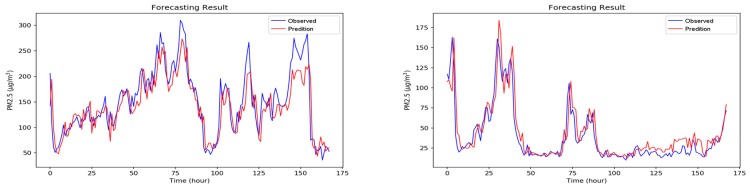
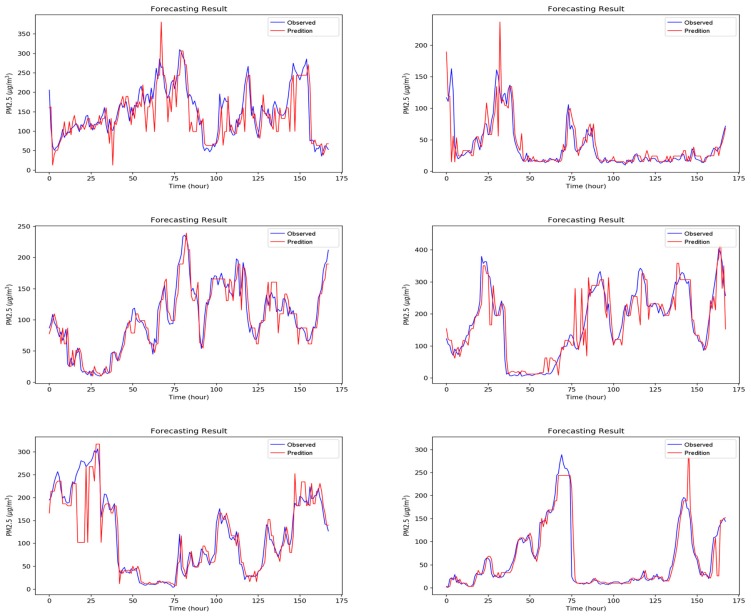
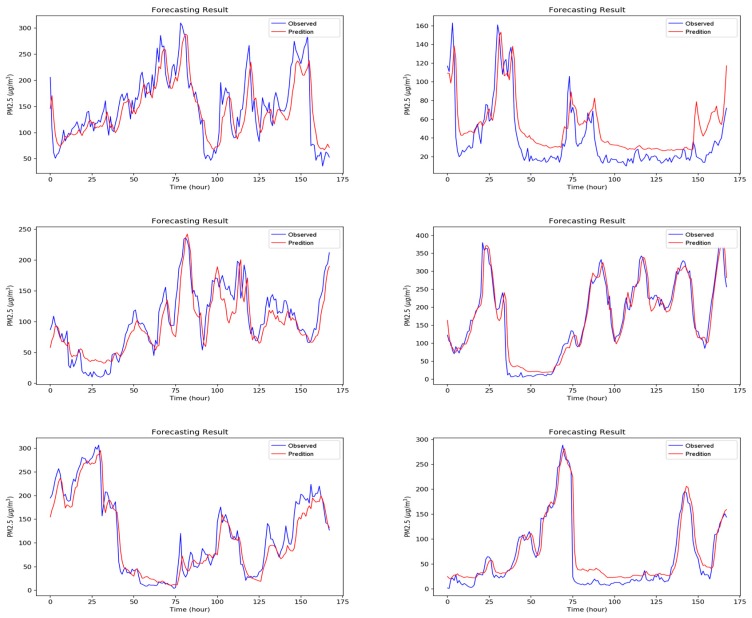
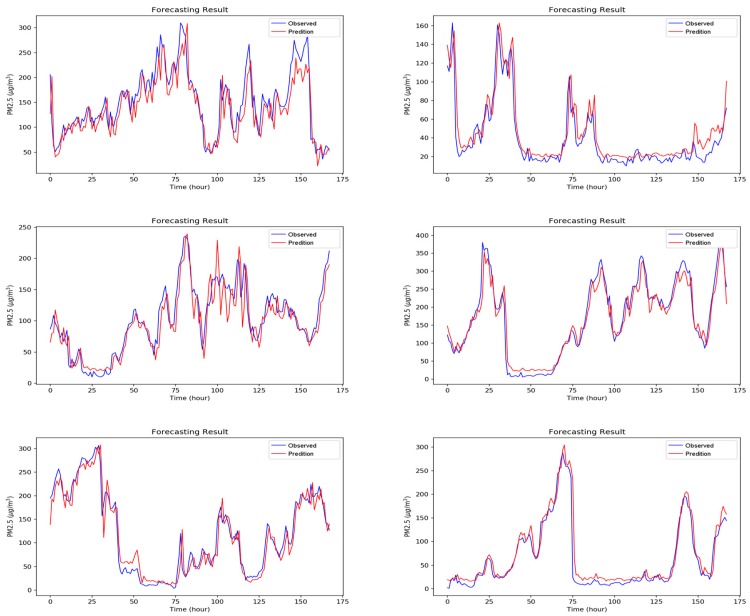
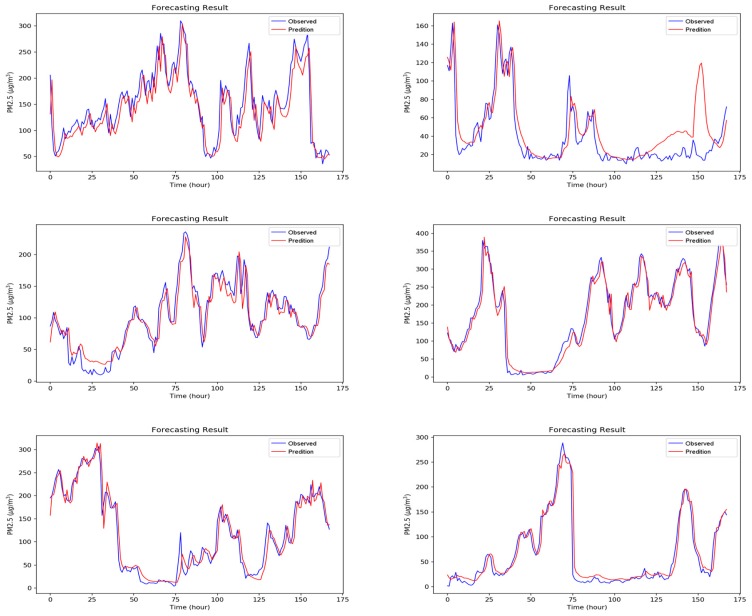
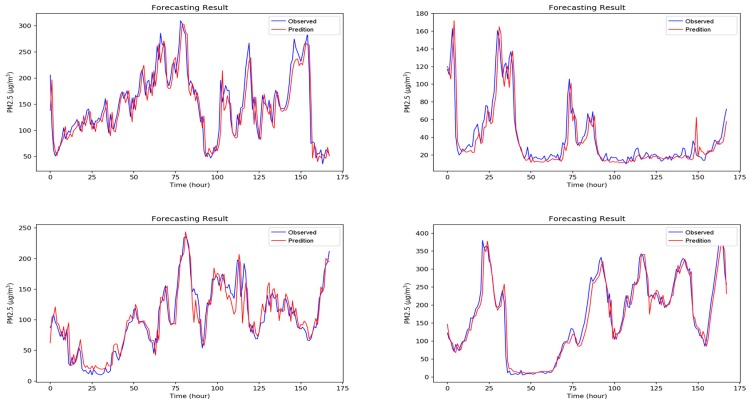
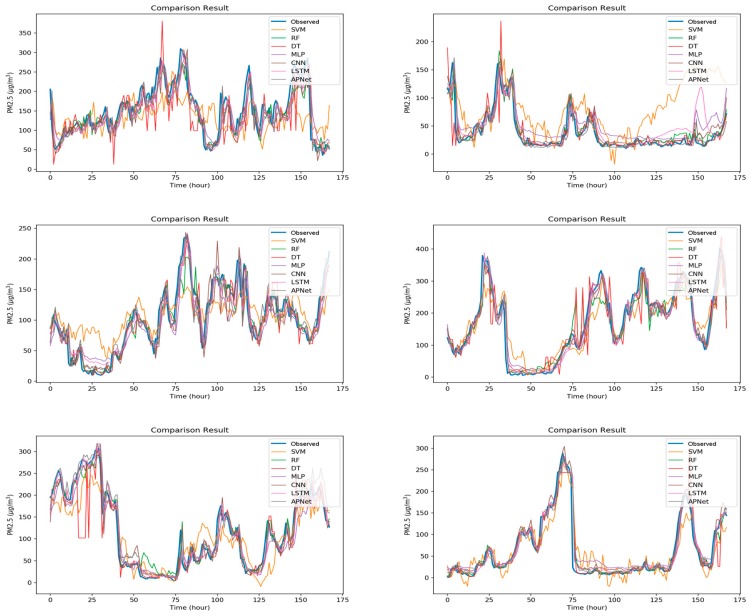
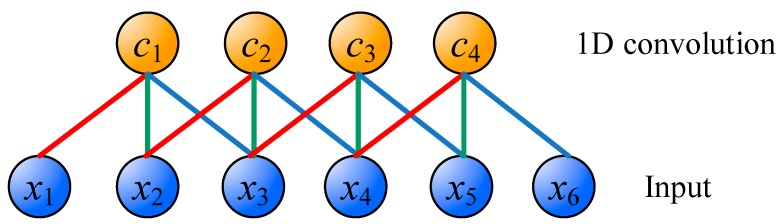
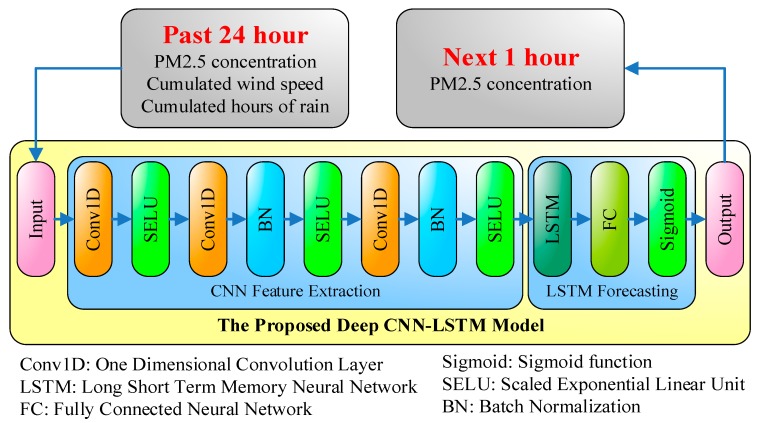
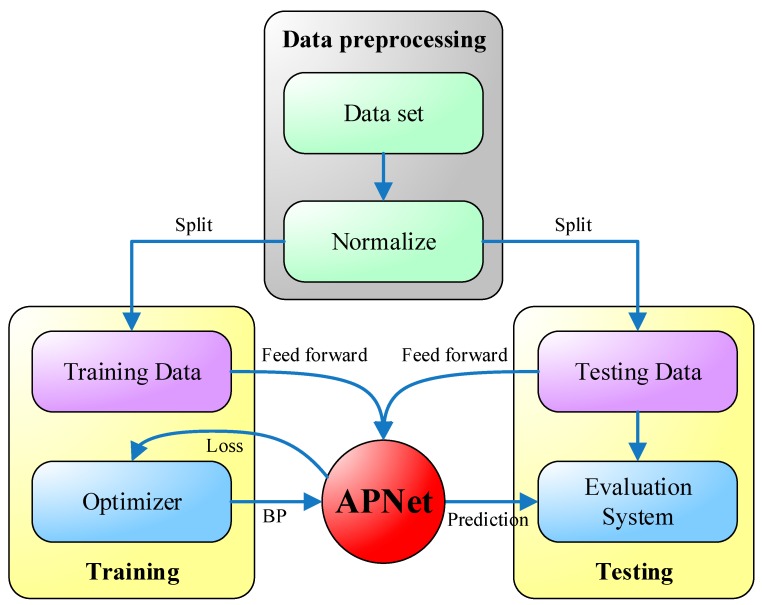
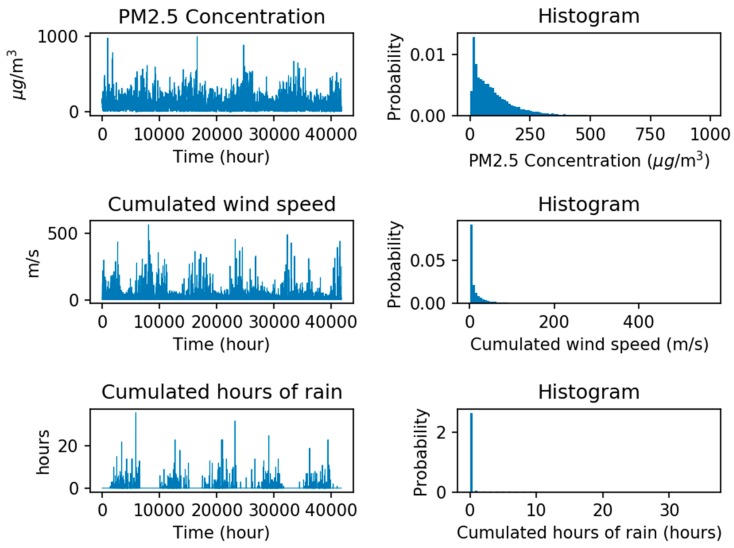
In modern society, air pollution is an important topic as this pollution exerts a critically bad influence on human health and the environment. Among air pollutants, Particulate Matter (PM) consists of suspended particles with a diameter equal to or less than 2.5 μm. Sources of PM can be coal-fired power generation, smoke, or dusts. These suspended particles in the air can damage the respiratory and cardiovascular systems of the human body, which may further lead to other diseases such as asthma, lung cancer, or cardiovascular diseases. To monitor and estimate the PM concentration, Convolutional Neural Network (CNN) and Long Short-Term Memory (LSTM) are combined and applied to the PM forecasting system. To compare the overall performance of each algorithm, four measurement indexes, Mean Absolute Error (MAE), Root Mean Square Error (RMSE) Pearson correlation coefficient and Index of Agreement (IA) are applied to the experiments in this paper. Compared with other machine learning methods, the experimental results showed that the forecasting accuracy of the proposed CNN-LSTM model (APNet) is verified to be the highest in this paper. For the CNN-LSTM model, its feasibility and practicability to forecast the PM concentration are also verified in this paper. The main contribution of this paper is to develop a deep neural network model that integrates the CNN and LSTM architectures, and through historical data such as cumulated hours of rain, cumulated wind speed and PM concentration. In the future, this study can also be applied to the prevention and control of PM.
在现代社会,空气污染是一个重要的话题,因为这种污染对人类健康和环境产生了极其恶劣的影响。在空气污染物中,颗粒物(PM)由直径等于或小于 2.5μm 的悬浮颗粒组成。PM 的来源可以是火力发电、烟雾或粉尘。空气中的这些悬浮颗粒会损害人体的呼吸系统和心血管系统,进而可能导致哮喘、肺癌或心血管疾病等其他疾病。为了监测和估计 PM 浓度,将卷积神经网络(CNN)和长短期记忆(LSTM)相结合,并应用于 PM 预测系统。为了比较每种算法的整体性能,本文实验应用了四个测量指标,即平均绝对误差(MAE)、均方根误差(RMSE)、皮尔逊相关系数和吻合指数(IA)。与其他机器学习方法相比,实验结果表明,本文提出的 CNN-LSTM 模型(APNet)的预测精度最高。对于 CNN-LSTM 模型,本文还验证了其通过累积降雨小时数、累积风速和 PM 浓度等历史数据预测 PM 浓度的可行性和实用性。本文的主要贡献是开发了一种深度神经网络模型,该模型集成了 CNN 和 LSTM 架构,通过累积降雨小时数、累积风速和 PM 浓度等历史数据。在未来,这项研究还可以应用于 PM 的防控。