Bulanda Edyta, Wypych Tomasz P
Laboratory of Host-Microbiota Interactions, Nencki Institute of Experimental Biology, Polish Academy of Sciences, Warsaw, Poland.
Front Microbiol. 2022 May 3;13:857418. doi: 10.3389/fmicb.2022.857418. eCollection 2022.
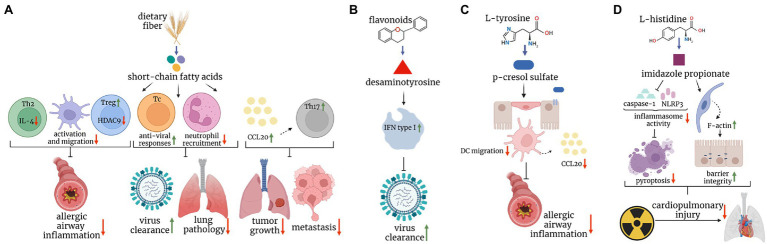
The gut microbiome engages in constant interactions with the immune system, laying down the fundamentals of what we perceive as health or disease. The gut microbiota acts locally in the intestines and distally in other organs, such as the lungs. This influence (termed "the gut-lung axis") constitutes the basis for harnessing the microbiome to prevent or treat chronic respiratory diseases. Within this context, two approaches gained the most attention: the diet interventions (which shape the microbiome) and the probiotics (which exert beneficial effects directly on the host). Microbial products, which constitute a means of communication along the gut-lung axis, are only now emerging as a new class of potential therapeutics. Here, we provide a comprehensive overview of microbial products active in the airways, describe the immunological mechanisms they trigger, and discuss their clinical advantages and pitfalls.
肠道微生物群与免疫系统持续相互作用,奠定了我们所认为的健康或疾病的基础。肠道微生物群在肠道局部发挥作用,并在肺部等其他器官产生远程影响。这种影响(称为“肠-肺轴”)构成了利用微生物群预防或治疗慢性呼吸道疾病的基础。在此背景下,两种方法最受关注:饮食干预(塑造微生物群)和益生菌(直接对宿主产生有益影响)。微生物产物作为沿肠-肺轴的一种通讯方式,目前才作为一类新的潜在治疗手段出现。在这里,我们全面概述了在气道中起作用的微生物产物,描述了它们触发的免疫机制,并讨论了它们的临床优势和缺陷。