Department of Microbiology, University of Pennsylvania, Philadelphia, PA 19104.
Penn Center for Research on Coronaviruses and Other Emerging Pathogens, Perelman School of Medicine, University of Pennsylvania, Philadelphia, PA 19104.
Proc Natl Acad Sci U S A. 2022 May 24;119(21):e2123208119. doi: 10.1073/pnas.2123208119. Epub 2022 May 20.
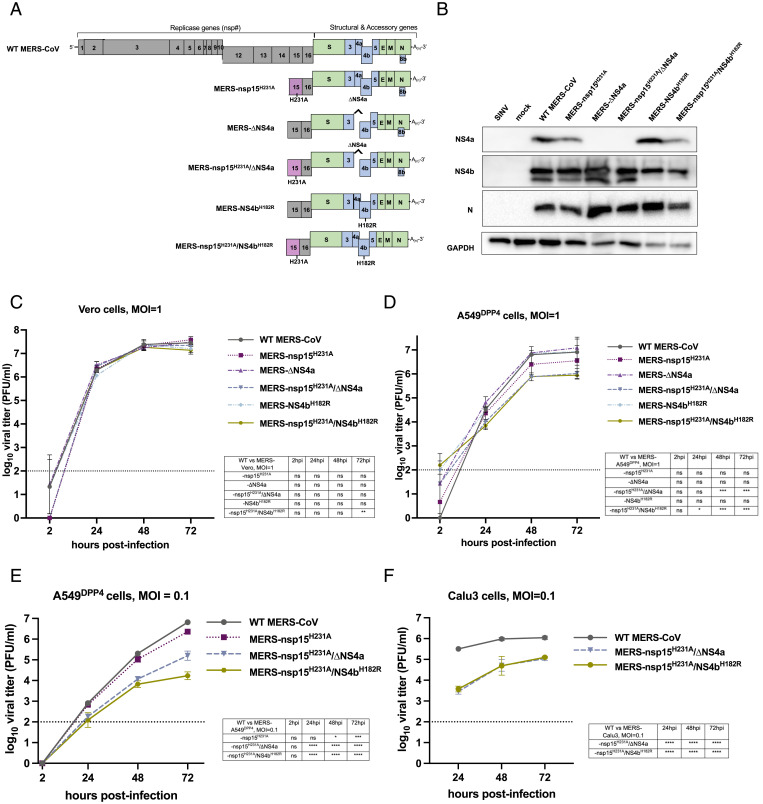
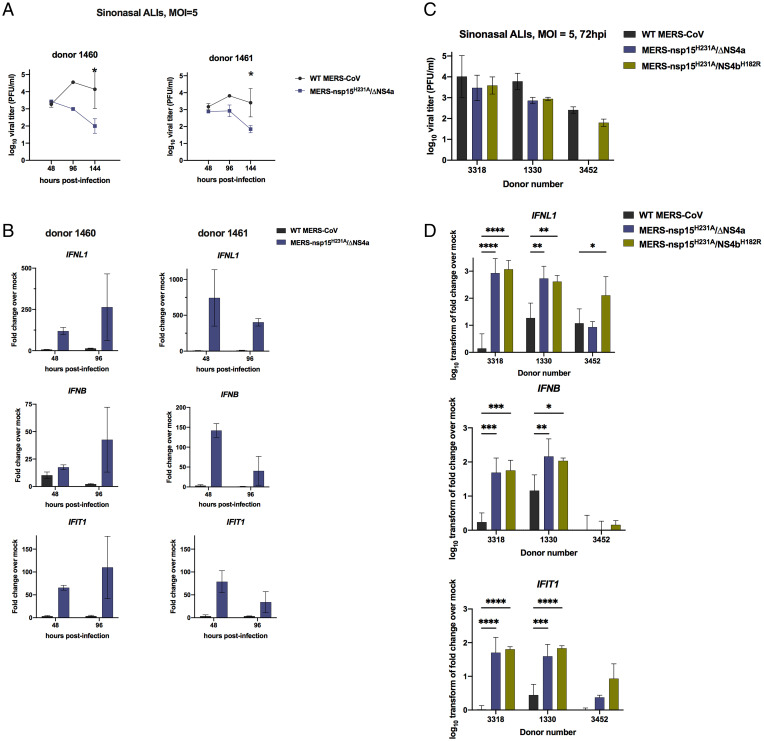
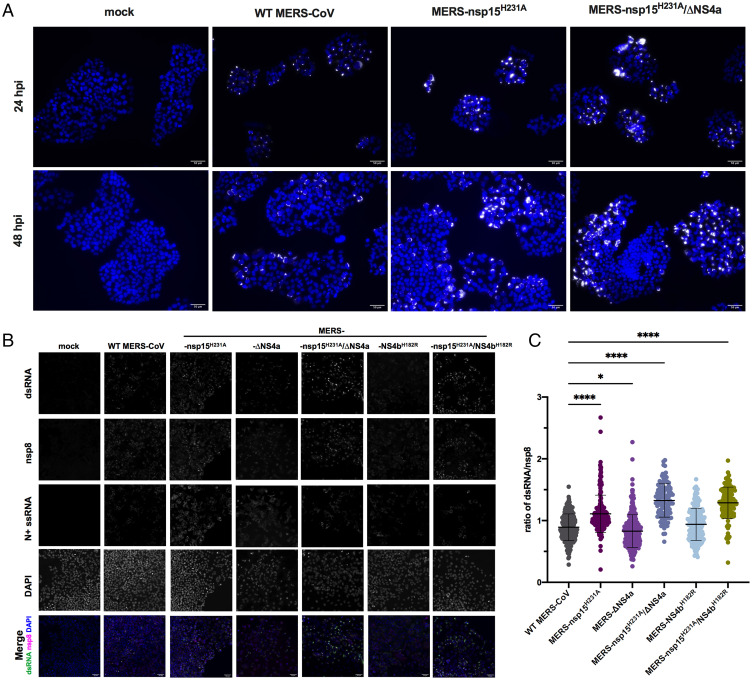
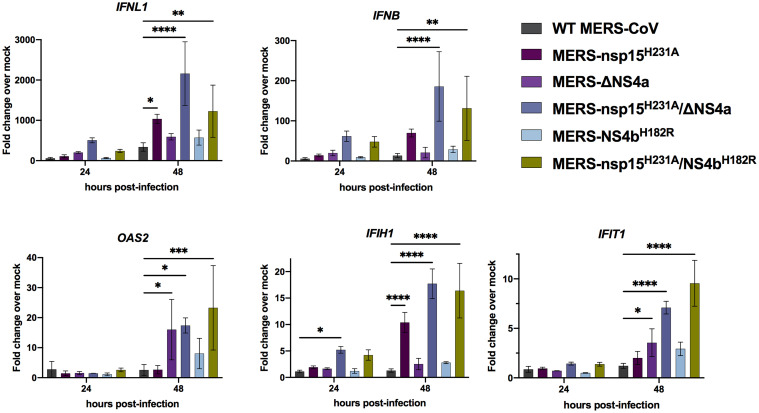
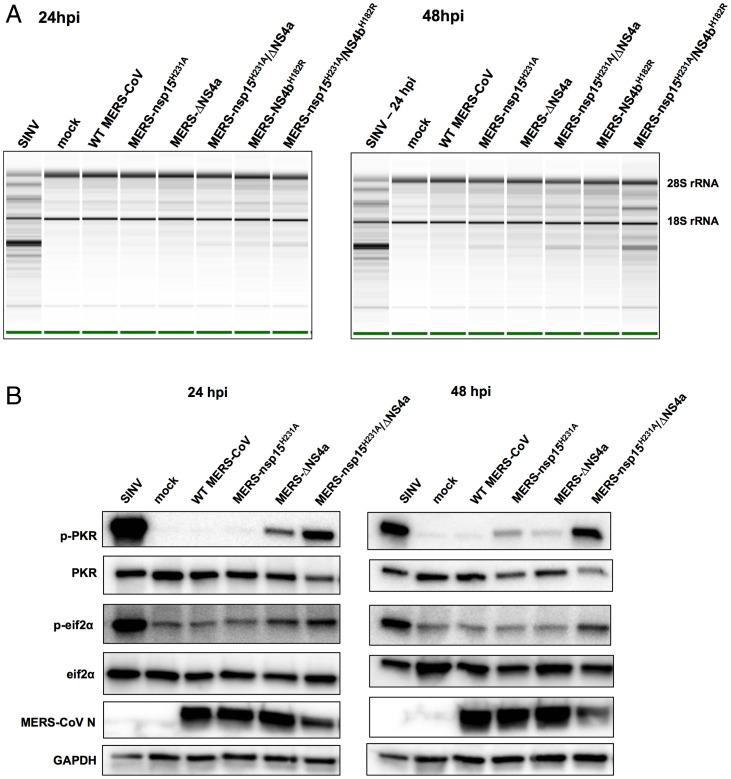
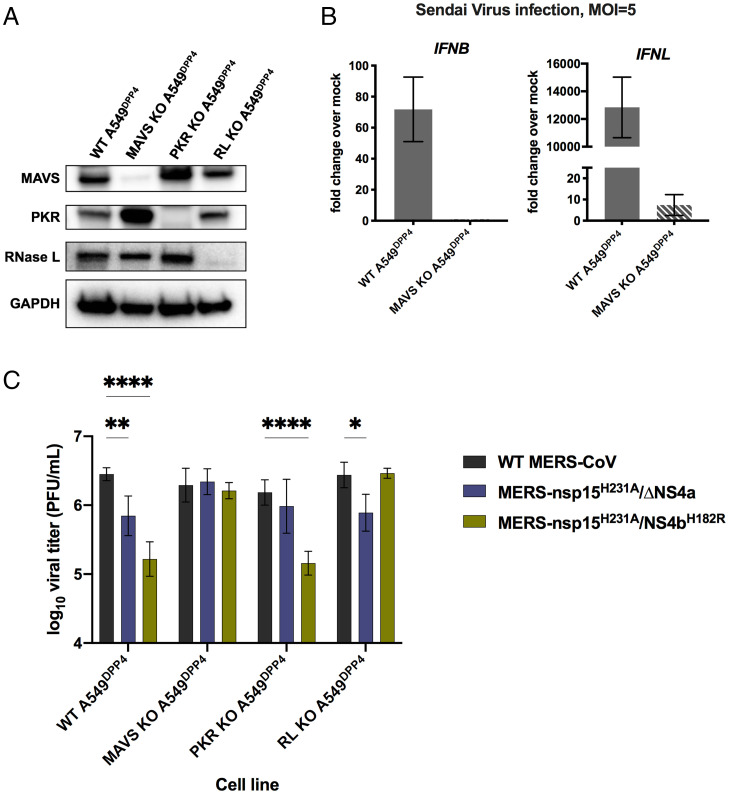
Middle East respiratory syndrome coronavirus (MERS-CoV) emerged into humans in 2012, causing highly lethal respiratory disease. The severity of disease may be, in part, because MERS-CoV is adept at antagonizing early innate immune pathways—interferon (IFN) production and signaling, protein kinase R (PKR), and oligoadenylate synthetase/ribonuclease L (OAS/RNase L)—activated in response to viral double-stranded RNA (dsRNA) generated during genome replication. This is in contrast to severe acute respiratory syndrome CoV-2 (SARS-CoV-2), which we recently reported to activate PKR and RNase L and, to some extent, IFN signaling. We previously found that MERS-CoV accessory proteins NS4a (dsRNA binding protein) and NS4b (phosphodiesterase) could weakly suppress these pathways, but ablation of each had minimal effect on virus replication. Here we investigated the antagonist effects of the conserved coronavirus endoribonuclease (EndoU), in combination with NS4a or NS4b. Inactivation of EndoU catalytic activity alone in a recombinant MERS-CoV caused little if any effect on activation of the innate immune pathways during infection. However, infection with recombinant viruses containing combined mutations with inactivation of EndoU and deletion of NS4a or inactivation of the NS4b phosphodiesterase promoted robust activation of dsRNA-induced innate immune pathways. This resulted in at least tenfold attenuation of replication in human lung–derived A549 and primary nasal cells. Furthermore, replication of these recombinant viruses could be rescued to the level of wild-type MERS-CoV by knockout of host immune mediators MAVS, PKR, or RNase L. Thus, EndoU and accessory proteins NS4a and NS4b together suppress dsRNA-induced innate immunity during MERS-CoV infection in order to optimize viral replication.
中东呼吸综合征冠状病毒(MERS-CoV)于 2012 年进入人类,引发高致死性呼吸道疾病。疾病的严重程度可能部分归因于 MERS-CoV 擅长拮抗早期先天免疫途径——干扰素(IFN)产生和信号转导、蛋白激酶 R(PKR)和寡聚腺苷酸合成酶/核糖核酸酶 L(OAS/RNase L)——这些途径是在病毒基因组复制过程中产生的双链 RNA(dsRNA)的刺激下激活的。这与我们最近报道的严重急性呼吸综合征冠状病毒 2(SARS-CoV-2)不同,SARS-CoV-2 激活 PKR 和 RNase L,并在一定程度上激活 IFN 信号转导。我们之前发现,MERS-CoV 辅助蛋白 NS4a(dsRNA 结合蛋白)和 NS4b(磷酸二酯酶)可以弱抑制这些途径,但每个蛋白的缺失对病毒复制的影响最小。在这里,我们研究了保守的冠状病毒内切核酸酶(EndoU)与 NS4a 或 NS4b 联合的拮抗作用。在重组 MERS-CoV 中单独失活 EndoU 的催化活性在感染过程中对先天免疫途径的激活几乎没有影响。然而,感染含有联合突变的重组病毒,即 EndoU 失活和 NS4a 缺失或 NS4b 磷酸二酯酶失活,可显著激活 dsRNA 诱导的先天免疫途径。这导致人肺衍生的 A549 和原代鼻腔细胞中的复制至少减少了十倍。此外,通过敲除宿主免疫调节剂 MAVS、PKR 或 RNase L,这些重组病毒的复制可以恢复到野生型 MERS-CoV 的水平。因此,EndoU 和辅助蛋白 NS4a 和 NS4b 共同抑制 MERS-CoV 感染过程中 dsRNA 诱导的先天免疫,以优化病毒复制。