University of Navarra, Tecnun School of Engineering, Manuel de Lardizábal, San Sebastian, Spain.
University of Navarra, Biomedical Engineering Center, Campus Universitario, Pamplona, Spain.
Elife. 2022 May 23;11:e77204. doi: 10.7554/eLife.77204.
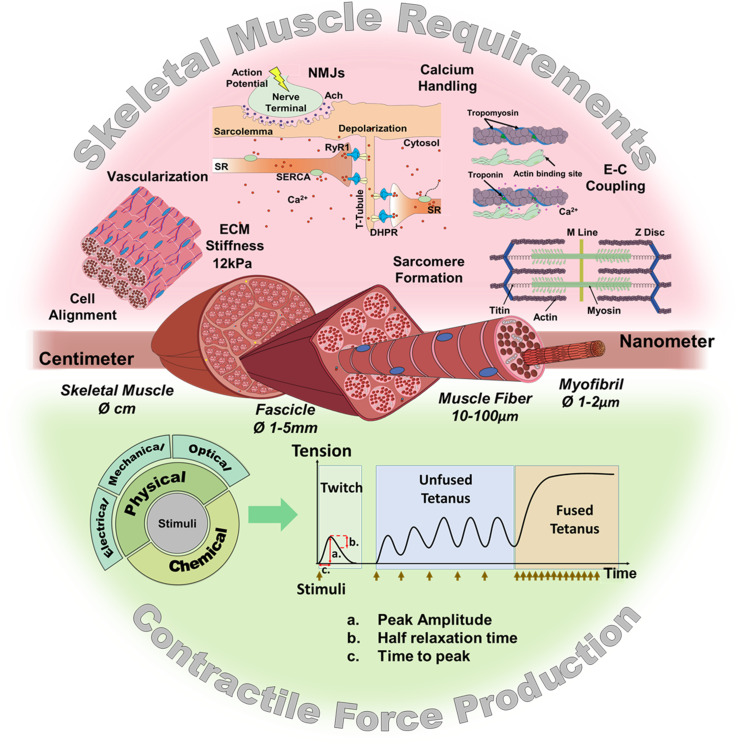
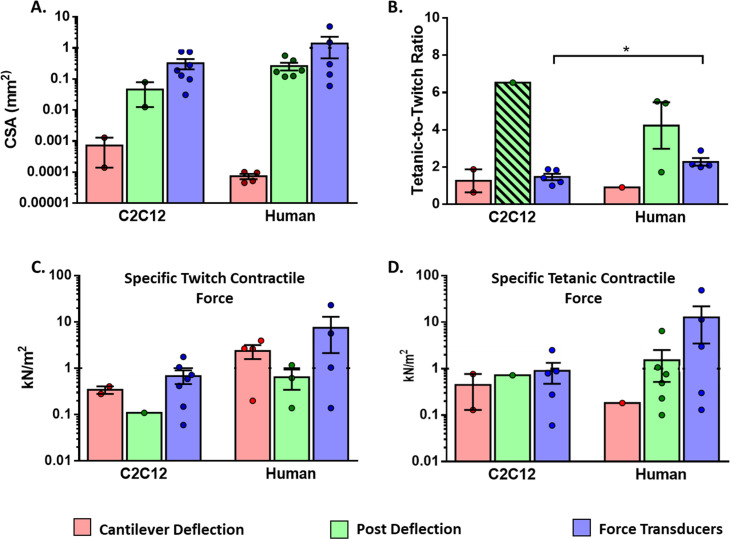
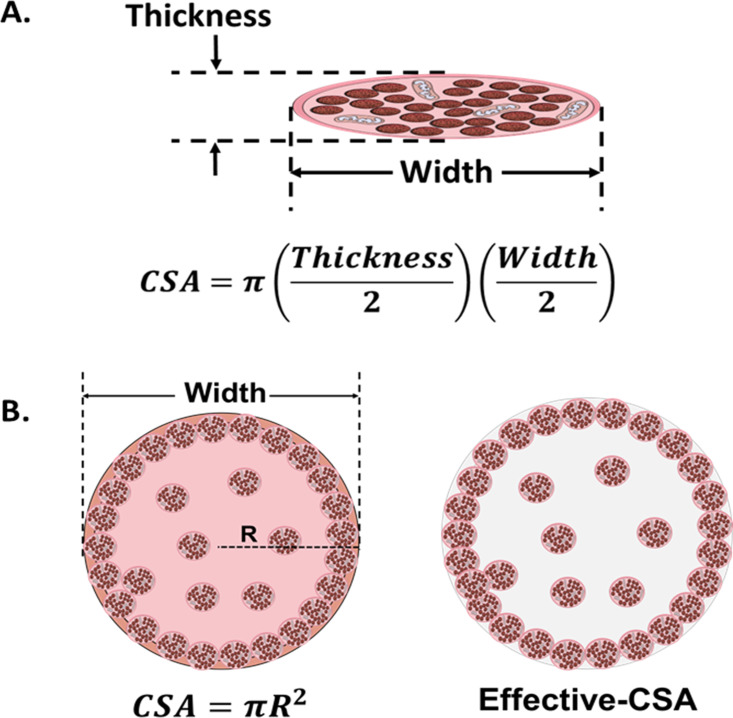
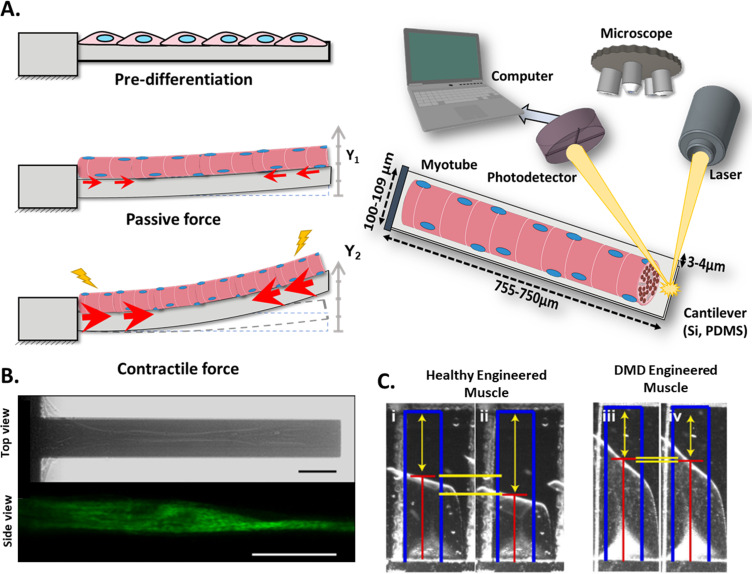
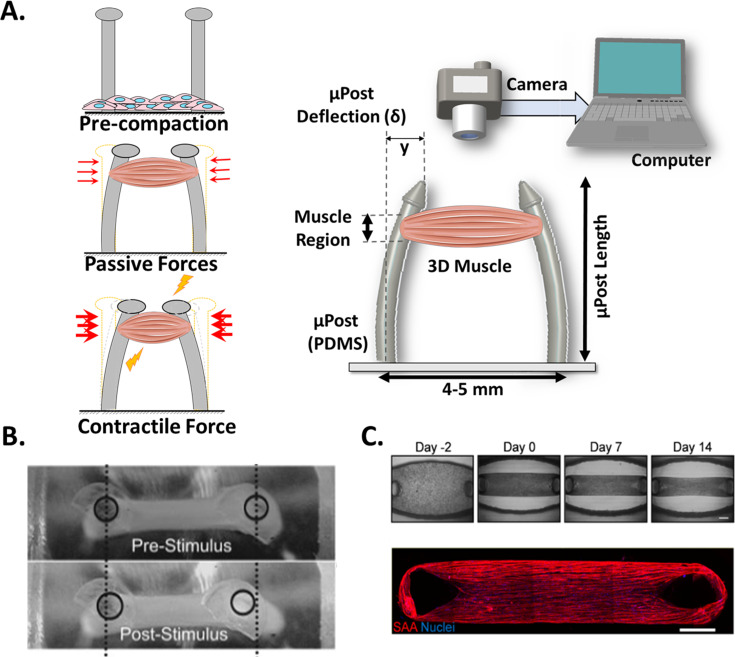
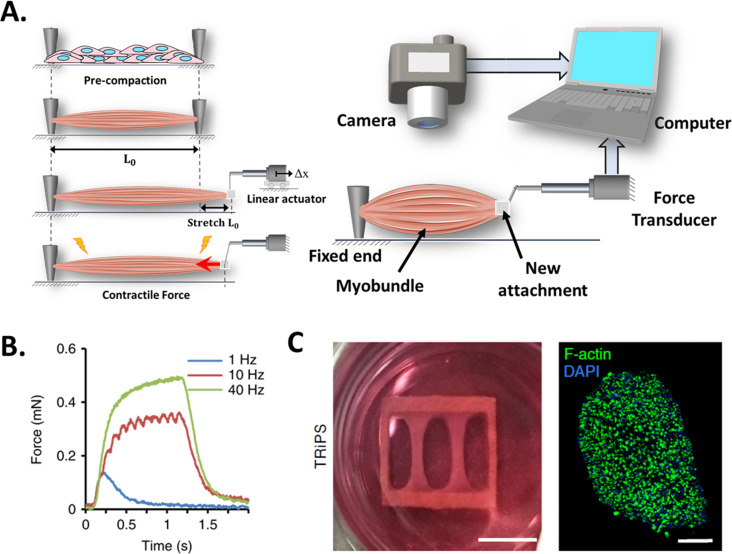
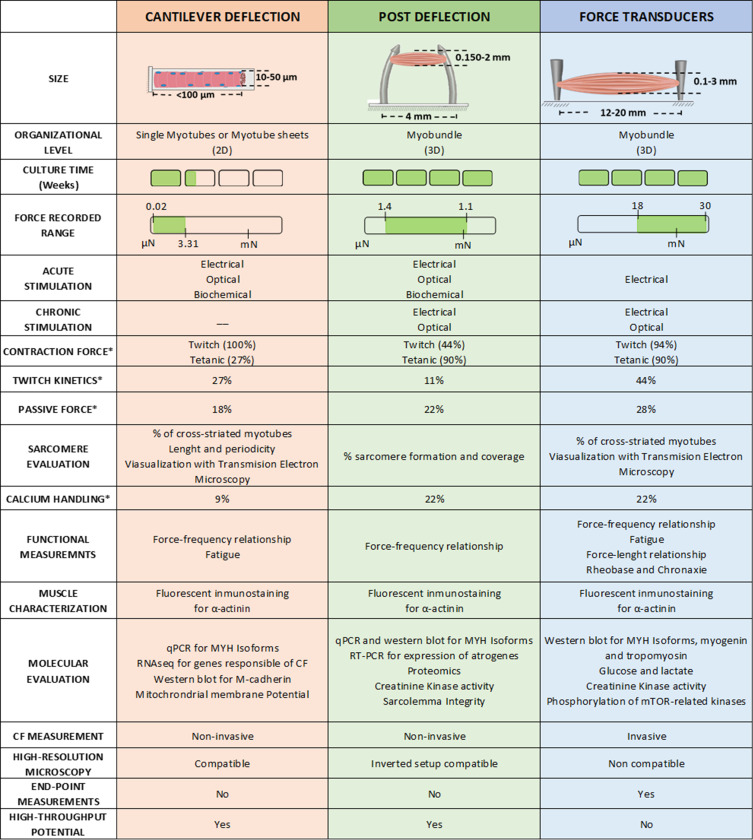
Over the last few years, there has been growing interest in measuring the contractile force (CF) of engineered muscle tissues to evaluate their functionality. However, there are still no standards available for selecting the most suitable experimental platform, measuring system, culture protocol, or stimulation patterns. Consequently, the high variability of published data hinders any comparison between different studies. We have identified that cantilever deflection, post deflection, and force transducers are the most commonly used configurations for CF assessment in 2D and 3D models. Additionally, we have discussed the most relevant emerging technologies that would greatly complement CF evaluation with intracellular and localized analysis. This review provides a comprehensive analysis of the most significant advances in CF evaluation and its critical parameters. In order to compare contractile performance across experimental platforms, we have used the specific force (sF, kN/m), CF normalized to the calculated cross-sectional area (CSA). However, this parameter presents a high variability throughout the different studies, which indicates the need to identify additional parameters and complementary analysis suitable for proper comparison. We propose that future contractility studies in skeletal muscle constructs report detailed information about construct size, contractile area, maturity level, sarcomere length, and, ideally, the tetanus-to-twitch ratio. These studies will hopefully shed light on the relative impact of these variables on muscle force performance of engineered muscle constructs. Prospective advances in muscle tissue engineering, particularly in muscle disease models, will require a joint effort to develop standardized methodologies for assessing CF of engineered muscle tissues.
在过去的几年中,人们对测量工程肌肉组织的收缩力 (CF) 以评估其功能越来越感兴趣。然而,仍然没有可供选择的标准,例如最适合的实验平台、测量系统、培养方案或刺激模式。因此,发表数据的高度可变性阻碍了不同研究之间的任何比较。我们已经确定,在 2D 和 3D 模型中,悬臂挠度、后挠度和力传感器是用于 CF 评估的最常用配置。此外,我们还讨论了最相关的新兴技术,这些技术将极大地补充细胞内和局部分析的 CF 评估。
本篇综述全面分析了 CF 评估及其关键参数的最重要进展。为了跨实验平台比较收缩性能,我们使用比力(specific force,sF,kN/m),即 CF 除以计算出的横截面积(CSA)。然而,该参数在不同研究中存在很大的可变性,这表明需要确定其他合适的参数和补充分析方法,以进行适当的比较。
我们建议未来的骨骼肌构建体收缩性研究报告有关构建体大小、收缩面积、成熟度水平、肌节长度的详细信息,理想情况下还报告强直刺激比。这些研究将有望揭示这些变量对工程肌肉构建体肌肉力量性能的相对影响。
肌肉组织工程的预期进展,特别是在肌肉疾病模型中,将需要共同努力制定评估工程肌肉组织 CF 的标准化方法。