Alesci Alessio, Cicero Nicola, Fumia Angelo, Petrarca Claudia, Mangifesta Rocco, Nava Vincenzo, Lo Cascio Patrizia, Gangemi Sebastiano, Di Gioacchino Mario, Lauriano Eugenia Rita
Department of Chemical, Biological, Pharmaceutical and Environmental Sciences, University of Messina, Viale Stagno d'Alcontres 31, 98166 Messina, Italy.
Department of Biomedical and Dental Science and Morphofunctional Imaging, University of Messina, Via Consolare Valeria, 98125 Messina, Italy.
Toxics. 2022 Apr 27;10(5):218. doi: 10.3390/toxics10050218.
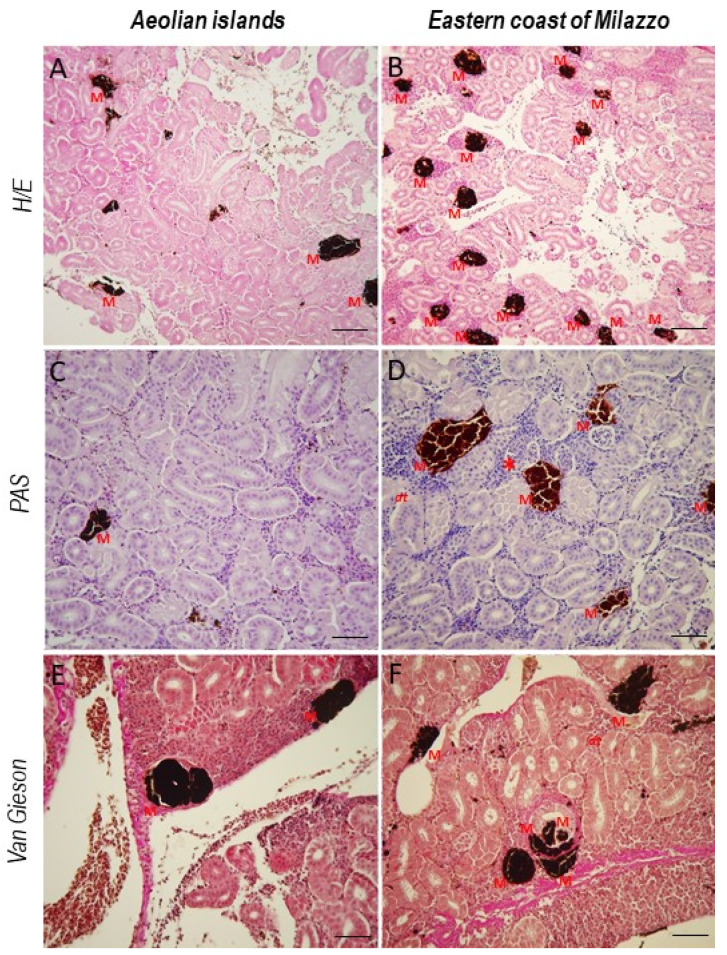
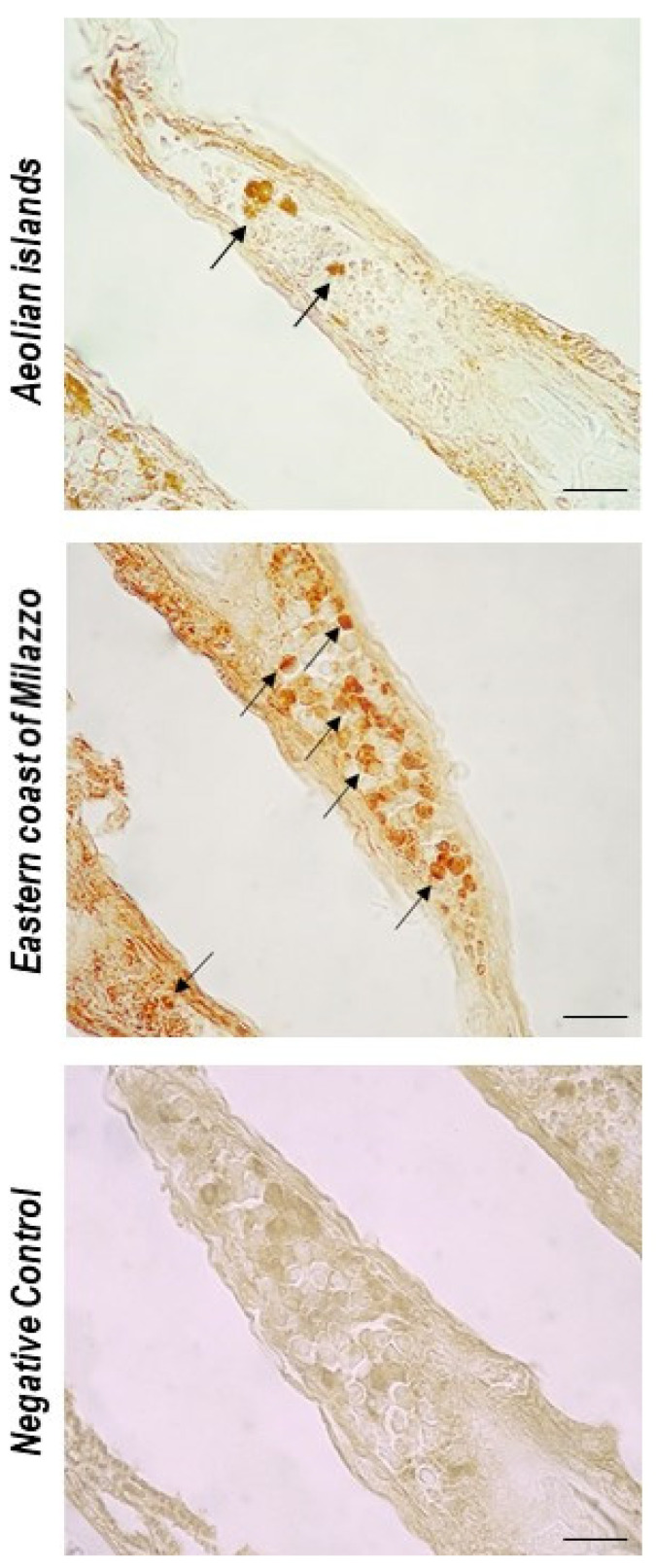
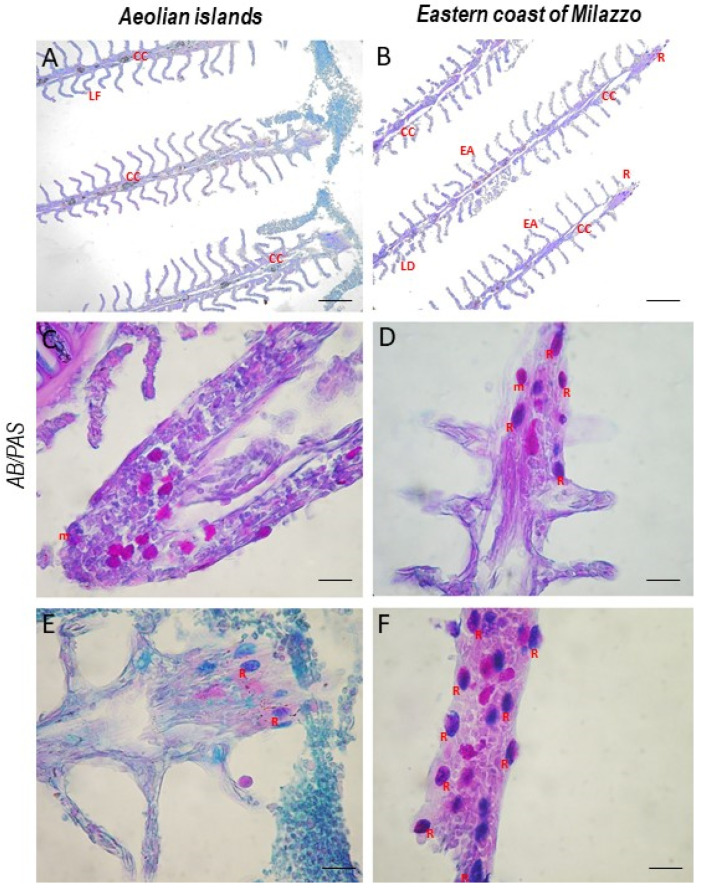
Industrialization has resulted in a massive increase in garbage output, which is frequently discharged or stored in waterways like rivers and seas. Due to their toxicity, durability, bioaccumulation, and biomagnification, heavy metals (such as mercury, cadmium, and lead) have been identified as strong biological poisons. Their presence in the aquatic environment has the potential to affect water quality parameters and aquatic life in general. Teleosts' histopathology provides a sensitive indicator of pollutant-induced stress, because their organs have a central role in the transformation of different active chemical compounds in the aquatic environment. In particular, the gills, kidneys, and liver are placed at the center of toxicological studies. The purpose of this study is to examine the morphological changes caused by heavy metals in the kidney and gills of , with a focus on melanomacrophages centers (MMCs) and rodlet cells (RCs) as environmental biomarkers, using histological and histochemical stainings (hematoxylin/eosin, Van Gieson trichrome, Periodic Acid Schiff reaction, and Alcian Blue/PAS 2.5), and immunoperoxidase methods. Our findings show an increase of MMCs and RCs linked to higher exposure to heavy metals, confirming the role of these aggregates and cells as reliable biomarkers of potential aquatic environmental changes reflected in fish fauna. The cytological study of RCs and MMCs could be important in gaining a better understanding of the complicated immune systems of teleosts.
工业化导致垃圾产量大幅增加,这些垃圾经常被排放或储存在河流和海洋等水道中。由于重金属(如汞、镉和铅)具有毒性、持久性、生物累积性和生物放大性,它们已被确认为强大的生物毒素。它们在水生环境中的存在可能会影响水质参数和整个水生生物。硬骨鱼的组织病理学提供了一个敏感的指标,用于衡量污染物引起的应激,因为它们的器官在水生环境中不同活性化合物的转化过程中起着核心作用。特别是,鳃、肾脏和肝脏是毒理学研究的重点。本研究的目的是使用组织学和组织化学染色(苏木精/伊红、范吉森三色染色、过碘酸希夫反应和阿尔辛蓝/过碘酸希夫2.5)以及免疫过氧化物酶方法,研究重金属对[鱼的种类未提及]肾脏和鳃造成的形态变化,重点关注作为环境生物标志物的黑色素巨噬细胞中心(MMCs)和小杆细胞(RCs)。我们的研究结果表明,MMCs和RCs的增加与更高的重金属暴露有关,证实了这些聚集体和细胞作为鱼类动物群中潜在水生环境变化可靠生物标志物的作用。对RCs和MMCs的细胞学研究对于更好地理解硬骨鱼复杂的免疫系统可能很重要。