Ding Peng, Tan Qiyuan, Wei Zhanying, Chen Qiyu, Wang Chun, Qi Luyue, Wen Li, Zhang Changqing, Yao Chen
Department of Orthopedic Surgery, Shanghai Jiaotong University affiliated Sixth People's Hospital, Shanghai, China.
Department of Endocrinology and Metabolism, Shanghai Jiaotong University affiliated Sixth People's Hospital, Shanghai, China.
Bone Res. 2022 May 27;10(1):42. doi: 10.1038/s41413-022-00210-3.
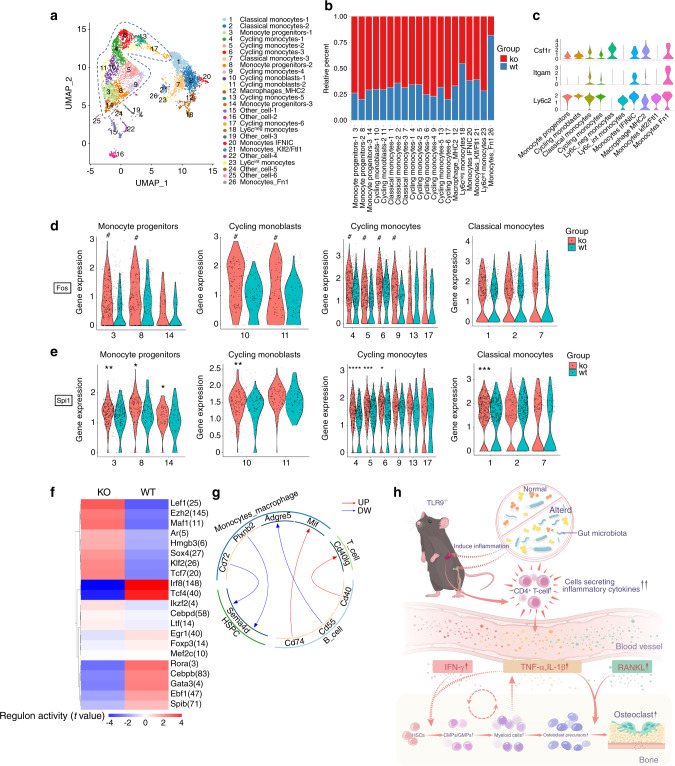
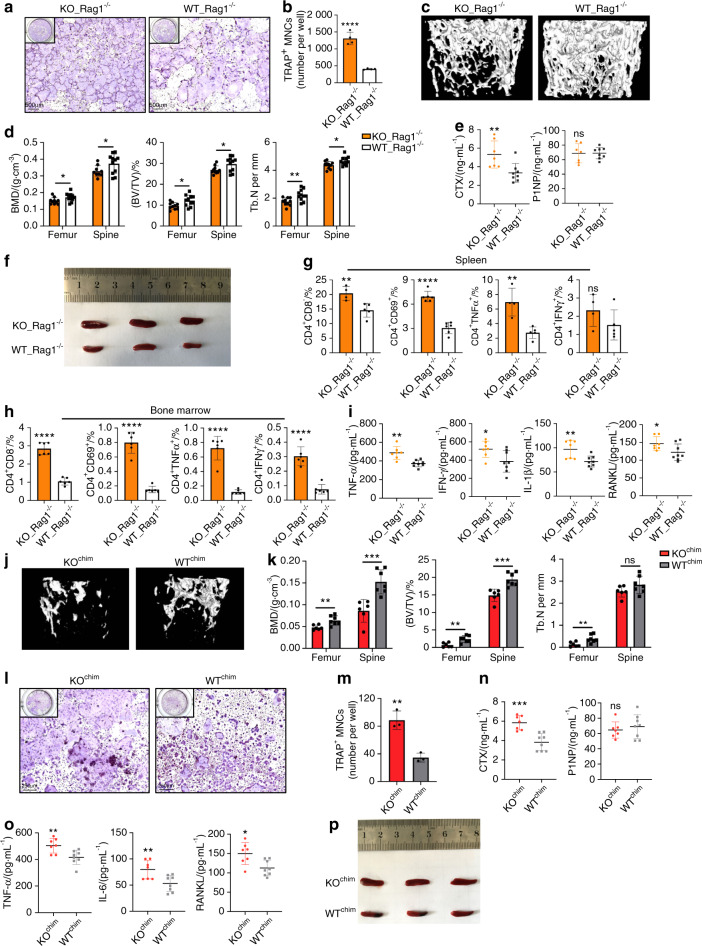
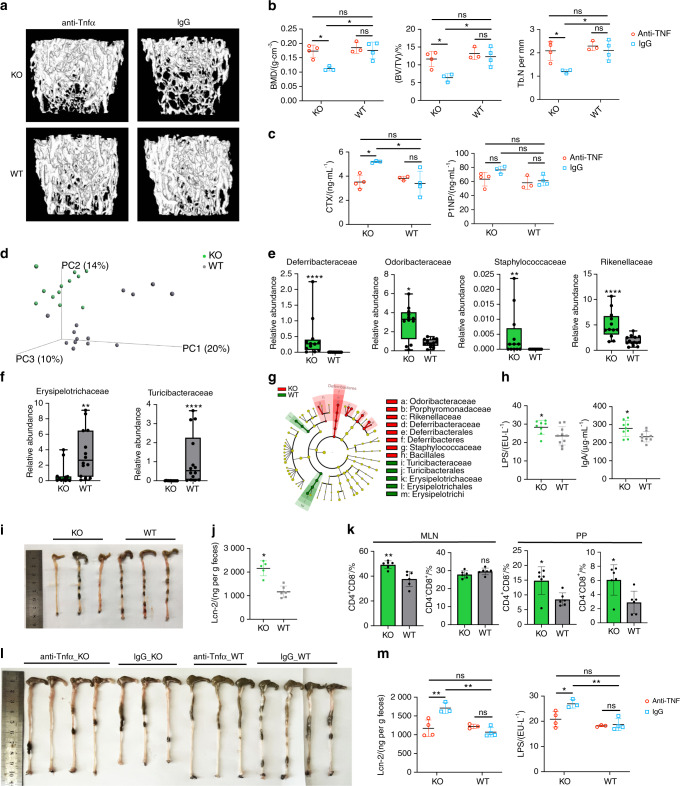
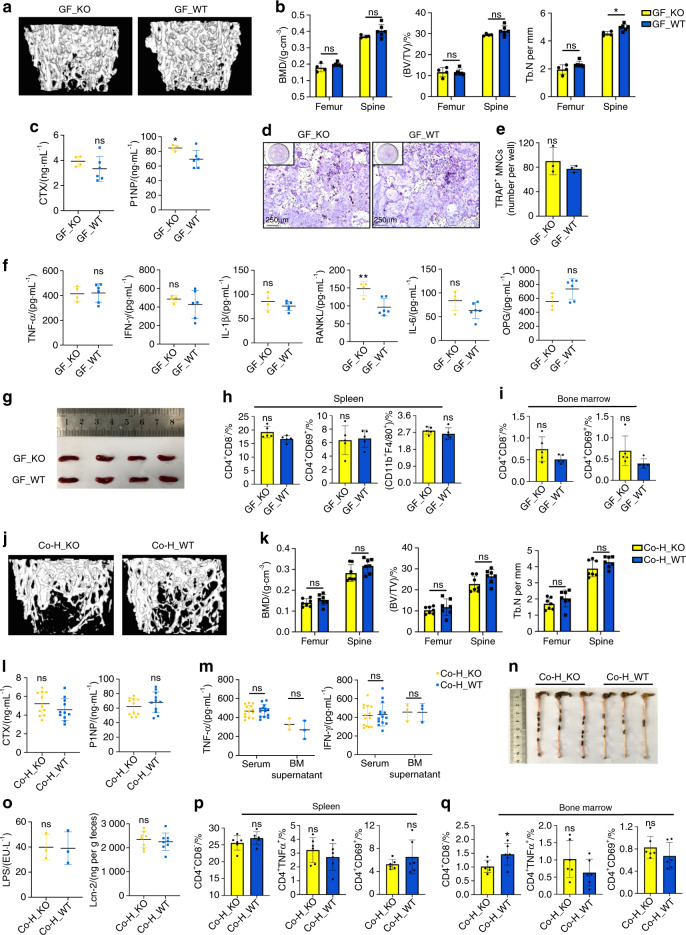
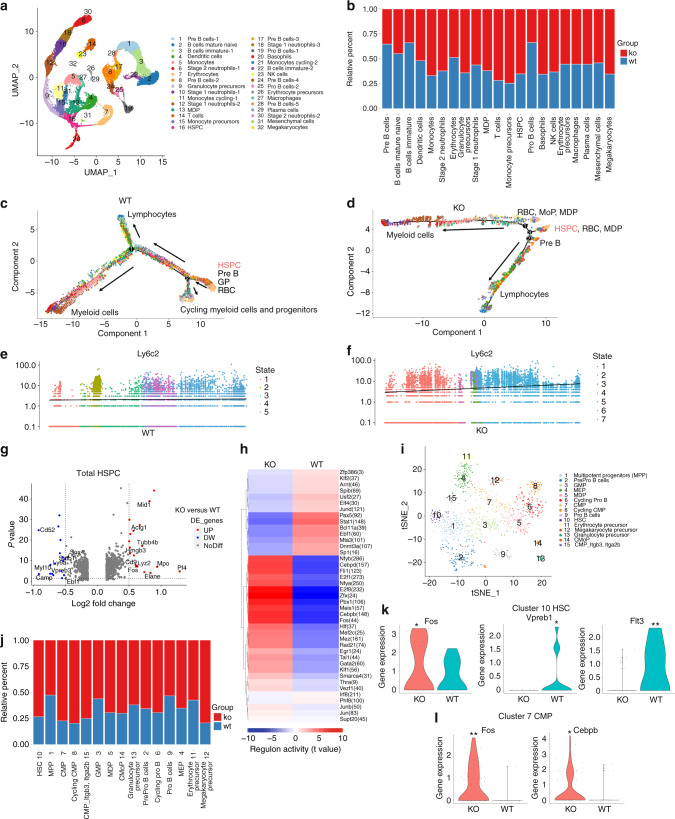
Toll-like receptors (TLRs) play pivotal roles in inflammation and provide important links between the immune and skeletal systems. Although the activation of TLRs may affect osteoclast differentiation and bone metabolism, whether and how TLRs are required for normal bone remodeling remains to be fully explored. In the current study, we show for the first time that TLR9 mice exhibit a low bone mass and low-grade systemic chronic inflammation, which is characterized by the expansion of CD4 T cells and increased levels of inflammatory cytokines, including TNFα, RANKL, and IL1β. The increased levels of these cytokines significantly promote osteoclastogenesis and induce bone loss. Importantly, TLR9 deletion alters the gut microbiota, and this dysbiosis is the basis of the systemic inflammation and bone loss observed in TLR9 mice. Furthermore, through single-cell RNA sequencing, we identified myeloid-biased hematopoiesis in the bone marrow of TLR9 mice and determined that the increase in myelopoiesis, likely caused by the adaptation of hematopoietic stem cells to systemic inflammation, also contributes to inflammation-induced osteoclastogenesis and subsequent bone loss in TLR9 mice. Thus, our study provides novel evidence that TLR9 signaling connects the gut microbiota, immune system, and bone and is critical in maintaining the homeostasis of inflammation, hematopoiesis, and bone metabolism under normal conditions.
Toll样受体(TLRs)在炎症中起关键作用,并在免疫和骨骼系统之间提供重要联系。尽管TLRs的激活可能影响破骨细胞分化和骨代谢,但正常骨重塑是否需要TLRs以及如何需要仍有待充分探索。在本研究中,我们首次表明TLR9基因敲除小鼠表现出低骨量和低度全身性慢性炎症,其特征为CD4 T细胞扩增以及炎性细胞因子水平升高,包括肿瘤坏死因子α(TNFα)、核因子κB受体活化因子配体(RANKL)和白细胞介素1β(IL1β)。这些细胞因子水平的升高显著促进破骨细胞生成并导致骨质流失。重要的是,TLR9缺失会改变肠道微生物群,这种生态失调是TLR9基因敲除小鼠中观察到的全身性炎症和骨质流失的基础。此外,通过单细胞RNA测序,我们在TLR9基因敲除小鼠的骨髓中鉴定出偏向髓系的造血,并确定髓系造血增加,可能是由于造血干细胞适应全身性炎症所致,这也导致了TLR9基因敲除小鼠中炎症诱导的破骨细胞生成和随后的骨质流失。因此,我们的研究提供了新的证据,表明TLR9信号通路连接肠道微生物群、免疫系统和骨骼,并且在正常条件下维持炎症、造血和骨代谢的稳态中至关重要。