Amer Shimaa A, El-Araby Doaa A, Tartor Haitham, Farahat Mahmoud, Goda Nehal I A, Farag Mohamed F M, Fahmy Esraa M, Hassan Aziza M, Abo El-Maati Mohamed F, Osman Ali
Department of Nutrition & Clinical Nutrition, Faculty of Veterinary Medicine, Zagazig University, Zagazig 44511, Egypt.
Department of Fish Health and Management, Central Laboratory for Aquaculture Research (CLAR), Agriculture Research Center, Abbassa, Abo-Hammad, Sharkia 44662, Egypt.
Antioxidants (Basel). 2022 May 10;11(5):937. doi: 10.3390/antiox11050937.
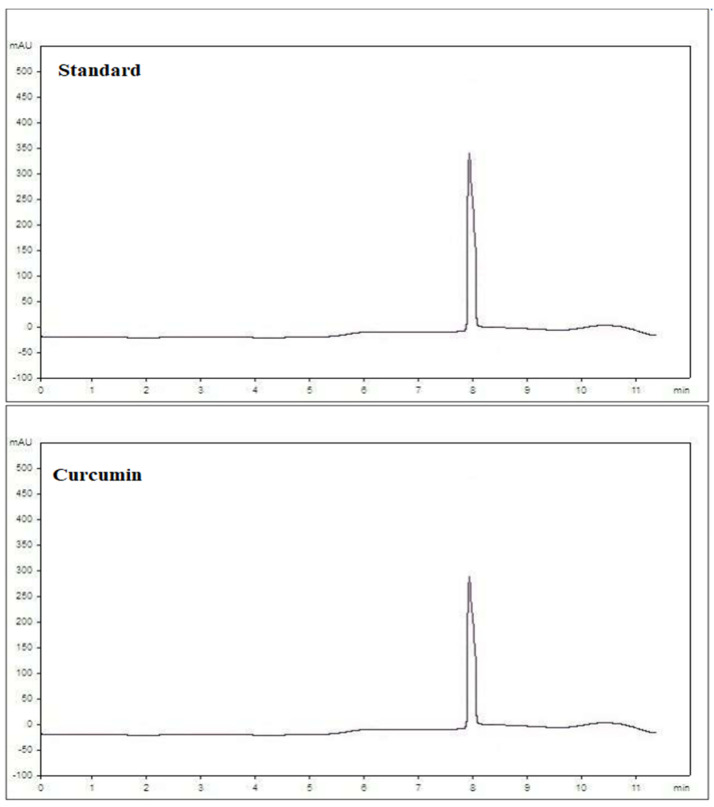
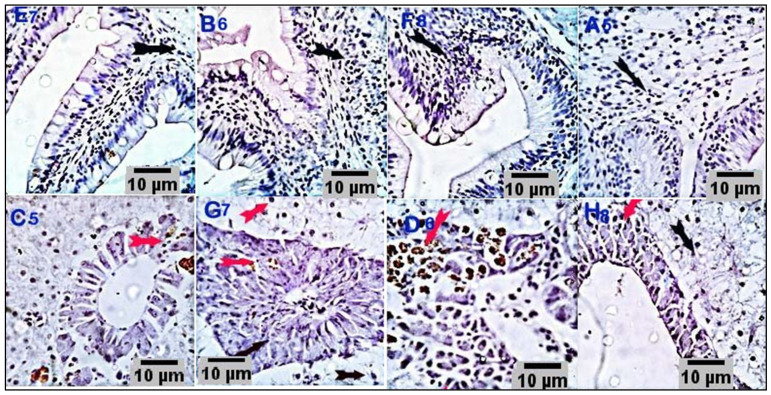
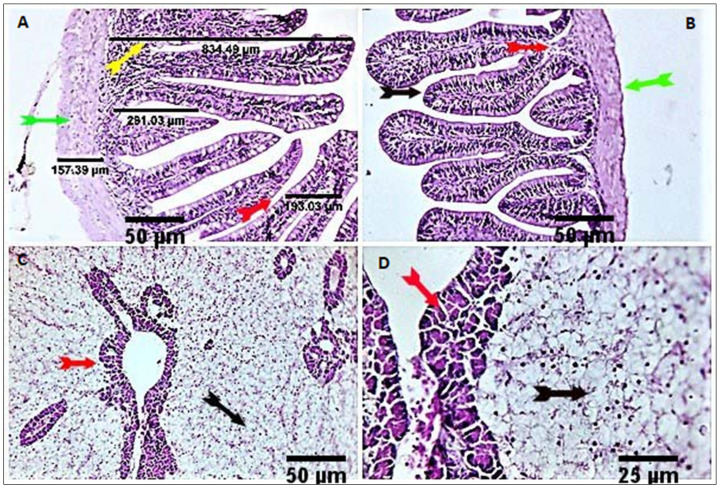
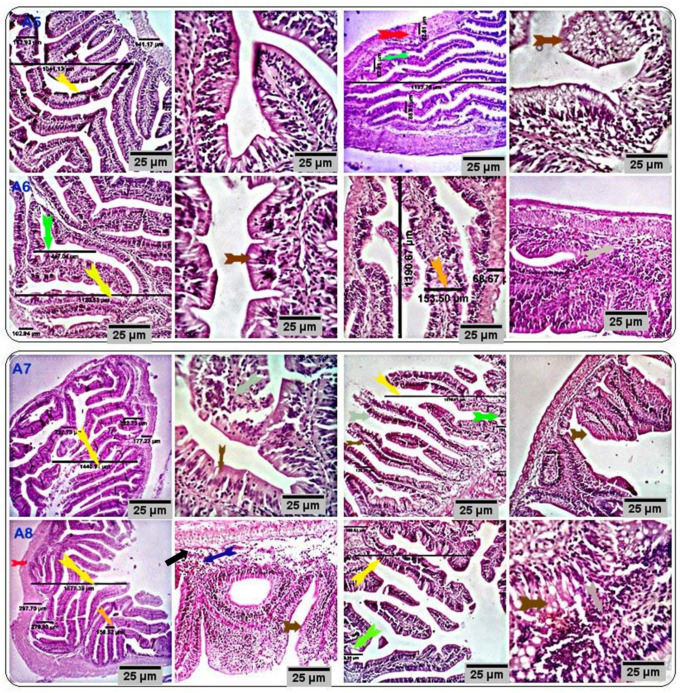
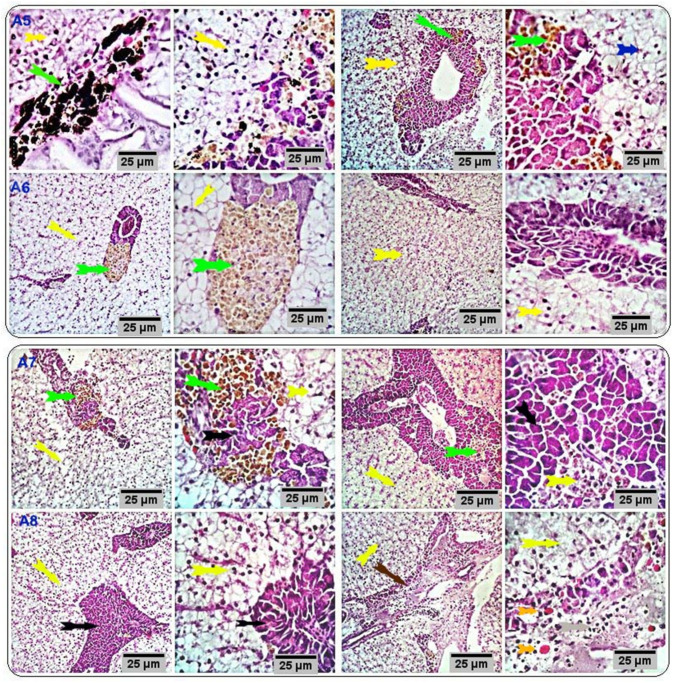
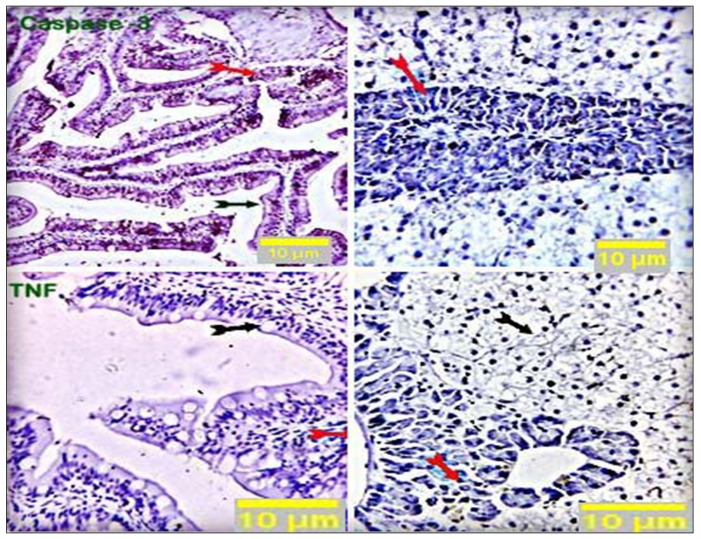
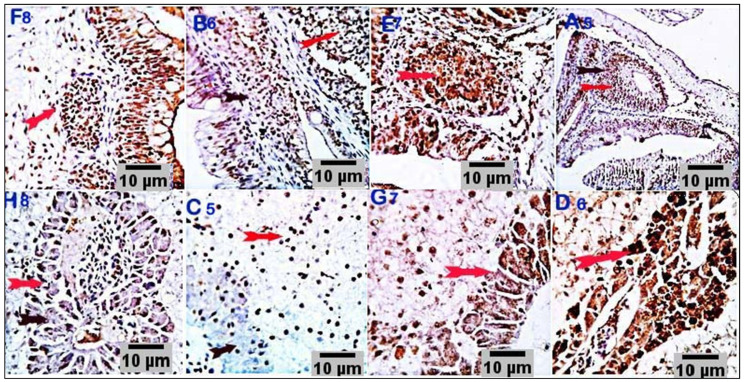
The impact of dietary curcumin (CUR) on the growth, antioxidant activity, histomorphology of certain organs, proinflammatory cytokine production, and immune status of Oreochromis niloticus was evaluated. The fingerlings (n = 225, 41.60 ± 0.09 g/fish) were randomly allotted into five experimental groups in triplicate. Fish were fed basal diets complemented with 0, 200, 400, 600, or 800 mg curcumin/kg diet (CUR0, CUR200, CUR400, CUR600, and CUR800, respectively) for 10 weeks. An increase in fish growth was reported in the CUR200 and CUR400 groups. The feed conversion ratio was enhanced by 15% in the CUR400 group. Fish body protein content was increased in the CUR600 group (p ≤ 0.01). Body fat was decreased, and ash content was increased by CUR supplementation in a level-related way (p < 0.05). The villus height was increased in the CUR400 and CUR600 groups. The villus width was increased by CUR supplementation, with the best result found in the CUR600 group. The liver of CUR-fed fish displayed comparatively normal hepatocytes. TNF-α and caspase-3 were significantly upregulated by dietary CUR in a level-related way. The serum catalase activity and GSH level were increased in CUR200 and CUR400 groups. Curcumin supplementation boosted the serum SOD activity and reduced the MDA level. IL10 and IgM levels were increased in the CUR200 and CUR400 groups. Lysozyme activity was increased in the CUR200−400 groups. Serum complement 3 level was increased in the CUR400 group. The percentage survival of O. niloticus challenged with Aeromonas hydrophila was highest in the CUR200-CUR600 groups (100%) and decreased in the CUR800 group (80%). This study concluded that CUR could be added to Nile tilapia diets up to 400 mg·kg−1 to achieve better growth, antioxidant capacity, immune response, and intestinal histology. Long feeding periods on high levels of CUR (600 and 800 mg·kg−1) stimulate inflammatory reactions in fish tissues.
评估了日粮姜黄素(CUR)对尼罗罗非鱼生长、抗氧化活性、某些器官的组织形态学、促炎细胞因子产生及免疫状态的影响。将幼鱼(n = 225,平均体重41.60 ± 0.09 g/尾)随机分为五个实验组,每组设三个重复。给鱼投喂添加0、200、400、600或800 mg姜黄素/kg日粮的基础日粮(分别为CUR0、CUR200、CUR400、CUR600和CUR800),持续10周。据报道,CUR200组和CUR400组鱼的生长有所增加。CUR400组的饲料转化率提高了15%。CUR600组鱼体蛋白质含量增加(p≤0.01)。添加CUR后,鱼体脂肪含量降低,灰分含量呈剂量依赖性增加(p<0.05)。CUR400组和CUR600组的绒毛高度增加。添加CUR后绒毛宽度增加,CUR600组效果最佳。投喂CUR的鱼肝脏中的肝细胞相对正常。日粮CUR以剂量依赖的方式显著上调肿瘤坏死因子-α(TNF-α)和半胱天冬酶-3(caspase-3)的表达。CUR200组和CUR400组的血清过氧化氢酶活性和谷胱甘肽(GSH)水平升高。添加姜黄素可提高血清超氧化物歧化酶(SOD)活性并降低丙二醛(MDA)水平。CUR200组和CUR400组的白细胞介素10(IL10)和免疫球蛋白M(IgM)水平升高。CUR200 - 400组的溶菌酶活性增加。CUR400组的血清补体3水平升高。用嗜水气单胞菌攻毒后,尼罗罗非鱼的存活率在CUR200 - CUR600组最高(100%),在CUR800组降低(80%)。本研究得出结论,在尼罗罗非鱼日粮中添加高达400 mg·kg−1的CUR可实现更好的生长、抗氧化能力、免疫反应和肠道组织学。长期投喂高水平的CUR(600和800 mg·kg−1)会刺激鱼组织中的炎症反应。