A.M. Butlerov' Chemistry Institute, Kazan Federal University, 18 Kremlevskaya Street, 420008 Kazan, Russia.
Analytical Chemistry Department, Chemical Technology Institute, Ural Federal University, 19 Mira Street, 620002 Ekaterinburg, Russia.
Sensors (Basel). 2022 May 12;22(10):3684. doi: 10.3390/s22103684.
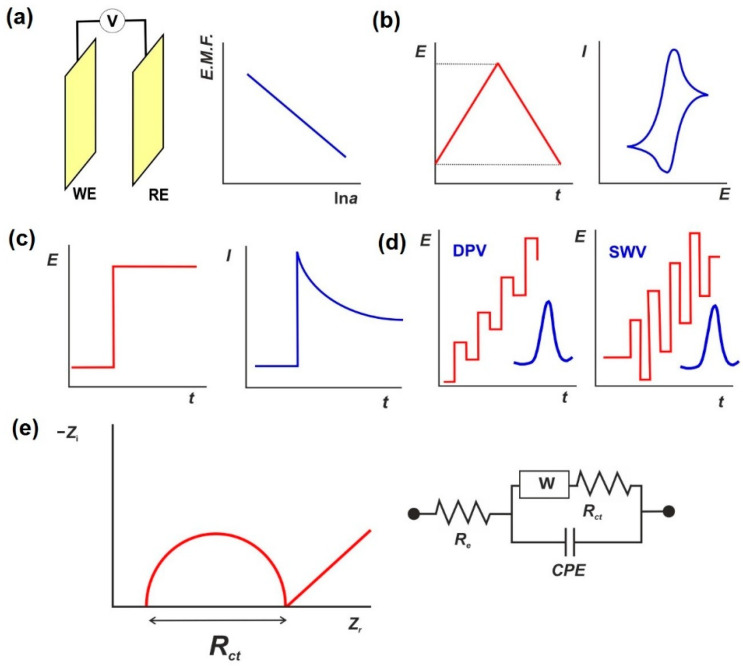
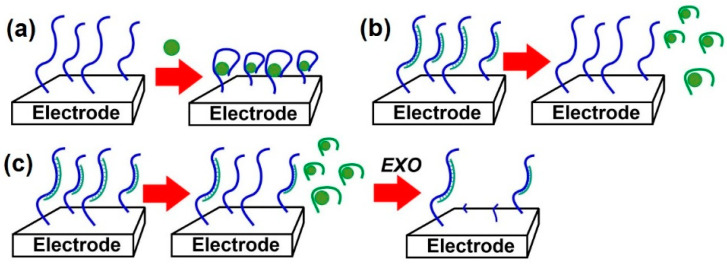
Antibiotics are often used in human and veterinary medicine for the treatment of bacterial diseases. However, extensive use of antibiotics in agriculture can result in the contamination of common food staples such as milk. Consumption of contaminated products can cause serious illness and a rise in antibiotic resistance. Conventional methods of antibiotics detection such are microbiological assays chromatographic and mass spectroscopy methods are sensitive; however, they require qualified personnel, expensive instruments, and sample pretreatment. Biosensor technology can overcome these drawbacks. This review is focused on the recent achievements in the electrochemical biosensors based on nucleic acid aptamers for antibiotic detection. A brief explanation of conventional methods of antibiotic detection is also provided. The methods of the aptamer selection are explained, together with the approach used for the improvement of aptamer affinity by post-SELEX modification and computer modeling. The substantial focus of this review is on the explanation of the principles of the electrochemical detection of antibiotics by aptasensors and on recent achievements in the development of electrochemical aptasensors. The current trends and problems in practical applications of aptasensors are also discussed.
抗生素在人类和兽医医学中常用于治疗细菌性疾病。然而,农业中抗生素的广泛使用会导致牛奶等常见主食受到污染。食用受污染的产品会导致严重疾病和抗生素耐药性的增加。传统的抗生素检测方法,如微生物检测、色谱和质谱方法,虽然灵敏,但需要合格的人员、昂贵的仪器和样品预处理。生物传感器技术可以克服这些缺点。本综述重点介绍了基于核酸适体的电化学生物传感器在抗生素检测方面的最新进展。还提供了传统抗生素检测方法的简要说明。解释了适体的选择方法,并介绍了通过 SELEX 后修饰和计算机建模来提高适体亲和力的方法。本综述的重点是解释通过适体传感器进行电化学抗生素检测的原理以及电化学适体传感器的最新进展。还讨论了适体传感器在实际应用中的当前趋势和问题。