Damijan Jože P, Damijan Sandra, Kostevc Črt
School of Economics and Business, University of Ljubljana, 1000 Ljubljana, Slovenia.
Department of Economics, University of Leuven, 3001 Leuven, Belgium.
Vaccines (Basel). 2022 Apr 24;10(5):678. doi: 10.3390/vaccines10050678.
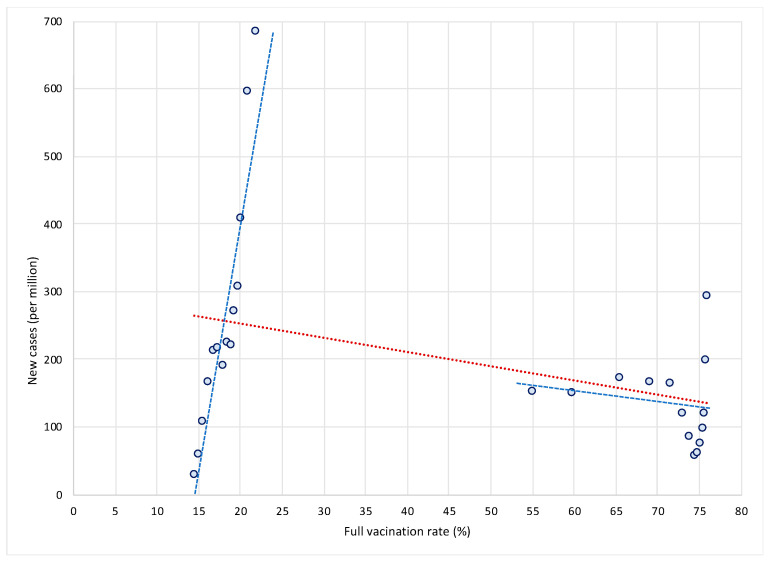
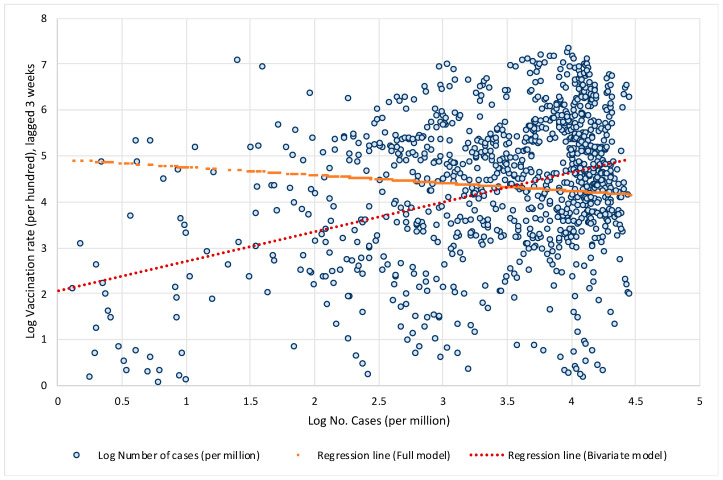
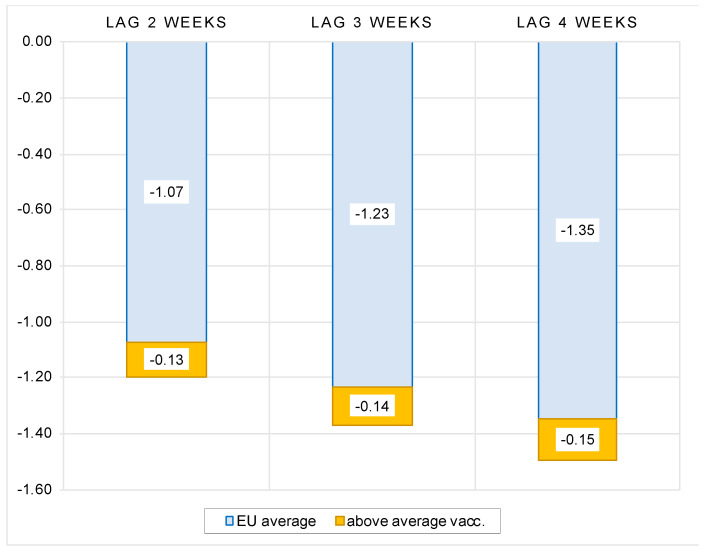
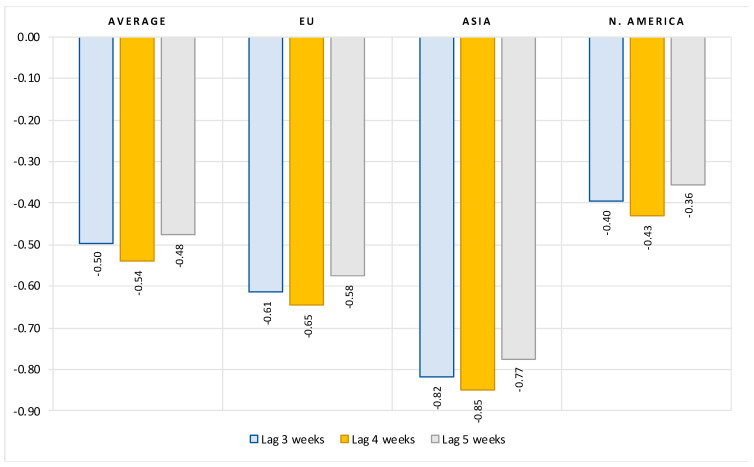
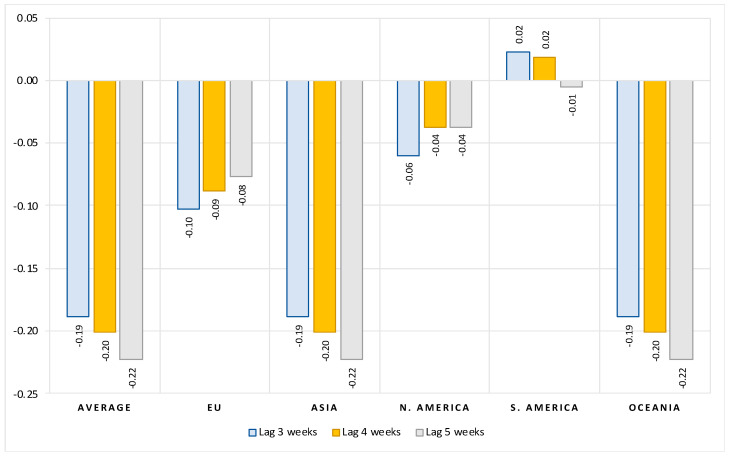
This paper uses large cross-country data for 110 countries to examine the effectiveness of COVID vaccination coverage during the delta variant outbreak. Our results confirm that vaccines are reasonably effective in both limiting the spread of infections and containing more severe disease progression in symptomatic patients. First, the results show that full vaccination rate is consistently negatively correlated with the number of new COVID cases, whereby a 10 percent increase in vaccination rate is associated with a 1.3 to 1.7 percent decrease in new COVID cases. Second, the magnitude of vaccination is shown to contribute significantly to moderating severe disease progression. On average, a 10 percent increase in the rate of vaccination leads to a reduction of about 5 percent in the number of new hospitalizations, 12 percent decrease in the number of new intensive care patients and 2 percent reduction in the number of new deaths. Finally, by comparing the data for the same period between 2020 and 2021, we also check how well vaccination performs as a substitute for lockdowns or other stringent government protection measures. Results suggest that vaccination appears to be an effective substitute for more stringent government safety measures to contain the spread of COVID infections only at a sufficiently high vaccination coverage threshold (more than 70 percent). On the other hand, vaccination is shown to be quite effective in limiting the more severe course of the disease in symptomatic patients already at moderate vaccination coverage (between 40 and 70 percent). This suggests that vaccination can also help to reduce pressure on the health system and thus benefit the overall public health of society. On the other hand, the efficient rollout of vaccines could explain the favourable economic performance in the second half of 2021 despite the severe outbreak of the delta variant.
本文使用110个国家的大型跨国数据,研究在德尔塔变种疫情期间新冠疫苗接种覆盖率的有效性。我们的结果证实,疫苗在限制感染传播和遏制有症状患者更严重的疾病进展方面都具有合理的有效性。首先,结果表明,全程接种率与新冠新增病例数始终呈负相关,即接种率每提高10%,新冠新增病例数就会减少1.3%至1.7%。其次,疫苗接种规模对缓解严重疾病进展有显著贡献。平均而言,接种率每提高10%,新住院人数会减少约5%,新重症监护患者人数会减少12%,新死亡人数会减少2%。最后,通过比较2020年和2021年同期的数据,我们还检验了疫苗接种作为封锁或其他严格政府保护措施的替代手段的效果。结果表明,只有在足够高的疫苗接种覆盖率阈值(超过70%)下,疫苗接种才似乎是遏制新冠感染传播的更严格政府安全措施的有效替代手段。另一方面,在中等疫苗接种覆盖率(40%至70%)下,疫苗接种在限制有症状患者更严重的病程方面已显示出相当有效。这表明疫苗接种还可以帮助减轻卫生系统的压力,从而有益于社会的整体公共卫生。另一方面,尽管德尔塔变种疫情严重爆发,但疫苗的有效推广可以解释2021年下半年良好的经济表现。