Song Wenjing, Liu Zhicheng, Wang Kunlei, Tan Kai, Zhao Anbang, Li Xinyin, Yuan Yufeng, Yang Zhiyong
Department of Hepatobiliary and Pancreatic Surgery, Zhongnan Hospital of Wuhan University, Wuhan, China.
Pancreatic Surgery Center, Zhongnan Hospital of Wuhan University, Wuhan, China.
Discov Oncol. 2022 May 28;13(1):39. doi: 10.1007/s12672-022-00495-0.
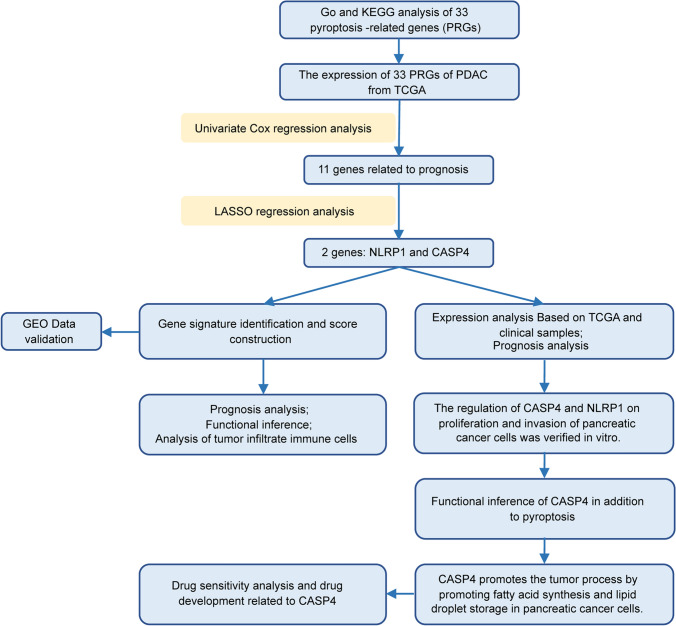
Pancreatic ductal adenocarcinoma (PDAC) has high mortality and poor prognosis. Pyroptosis can influence the prognosis of patients by regulating the proliferation, invasion, and metastasis of cancer cells. However, the role of pyroptosis-related genes (PRGs) in PDAC remains unclear.
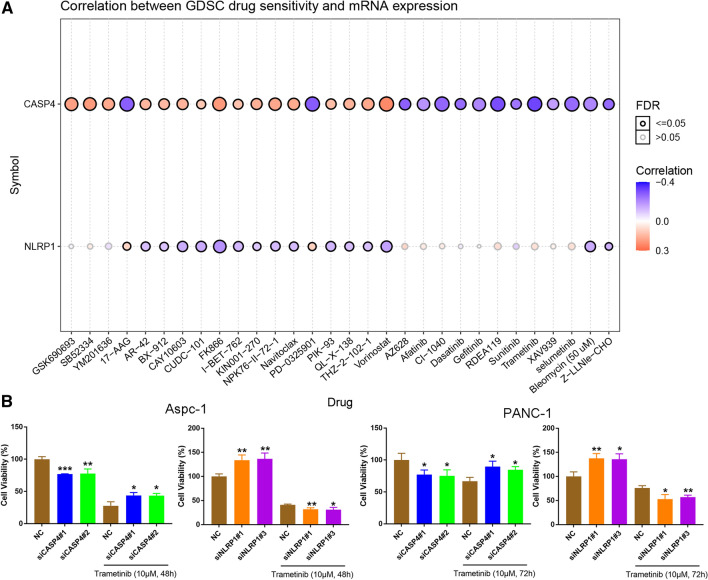
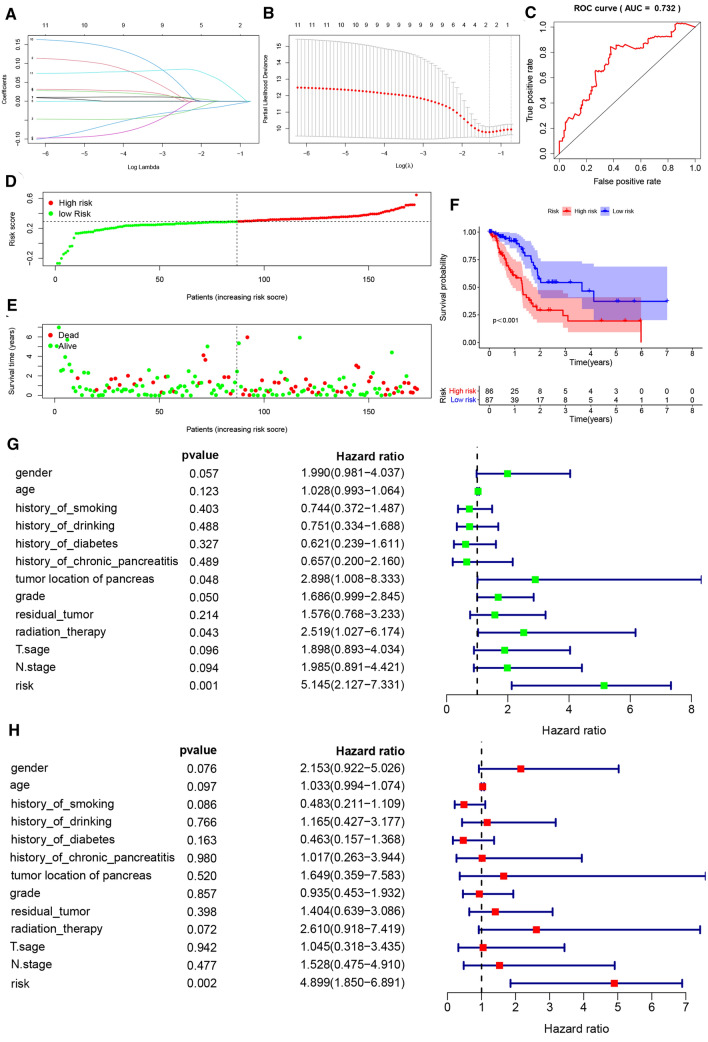
In this study, based on the Cancer Genome Atlas (TCGA) cohort of PDAC samples, univariate Cox analysis and LASSO regression analysis were used to screen the prognostic PRGs and establish the gene signature. To further evaluate the functional significance of CASP4 and NLRP1 in PDAC, we also conducted an in vitro study to explore the mechanism of CASP4 and NLRP1 regulating the occurrence and development of PDAC. Finally, we investigated the relationship between CASP4 and NLRP1 expression levels and drug sensitivity in pancreatic cancer cells.
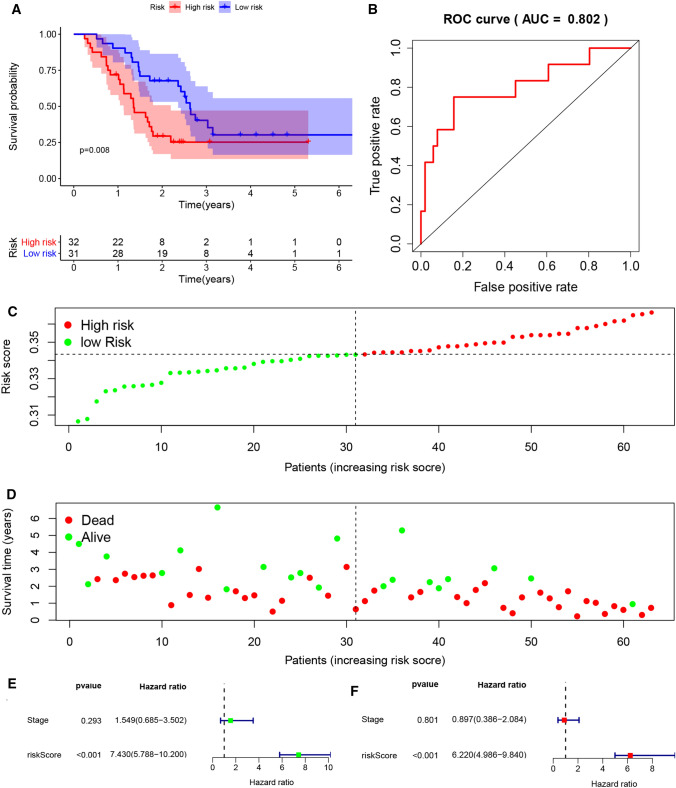
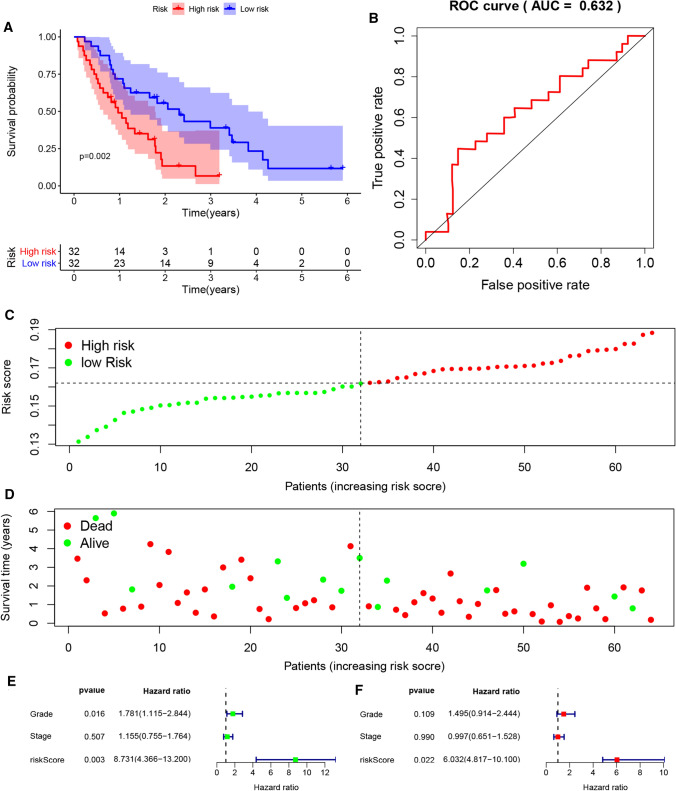
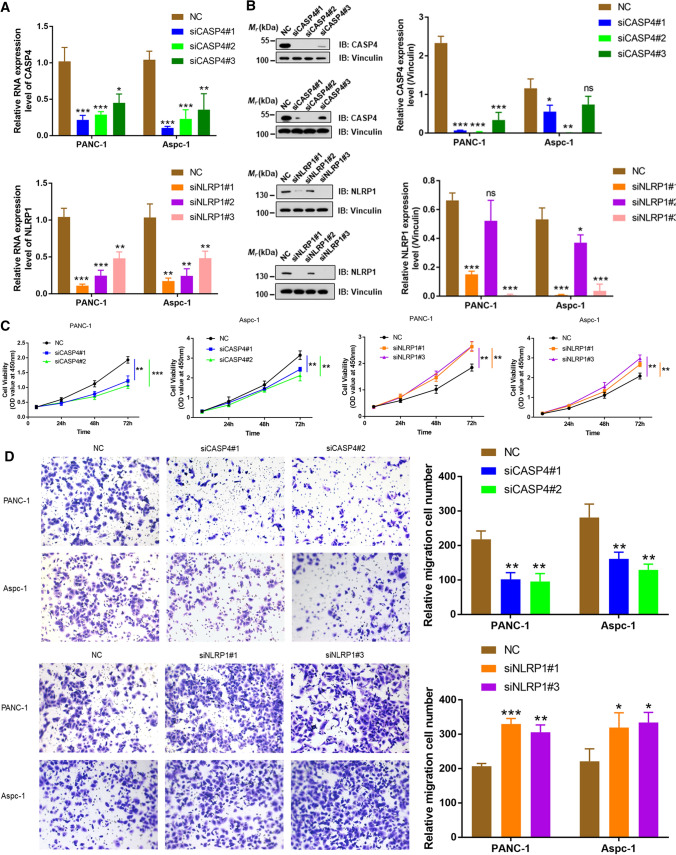
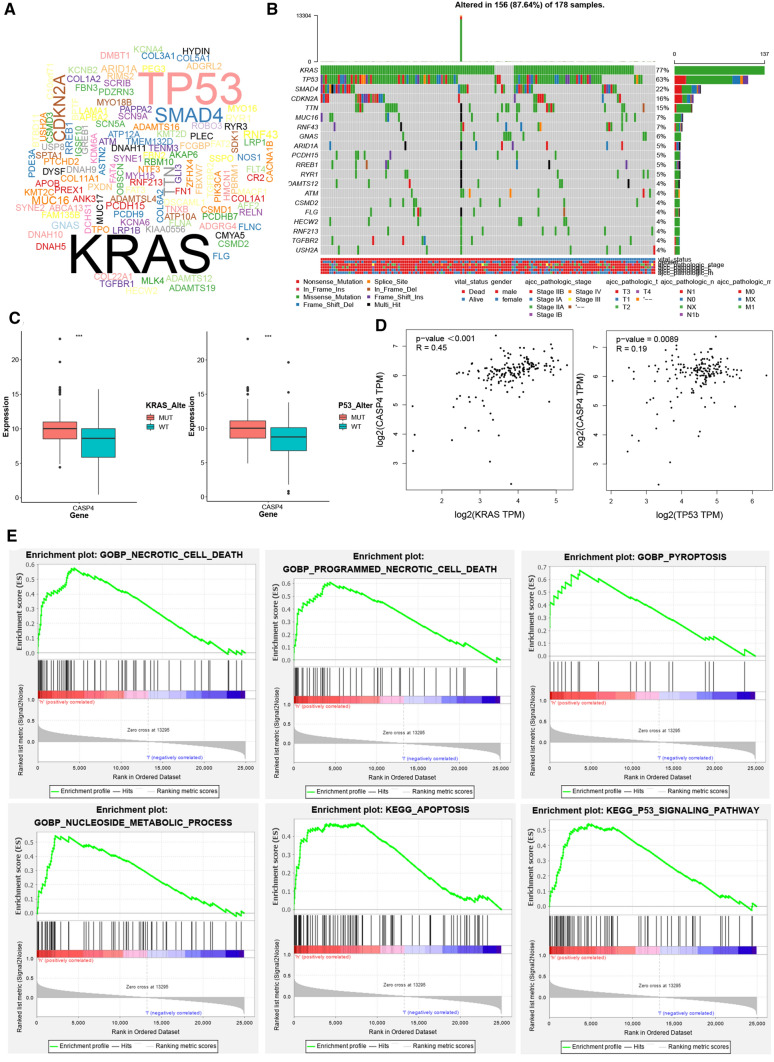
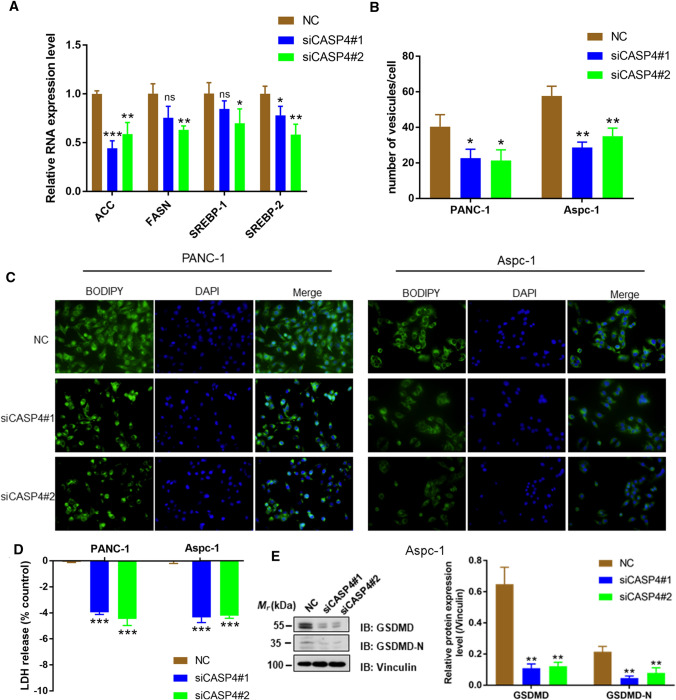
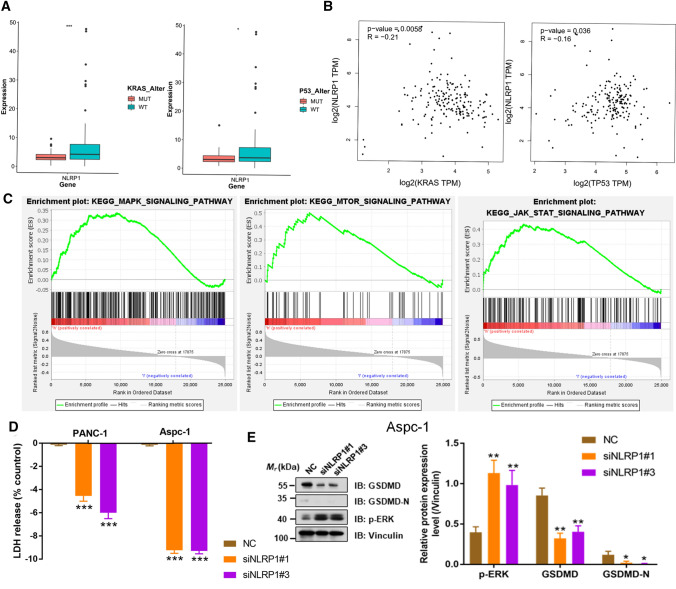
A risk prediction model based on CASP4 and NLRP1 was established, which can distinguish high-risk patients from low-risk patients (P < 0.001). Both internal validation and external GEO data sets validation demonstrate good predictive capability of the model (AUC = 0.732, AUC = 0.802, AUC = 0.632, P < 0.05). In vitro, CCK8 and Transwell assay suggested that CASP4 may accelerate the progression of PDAC by promoting proliferation and migration of pancreatic cancer cells, while NLRP1 has been found to have tumor suppressive effect. It should be noted that knockdown of CASP4 reduced the level of coke death, the expression levels of acetyl-CoA carboxylase, FASN, SREBP-1 and SREBP-2 were decreased, and the number of lipid droplets was also significantly reduced. Moreover, the enrichment of signaling pathways showed that NLRP1 was significantly correlated with MAPK and RAS/ERK signaling pathways, and knocking down NLRP1 could indeed up-regulate p-ERK expression. Finally, high expression of CASP4 and low expression of NLRP1 increased the sensitivity of pancreatic cancer cells to ERK inhibitors.
In especial, CASP4 can promote tumor progression by promoting the synthesis and accumulation of fatty acids, while NLRP1 acts on RAS/ERK signaling pathway. Both of genes play an important role in the diagnosis and treatment of PDAC, which may also affect the inhibitors of MAPK/ERK efficiency.
胰腺导管腺癌(PDAC)死亡率高且预后差。细胞焦亡可通过调节癌细胞的增殖、侵袭和转移来影响患者预后。然而,细胞焦亡相关基因(PRGs)在PDAC中的作用仍不清楚。
在本研究中,基于PDAC样本的癌症基因组图谱(TCGA)队列,采用单因素Cox分析和LASSO回归分析筛选预后PRGs并建立基因特征。为进一步评估CASP4和NLRP1在PDAC中的功能意义,我们还进行了体外研究以探索CASP4和NLRP1调节PDAC发生发展的机制。最后,我们研究了CASP4和NLRP1表达水平与胰腺癌细胞药物敏感性之间的关系。
建立了基于CASP4和NLRP1的风险预测模型,该模型可区分高风险患者和低风险患者(P < 0.001)。内部验证和外部GEO数据集验证均表明该模型具有良好的预测能力(AUC = 0.732,AUC = 0.802,AUC = 0.632,P < 0.05)。在体外,CCK8和Transwell实验表明,CASP4可能通过促进胰腺癌细胞的增殖和迁移来加速PDAC的进展,而NLRP1具有肿瘤抑制作用。值得注意的是,敲低CASP4可降低焦亡水平,乙酰辅酶A羧化酶、FASN、SREBP-1和SREBP-2的表达水平降低,脂滴数量也显著减少。此外,信号通路富集显示NLRP1与MAPK和RAS/ERK信号通路显著相关,敲低NLRP1确实可上调p-ERK表达。最后,CASP4高表达和NLRP1低表达增加了胰腺癌细胞对ERK抑制剂的敏感性。
特别是,CASP4可通过促进脂肪酸的合成和积累来促进肿瘤进展,而NLRP1作用于RAS/ERK信号通路。这两个基因在PDAC的诊断和治疗中都起着重要作用,这也可能影响MAPK/ERK抑制剂的疗效。