Zhou Wenhao, Bai Tian, Wang Lan, Cheng Yan, Xia Dandan, Yu Sen, Zheng Yufeng
Shaanxi Key Laboratory of Biomedical Metallic Materials, Northwest Institute for Non-ferrous Metal Research, Xi'an, 710016, China.
School of Materials Science and Engineering, Peking University, Beijing, 100871, China.
Bioact Mater. 2022 May 20;20:64-80. doi: 10.1016/j.bioactmat.2022.05.015. eCollection 2023 Feb.
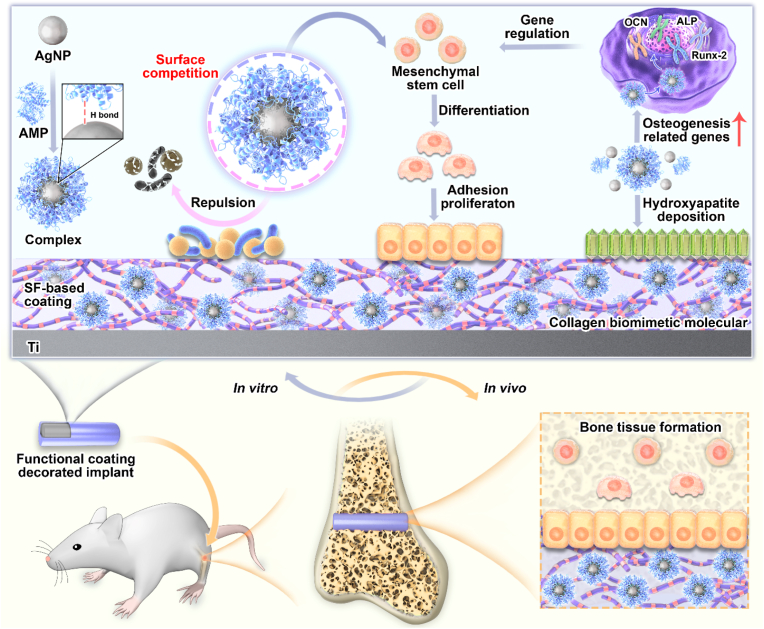
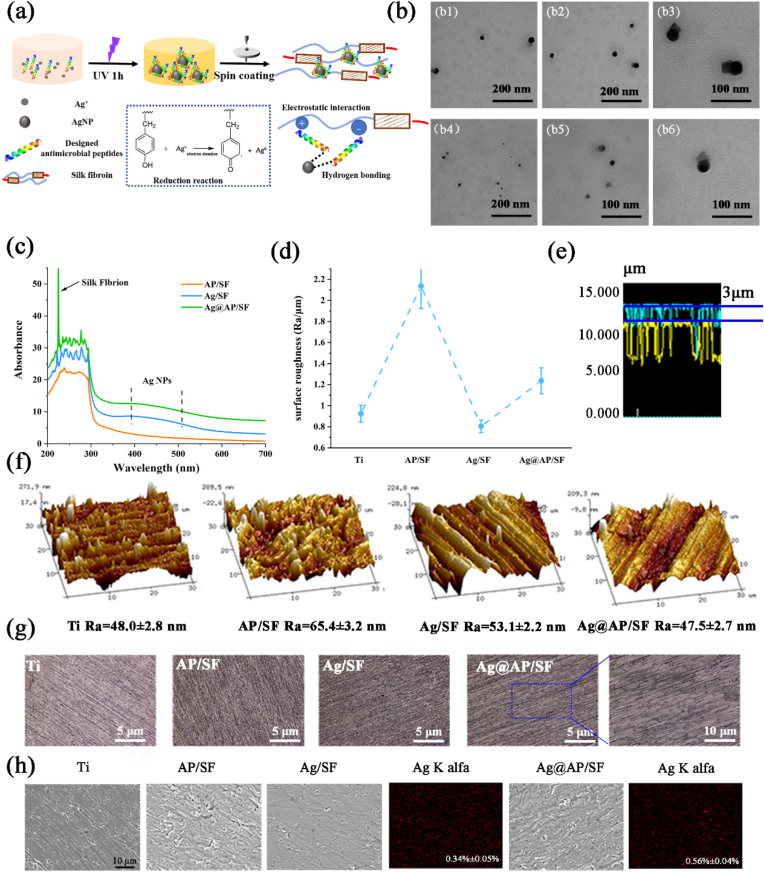
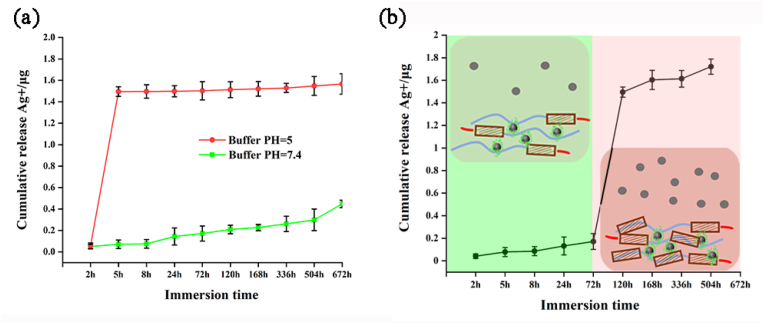
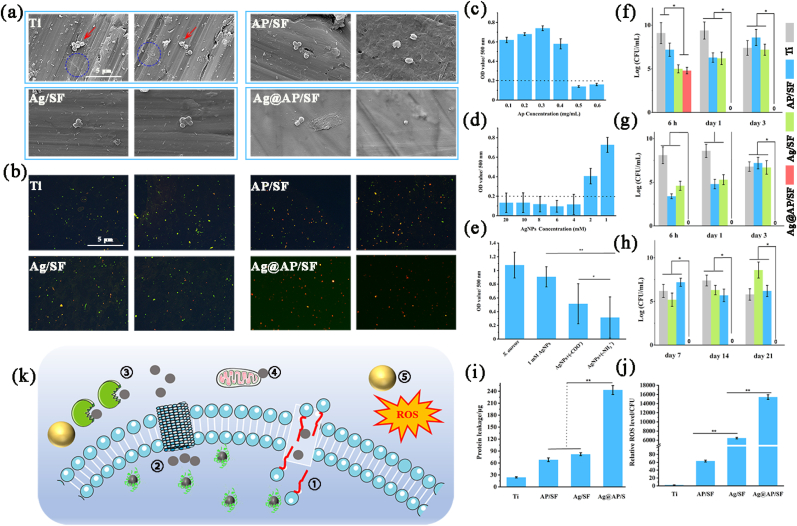
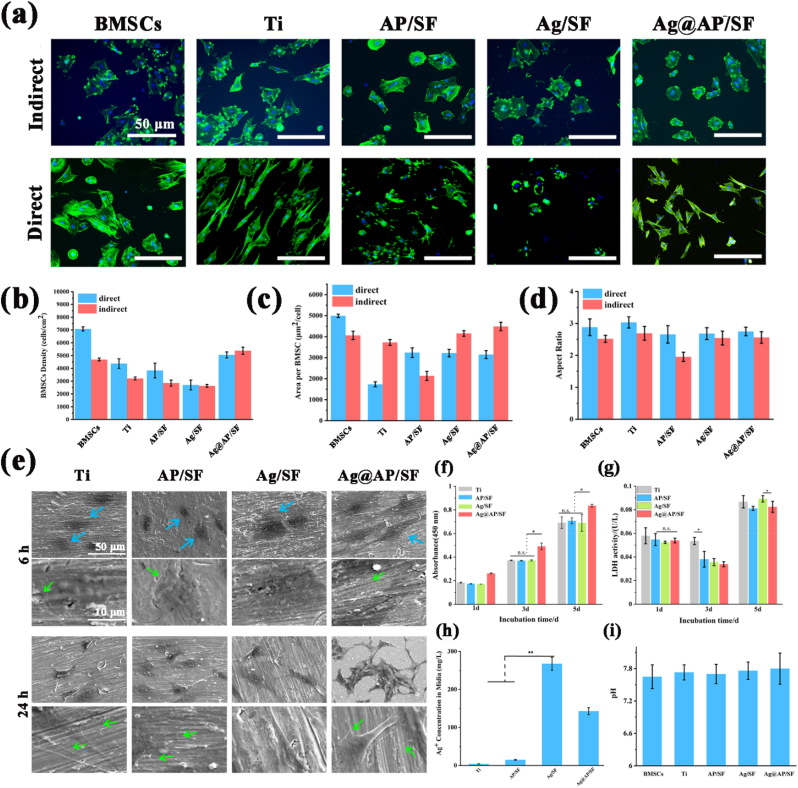
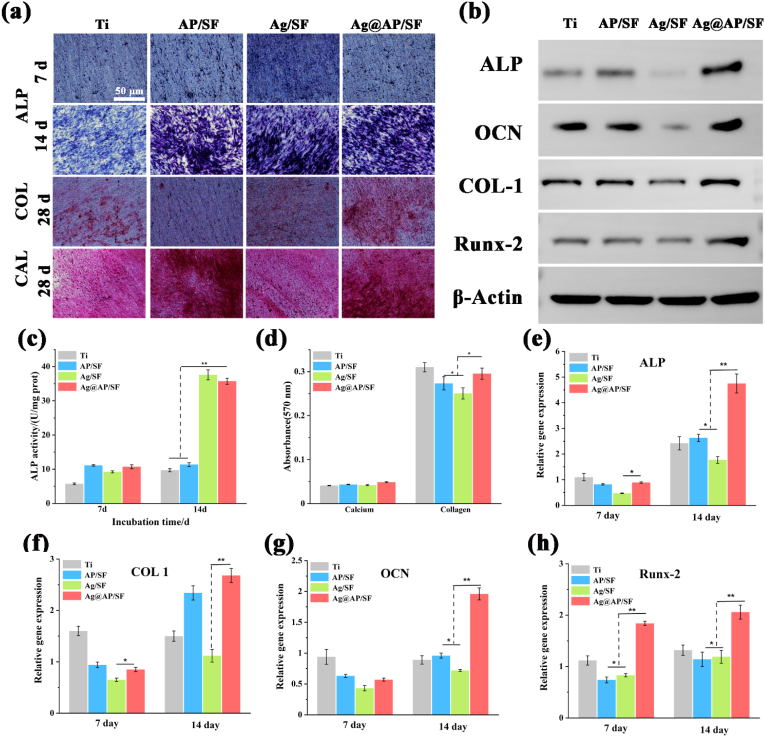
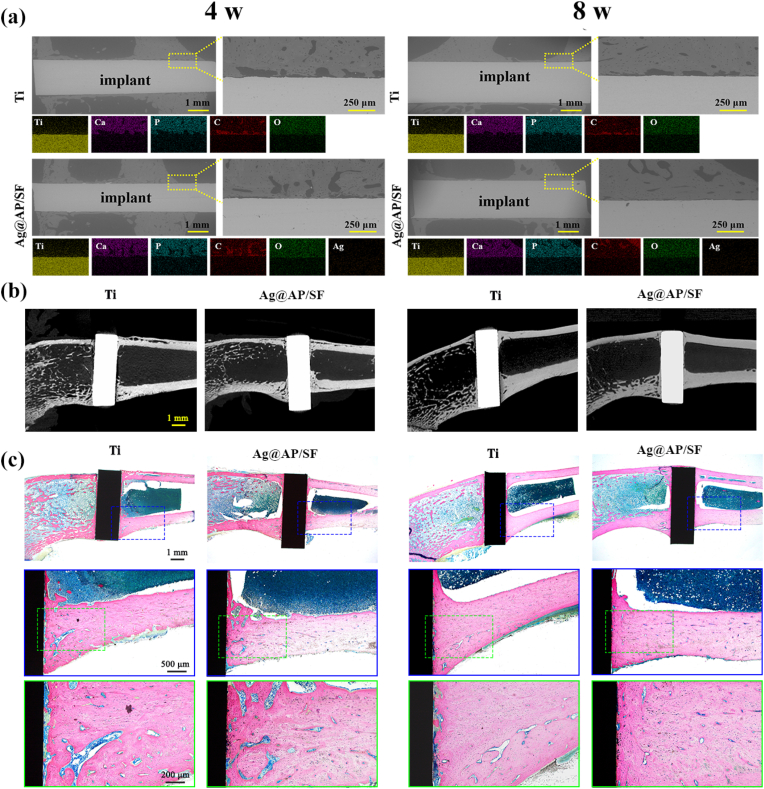
Endowing implant surfaces with combined antibacterial and osteogenic properties by drug-loaded coatings has made great strides, but how to achieve the combined excellence of infection-triggered bactericidal and -proven osteogenic activities without causing bacterial resistance still remains a formidable challenge. Herein, antimicrobial peptides (AMPs) with osteogenic fragments were designed and complexed on the surface of silver nanoparticle (AgNP) through hydrogen bonding, and the collagen structure-bionic silk fibroin (SF) was applied to carry AgNPs@ AMPs to achieve infection-triggered antibacterial and osteointegration. As verified by TEM, AMPs contributed to the dispersion and size-regulation of AgNPs, with a particle size of about 20 nm, and a clear protein corona structure was observed on the particle surface. The release curve of silver ion displayed that the SF-based coating owned sensitive pH-responsive properties. In the antibacterial test against for up to 21 days, the antibacterial rate had always remained above 99%. Meanwhile, the underlying mechanism was revealed, originating from the destruction of the bacterial cell membranes and ROS generation. The SF-based coating was conducive to the adhesion, diffusion, and proliferation of bone marrow stem cells (BMSCs) on the surface, and promoted the expression of osteogenic genes and collagen secretion. The implantation results showed that compared with the untreated Ti implants, SF-based coating enhanced osseointegration at week 4 and 8. Overall, the AgNPs@AMPs-loaded SF-based coating presented the ability to synergistically inhibit bacteria and promote osseointegration, possessing tremendous potential application prospects in bone defects and related-infection treatments.
通过载药涂层赋予植入物表面抗菌和成骨的联合特性已取得了很大进展,但如何在不引起细菌耐药性的情况下实现感染引发的杀菌和成骨活性的联合卓越性,仍然是一个巨大的挑战。在此,设计了具有成骨片段的抗菌肽(AMPs),并通过氢键作用使其在银纳米颗粒(AgNP)表面复合,应用胶原结构仿生的丝素蛋白(SF)来负载AgNPs@AMPs,以实现感染引发的抗菌和骨整合。经透射电子显微镜(TEM)验证,AMPs有助于AgNPs的分散和尺寸调节,粒径约为20nm,在颗粒表面观察到清晰的蛋白冠结构。银离子释放曲线表明,基于SF的涂层具有灵敏的pH响应特性。在对[具体细菌]长达21天的抗菌测试中,抗菌率始终保持在99%以上。同时,揭示了其潜在机制,源于细菌细胞膜的破坏和活性氧的产生。基于SF的涂层有利于骨髓干细胞(BMSCs)在其表面的黏附、扩散和增殖,并促进成骨基因的表达和胶原蛋白的分泌。[具体动物]植入结果表明,与未处理的钛植入物相比,基于SF的涂层在第4周和第8周增强了骨整合。总体而言,负载AgNPs@AMPs的基于SF的涂层呈现出协同抑制细菌和促进骨整合的能力,在骨缺损及相关感染治疗中具有巨大的潜在应用前景。