Wu Yi-Fan, Salamanca Eisner, Chen I-Wen, Su Jo-Ning, Chen Yu-Che, Wang Sin Yu, Sun Ying-Sui, Teng Nai-Chia, Chang Wei-Jen
School of Dentistry, College of Oral Medicine, Taipei Medical University, Taipei, Taiwan.
School of Dental Technology, Taipei Medical University, Taipei, Taiwan.
Front Nutr. 2022 May 11;9:882636. doi: 10.3389/fnut.2022.882636. eCollection 2022.
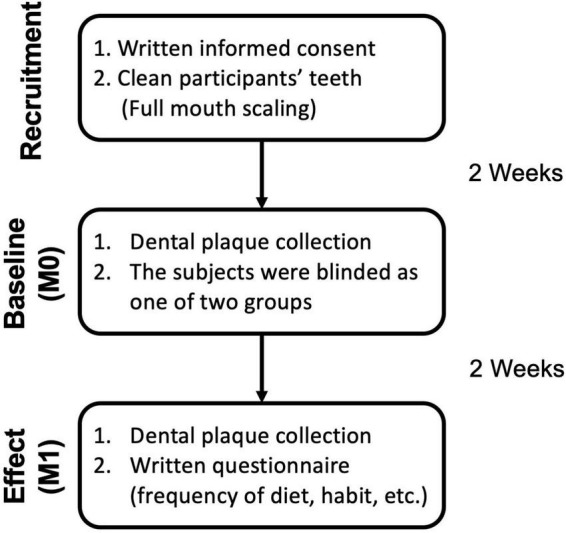
Dental caries and periodontal disease remain the most prevalent oral health problems in the world. Chewing xylitol gum may help reduce the risk of caries and periodontitis for dental health benefits. However, little evidence has shown healthy food estimation by sequencing 16S rDNA in oral microbial communities. This study investigated the clinical effect of xylitol chewing gum on dental plaque accumulation and microbiota composition using the PacBio full-length sequencing platform in 24 young adults ( = 24). The participants were randomly assigned to xylitol chewing gum and control (no chewing gum) groups. Participants in the chewing gum group chewed ten pieces of gum (a total of 6.2 g xylitol/day). Dental plaque from all teeth was collected for weighing, measuring the pH value, and analysis of microbial communities at the beginning (baseline, M0) and end of the 2-week (effect, M1) study period.
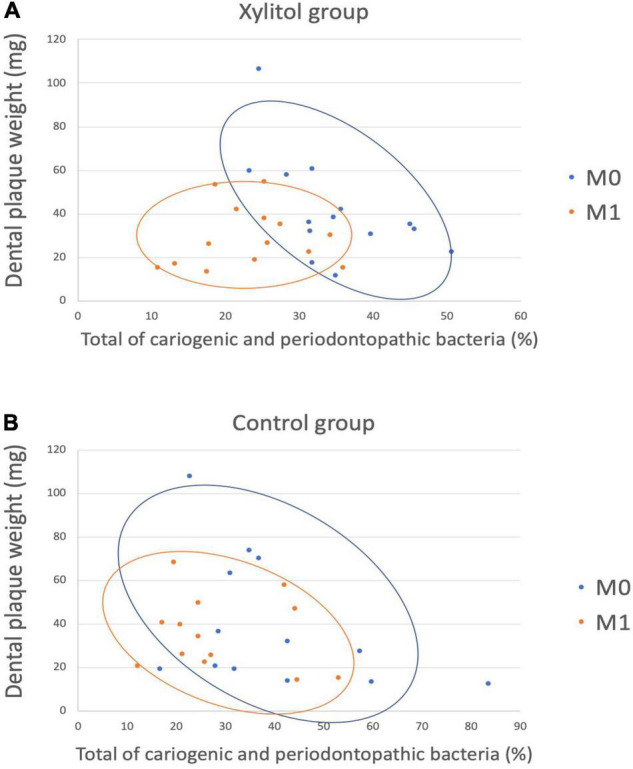
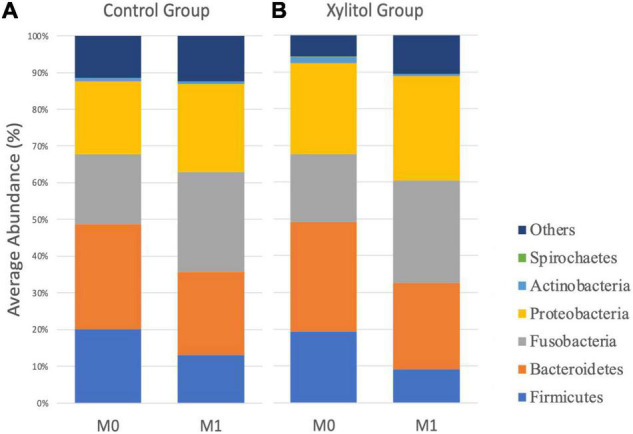
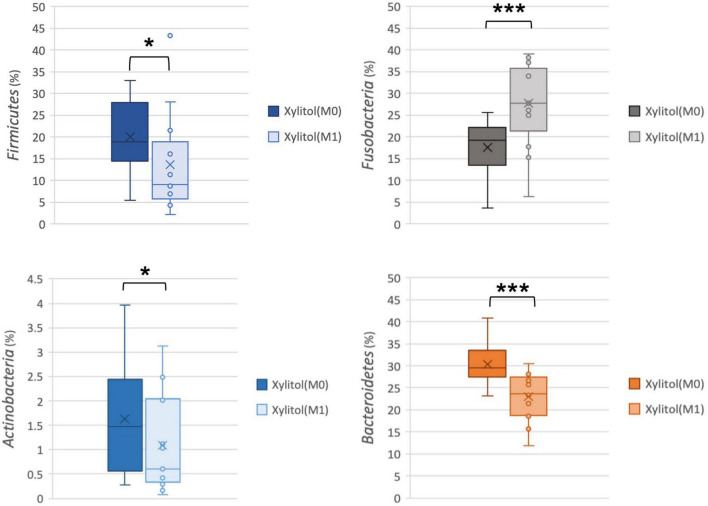
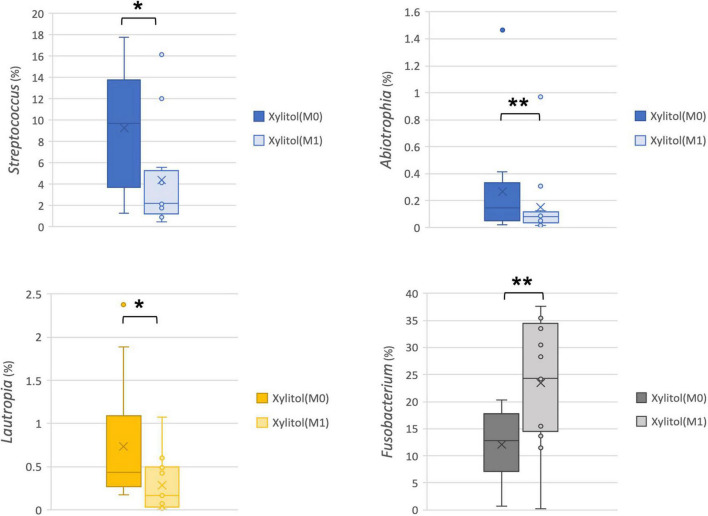
The results suggested a 20% reduction in dental plaque accumulation ( < 0.05) among participants chewing xylitol gum for 2 weeks, and the relative abundance of (a type of pathogenic bacteria associated with caries) decreased by 10.26% ( < 0.05) and that of and (two types of pathogenic bacteria associated with periodontitis) decreased by 6.32% ( < 0.001) and 1.66% ( < 0.05), respectively. Moreover, the relative abundance of was increased by 9.24% ( < 0.001), which has been proven to have a higher proportion in dental plaque of healthy adults. However, the dental plaque pH value stayed in a healthy range for the two groups.
In conclusion, chewing xylitol gum would benefit cariogenic and periodontal bacterial reduction in the oral cavity, which could help to prevent the diseases related to these bacteria.
龋齿和牙周疾病仍然是世界上最普遍的口腔健康问题。咀嚼木糖醇口香糖可能有助于降低龋齿和牙周炎风险,对牙齿健康有益。然而,通过对口腔微生物群落中的16S核糖体DNA进行测序来评估健康食物的证据很少。本研究使用PacBio全长测序平台,调查了木糖醇口香糖对24名年轻成年人(n = 24)牙菌斑积聚和微生物群组成的临床效果。参与者被随机分为木糖醇口香糖组和对照组(不咀嚼口香糖)。口香糖组的参与者每天咀嚼10片口香糖(共6.2克木糖醇)。在为期2周的研究开始时(基线,M0)和结束时(效果,M1),收集所有牙齿的牙菌斑进行称重、测量pH值,并分析微生物群落。
结果表明,咀嚼木糖醇口香糖2周的参与者牙菌斑积聚减少了20%(P < 0.05),与龋齿相关的一种病原菌变形链球菌的相对丰度下降了10.26%(P < 0.05),与牙周炎相关的两种病原菌牙龈卟啉单胞菌和福赛坦氏菌的相对丰度分别下降了6.32%(P < 0.001)和1.66%(P < 0.05)。此外,健康成人牙菌斑中比例较高的具核梭杆菌的相对丰度增加了9.24%(P < 0.001)。然而,两组的牙菌斑pH值均保持在健康范围内。
总之,咀嚼木糖醇口香糖有利于减少口腔中致龋菌和牙周细菌,有助于预防与这些细菌相关的疾病。