Wang Wenyu, Cho Untack, Yoo Anna, Jung Chae-Lim, Kim Boyun, Kim Heeyeon, Lee Juwon, Jo HyunA, Han Youngjin, Song Myoung-Hyun, Lee Ja-Oh, Kim Se Ik, Lee Maria, Ku Ja-Lok, Lee Cheol, Song Yong Sang
Interdisciplinary Program in Cancer Biology, Seoul National University College of Medicine, Seoul, South Korea.
Cancer Research Institute, Seoul National University College of Medicine, Seoul, South Korea.
Front Oncol. 2022 May 12;12:852260. doi: 10.3389/fonc.2022.852260. eCollection 2022.
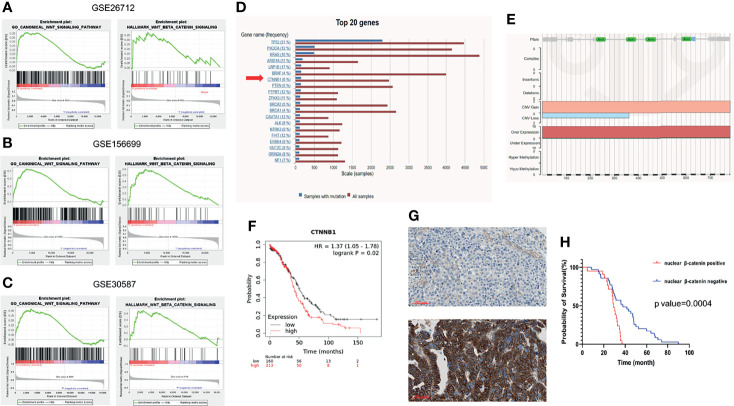
The poor prognosis of ovarian cancer patients mainly results from a lack of early diagnosis approaches and a high rate of relapse. Only a very modest improvement has been made in ovarian cancer patient survival with traditional treatments. More targeted therapies precisely matching each patient are strongly needed. The aberrant activation of Wnt/β-catenin signaling pathway plays a fundamental role in cancer development and progression in various types of cancer including ovarian cancer. Recent insight into this pathway has revealed the potential of targeting Wnt/β-catenin in ovarian cancer treatment. This study aims to investigate the effect of CWP232291, a small molecular Wnt/β-catenin inhibitor on ovarian cancer progression. Various , and models are established for CWP232291 testing. Results show that CWP232291 could significantly attenuate ovarian cancer growth through inhibition of β-catenin. Noticeably, CWP232291 could also s suppress the growth of cisplatin-resistant cell lines and ovarian cancer patient-derived organoids. Overall, this study has firstly demonstrated the anti-tumor effect of CWP232291 in ovarian cancer and proposed Wnt/β-catenin pathway inhibition as a novel therapeutic strategy against ovarian cancer.
卵巢癌患者预后较差,主要是由于缺乏早期诊断方法以及复发率高。传统治疗方法对卵巢癌患者生存率的改善甚微。因此,迫切需要更具针对性、能精准适配每位患者的治疗方法。Wnt/β-连环蛋白信号通路的异常激活在包括卵巢癌在内的多种癌症的发生和发展中起着关键作用。最近对该信号通路的深入研究揭示了靶向Wnt/β-连环蛋白在卵巢癌治疗中的潜力。本研究旨在探讨小分子Wnt/β-连环蛋白抑制剂CWP232291对卵巢癌进展的影响。为此建立了多种细胞、动物和类器官模型来测试CWP232291。结果表明,CWP232291可通过抑制β-连环蛋白显著减缓卵巢癌的生长。值得注意的是,CWP232291还能抑制顺铂耐药细胞系和源自卵巢癌患者的类器官的生长。总体而言,本研究首次证明了CWP232291在卵巢癌中的抗肿瘤作用,并提出抑制Wnt/β-连环蛋白信号通路是一种针对卵巢癌的新型治疗策略。