The Second Affiliated Hospital of Harbin Medical University, Harbin, Heilongjiang, China.
J Neural Transm (Vienna). 2022 Aug;129(8):1031-1038. doi: 10.1007/s00702-022-02518-0. Epub 2022 Jun 1.
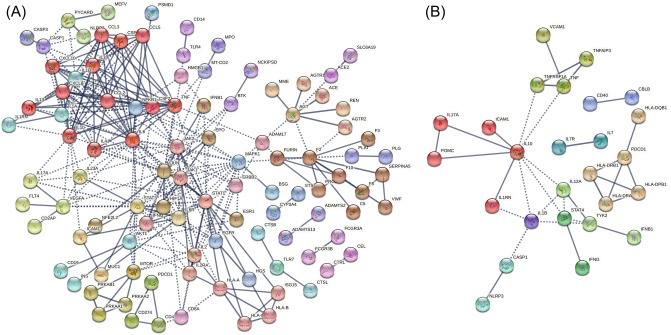
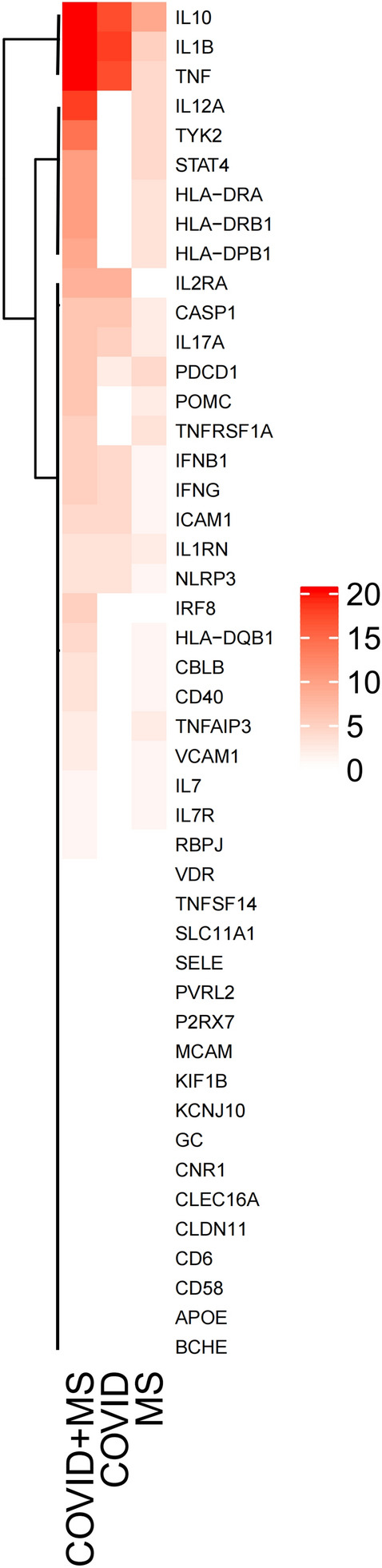
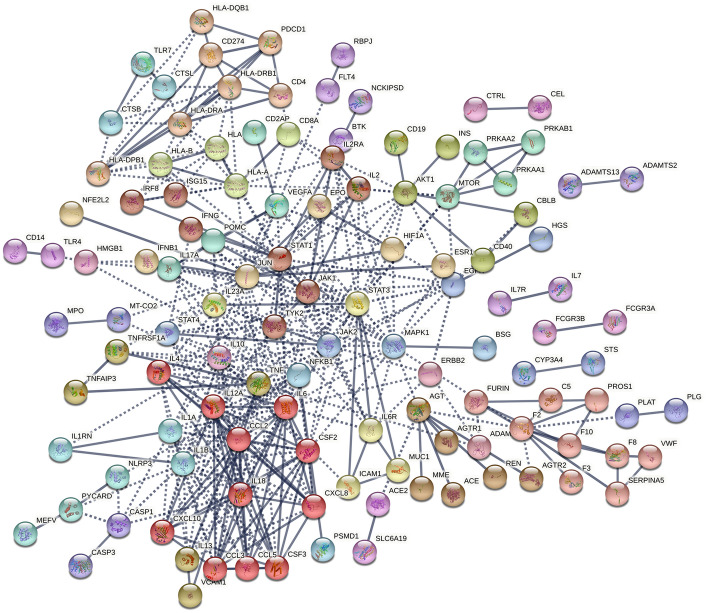
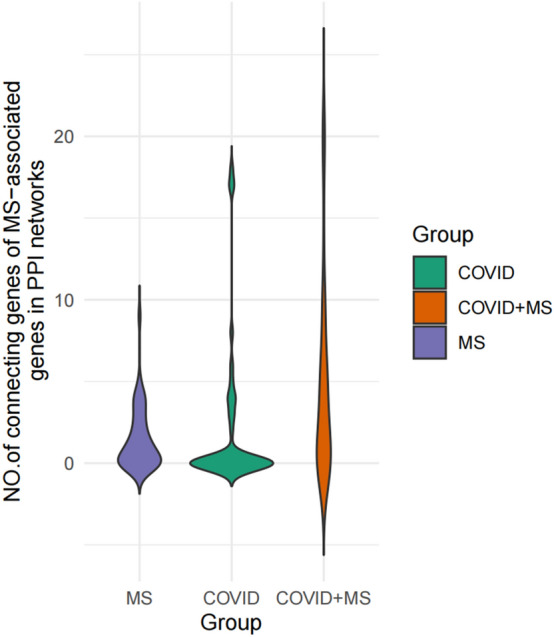
Multiple sclerosis (MS) is a kind of central nervous system (CNS) autoimmune disease, which mainly damages nerves, the brain, and the spinal cord. Recently, several clinical cases reported the relativity between Coronavirus Disease 2019 (COVID-19) and the development of MS, but the mechanism of how COVID-19 affects the occurrence of MS was still not clear. It is bioinformatics technology that we use to explore the potential association at the gene level. The genetic information related to the two diseases was collected from the DisGNET platform for functional protein network analysis and used STRING to identify the complete gene set. The protein-protein interaction (PPI) network was analyzed by STRING. Finally, in the GEO database, we selected peripheral blood mononuclear cell (PBMC) RNA sequencing data (GSE164805, GSE21942) from COVID-19 patients and MS patients to verify the potential cross mechanism between the two diseases. The similar gene set of immune or inflammation existed between the patients with COVID-19 and ones with MS, including L2RA, IFNG, IL1B, NLRP3, and TNF. Interaction network analysis among proteins revealed that IL1B, P2RX7, IFNB1, IFNB1, TNF, and CASP1 enhanced the network connectivity between the combined gene set of COVID-19 and MS associated with NOD-like receptor (NLR) signaling. The involvement of NLR signaling in both diseases was further confirmed by comparing peripheral blood monocyte samples from COVID-19 and MS patients. Activation of NLR signaling was found in both COVID-19 and MS. The PBMC samples analyses also indicated the involvement of the NLR signaling pathway. Taken together, our data analyses revealed that the NLR signaling pathway might play a critical role in the COVID-19-related MS.
多发性硬化症(MS)是一种中枢神经系统(CNS)自身免疫性疾病,主要损害神经、大脑和脊髓。最近,有几项临床病例报告了 2019 年冠状病毒病(COVID-19)与 MS 发展之间的相关性,但 COVID-19 如何影响 MS 的发生机制尚不清楚。我们使用生物信息学技术来探索基因水平的潜在关联。从 DisGNET 平台收集与两种疾病相关的遗传信息,进行功能蛋白网络分析,并使用 STRING 识别完整的基因集。通过 STRING 分析蛋白质-蛋白质相互作用(PPI)网络。最后,在 GEO 数据库中,我们从 COVID-19 患者和 MS 患者中选择外周血单核细胞(PBMC)RNA 测序数据(GSE164805、GSE21942),以验证两种疾病之间潜在的交叉机制。COVID-19 患者和 MS 患者之间存在相似的免疫或炎症相关基因集,包括 L2RA、IFNG、IL1B、NLRP3 和 TNF。蛋白质相互作用网络分析表明,IL1B、P2RX7、IFNB1、IFNB1、TNF 和 CASP1 增强了与 NLR 信号相关的 COVID-19 和 MS 联合基因集的网络连通性。通过比较 COVID-19 和 MS 患者的外周血单核细胞样本,进一步证实了 NLR 信号在这两种疾病中的参与。在 COVID-19 和 MS 中均发现 NLR 信号的激活。PBMC 样本分析还表明 NLR 信号通路的参与。总之,我们的数据分析表明,NLR 信号通路可能在 COVID-19 相关 MS 中发挥关键作用。