Bu Wenhuan, Wu Yuanhao, Ghaemmaghami Amir M, Sun Hongchen, Mata Alvaro
Liaoning Provincial Key Laboratory of Oral Diseases, School of Stomatology, China Medical University, No. 117, Nanjing North Street, Heping District, Shenyang 110001, China.
Department of Dental Materials, School of Stomatology, China Medical University, No. 117, Nanjing North Street, Heping District, Shenyang 110001, China.
Regen Biomater. 2022 Feb 22;9:rbac009. doi: 10.1093/rb/rbac009. eCollection 2022.
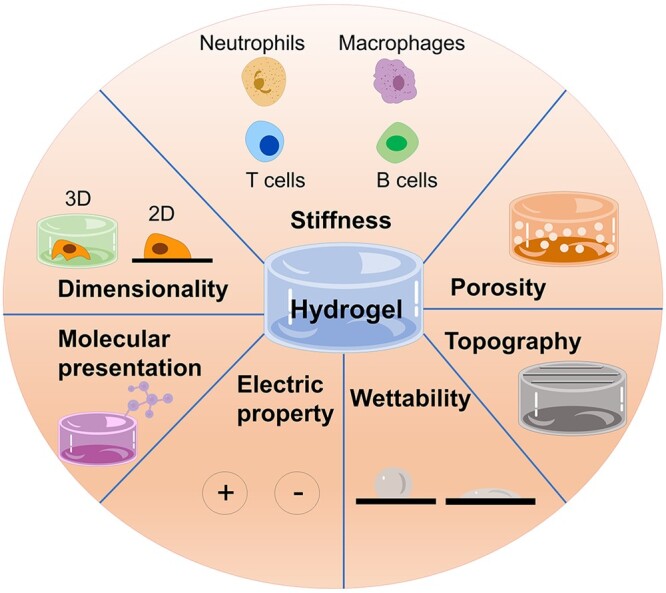
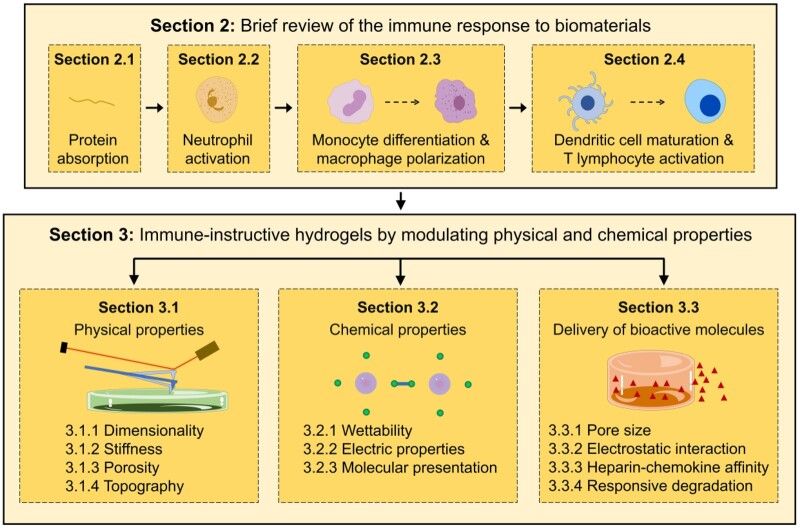
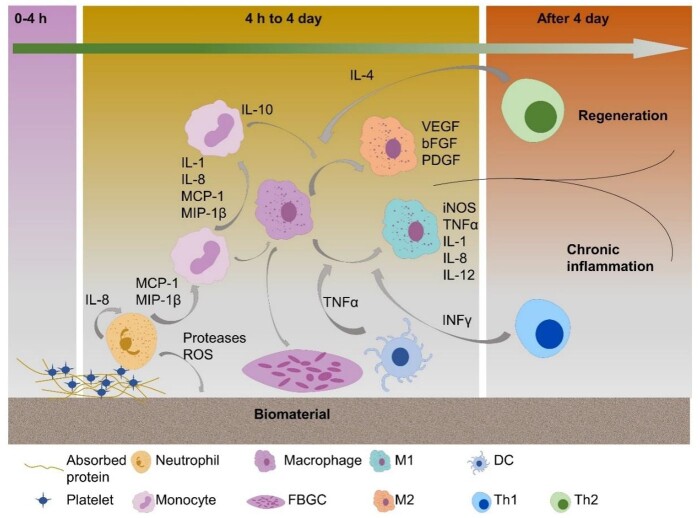
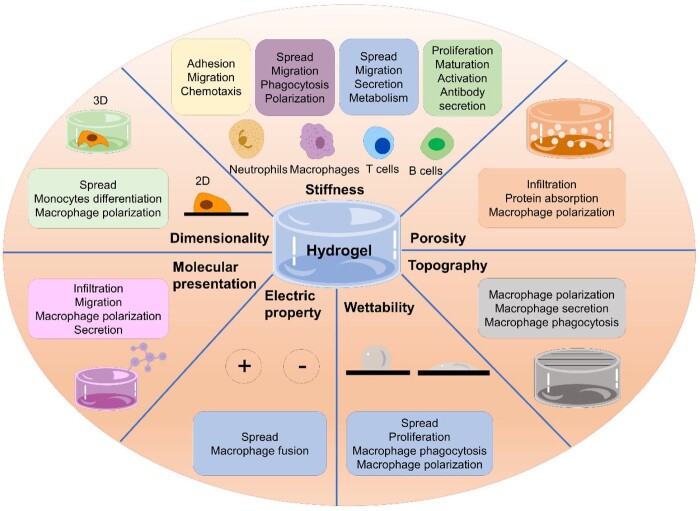
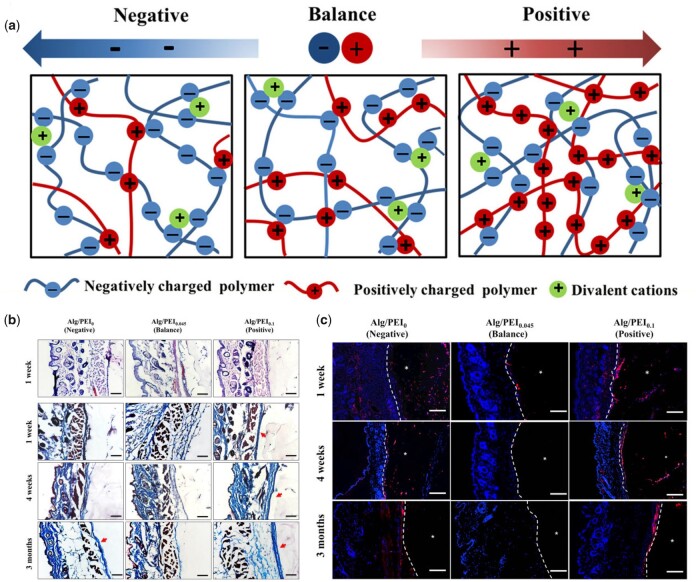
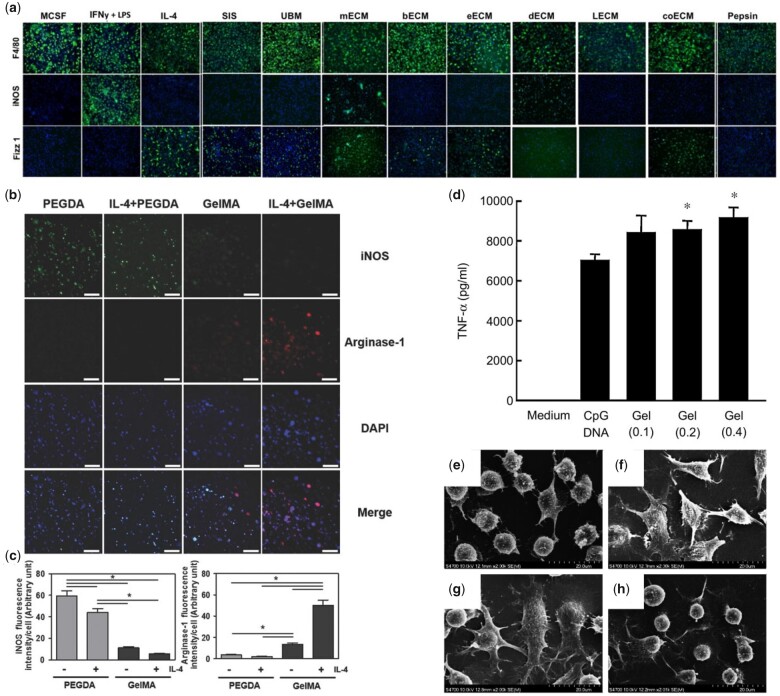
The immune system protects organisms against endogenous and exogenous harm and plays a key role in tissue development, repair and regeneration. Traditional immunomodulatory biologics exhibit limitations including degradation by enzymes, short half-life and lack of targeting ability. Encapsulating or binding these biologics within biomaterials is an effective way to address these problems. Hydrogels are promising immunomodulatory materials because of their prominent biocompatibility, tuneability and versatility. However, to take advantage of these opportunities and optimize material performance, it is important to more specifically elucidate, and leverage on, how hydrogels affect and control the immune response. Here, we summarize how key physical and chemical properties of hydrogels affect the immune response. We first provide an overview of underlying steps of the host immune response upon exposure to biomaterials. Then, we discuss recent advances in immunomodulatory strategies where hydrogels play a key role through (i) physical properties including dimensionality, stiffness, porosity and topography; (ii) chemical properties including wettability, electric property and molecular presentation;and (iii) the delivery of bioactive molecules via chemical or physical cues. Thus, this review aims to build a conceptual and practical toolkit for the design of immune-instructive hydrogels capable of modulating the host immune response.
免疫系统保护生物体免受内源性和外源性伤害,并在组织发育、修复和再生中发挥关键作用。传统的免疫调节生物制品存在局限性,包括易被酶降解、半衰期短和缺乏靶向能力。将这些生物制品封装或结合在生物材料中是解决这些问题的有效方法。水凝胶因其突出的生物相容性、可调节性和多功能性而成为有前途的免疫调节材料。然而,为了利用这些优势并优化材料性能,更具体地阐明并利用水凝胶如何影响和控制免疫反应非常重要。在这里,我们总结了水凝胶的关键物理和化学性质如何影响免疫反应。我们首先概述宿主在接触生物材料时免疫反应的基本步骤。然后,我们讨论免疫调节策略的最新进展,其中水凝胶通过以下方式发挥关键作用:(i)物理性质,包括维度、硬度、孔隙率和拓扑结构;(ii)化学性质,包括润湿性、电性质和分子呈现;以及(iii)通过化学或物理线索递送生物活性分子。因此,本综述旨在构建一个概念性和实用性的工具包,用于设计能够调节宿主免疫反应的免疫指导性水凝胶。