Hussein Heba G, El-Sayed El-Sayed R, Younis Nahed A, Hamdy Abd El Hamid A, Easa Saadia M
Plant Research Department, Nuclear Research Center, Egyptian Atomic Energy Authority, Cairo, Egypt.
Chemistry of Natural and Microbial Products Department, National Research Center, Giza, Egypt.
AMB Express. 2022 Jun 8;12(1):68. doi: 10.1186/s13568-022-01408-8.
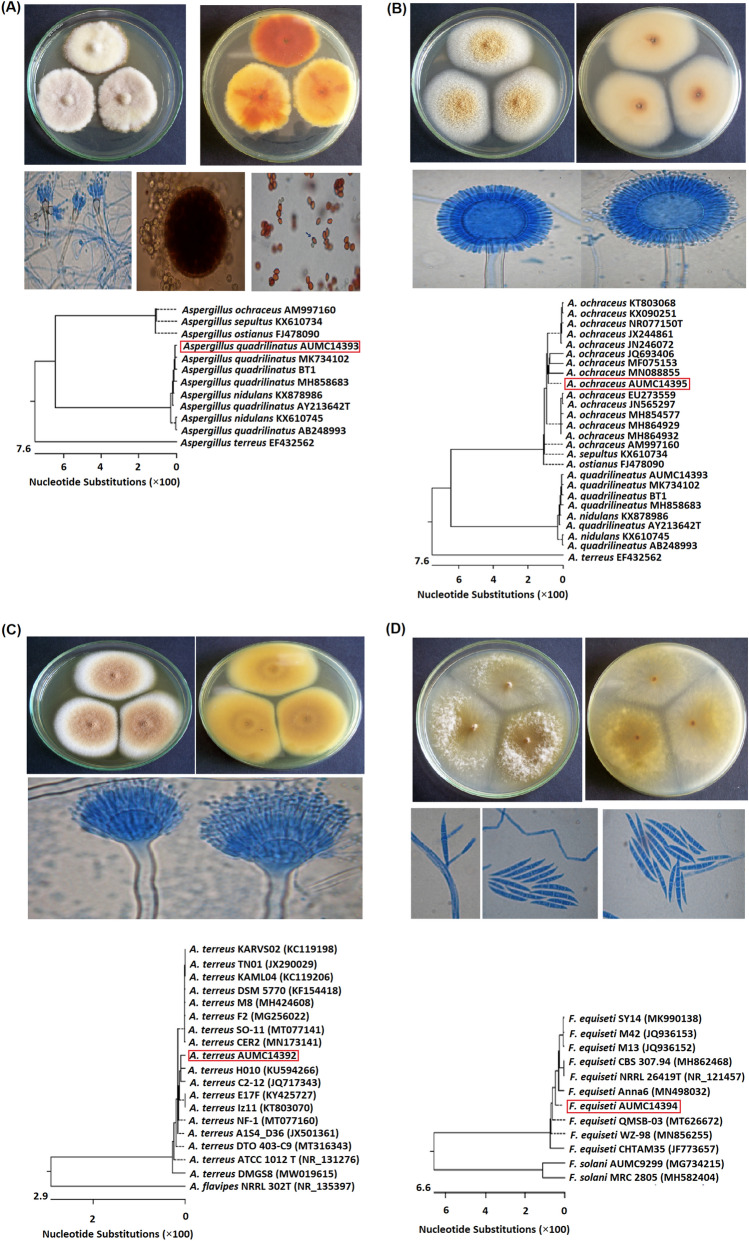
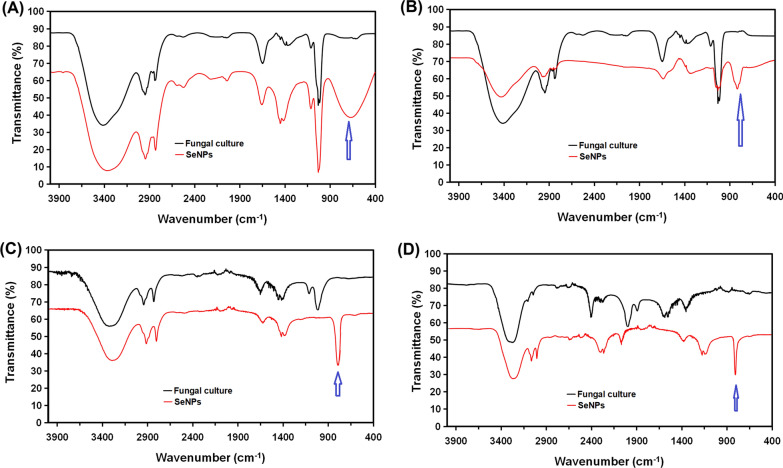
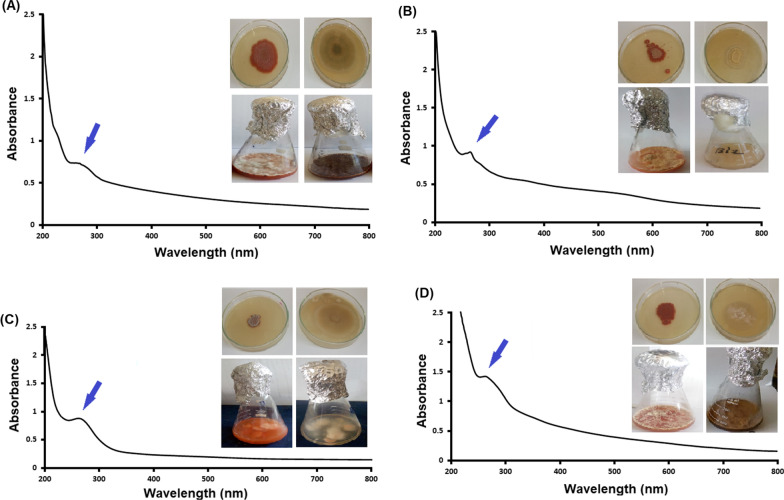
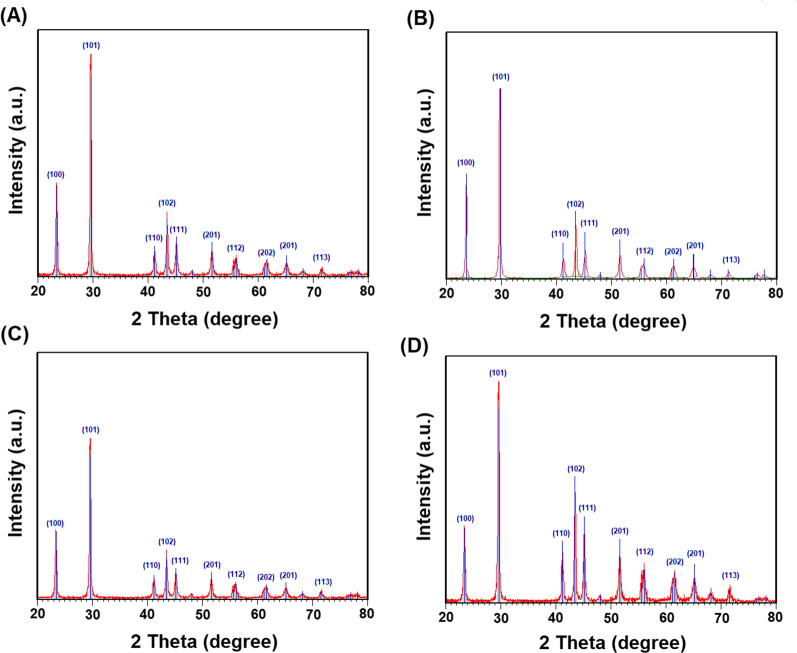
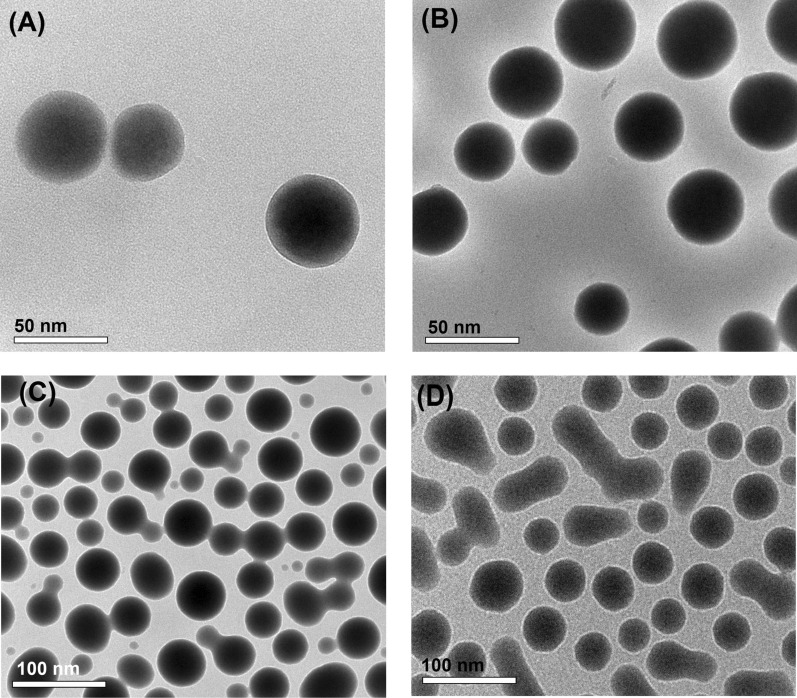
In the light of the fast growing several applications of selenium nanoparticles (SeNPs) in different industrial and agricultural sectors, this paper was conducted to explore the suitability of endophytic fungi as nano-factories for SeNPs. Thus, 75 fungal isolates were recovered from plant tissues and tested for their efficacy to biosynthesize SeNPs. Four promising strains were found able to synthesis SeNPs with different characteristics and identified. These strains were Aspergillus quadrilineatus isolated from the twigs of Ricinus communis, Aspergillus ochraceus isolated from the leaves of Ricinus communis, Aspergillus terreus isolated from the twigs of Azadirachta indica, and Fusarium equiseti isolated from the twigs of Hibiscus rose-sinensis. The synthesized SeNPs were characterized by several techniques viz., UV-Vis, X-ray diffraction, Dynamic light scattering analyses, High resolution transmission electron microscopy, and Fourier transform infrared spectroscopy, to study their crystalline structure, particle sized distribution, and morphology. Furthermore, the in vitro antimicrobial and antioxidant activities were evaluated. SeNPs synthesized by the four strains showed potent antifungal and antibacterial potentials against different human and phyto- pathogens. Moreover, SeNPs synthesized by the respective strains showed promising antioxidant power with IC values of 198.32, 151.23, 100.31, and 91.52 µg mL. To the best of our knowledge, this is the first study on the use of endophytic fungi for SeNPs' biosynthesis. The presented research recommends the use of endophytic fungi as facile one-pot production bio-factories of SeNPs with promising characteristics.
鉴于硒纳米颗粒(SeNPs)在不同工农业领域的多种应用快速增长,本文旨在探索内生真菌作为SeNPs纳米工厂的适用性。因此,从植物组织中分离出75株真菌菌株,并测试它们生物合成SeNPs的功效。发现有四株有前景的菌株能够合成具有不同特性的SeNPs并进行了鉴定。这些菌株分别是从蓖麻嫩枝中分离出的四线曲霉、从蓖麻叶片中分离出的赭曲霉、从印楝嫩枝中分离出的土曲霉以及从朱槿嫩枝中分离出的木贼镰刀菌。通过紫外可见光谱、X射线衍射、动态光散射分析、高分辨率透射电子显微镜和傅里叶变换红外光谱等多种技术对合成的SeNPs进行表征,以研究它们的晶体结构、粒径分布和形态。此外,还评估了其体外抗菌和抗氧化活性。由这四株菌株合成的SeNPs对不同的人类和植物病原体显示出强大的抗真菌和抗菌潜力。而且,由各菌株合成的SeNPs显示出有前景的抗氧化能力,其IC值分别为198.32、151.23、100.31和91.52 µg mL。据我们所知,这是关于利用内生真菌进行SeNPs生物合成的首次研究。本研究推荐将内生真菌用作具有良好特性的SeNPs简易一锅法生产生物工厂。