• 文献检索
  • 文档翻译
  • 深度研究
  • 学术资讯
  • Suppr Zotero 插件Zotero 插件
  • 邀请有礼
  • 套餐&价格
  • 历史记录
应用&插件
Suppr Zotero 插件Zotero 插件浏览器插件Mac 客户端Windows 客户端微信小程序
定价
高级版会员购买积分包购买API积分包
服务
文献检索文档翻译深度研究API 文档MCP 服务
关于我们
关于 Suppr公司介绍联系我们用户协议隐私条款
关注我们

Suppr 超能文献

核心技术专利:CN118964589B侵权必究
粤ICP备2023148730 号-1Suppr @ 2026

文献检索

告别复杂PubMed语法,用中文像聊天一样搜索,搜遍4000万医学文献。AI智能推荐,让科研检索更轻松。

立即免费搜索

文件翻译

保留排版,准确专业,支持PDF/Word/PPT等文件格式,支持 12+语言互译。

免费翻译文档

深度研究

AI帮你快速写综述,25分钟生成高质量综述,智能提取关键信息,辅助科研写作。

立即免费体验

视频远程口译与克服聋人用户医疗保健障碍:范围综述。

Video Relay Interpretation and Overcoming Barriers in Health Care for Deaf Users: Scoping Review.

机构信息

Department of Radiology and Medical Informatics, Faculty of Medicine, University of Geneva, Geneve, Switzerland.

Department of Clinical Speech & Language Studies, Trinity College Dublin, University of Dublin, Dublin, Ireland.

出版信息

J Med Internet Res. 2022 Jun 9;24(6):e32439. doi: 10.2196/32439.

DOI:10.2196/32439
PMID:35679099
原文链接:https://pmc.ncbi.nlm.nih.gov/articles/PMC9227653/
Abstract

BACKGROUND

Persons who are deaf are more likely to avoid health care providers than those who can hear, partially because of the lack of means of communication with these providers and the dearth of available interpreters. The use of video remote interpretation, namely the video camera on an electronic device, to connect deaf patients and health providers has rapidly expanded owing to its flexibility and advantageous cost compared with in-person sign language interpretation. Thus, we need to learn more about how this technology could effectively engage with and respond to the priorities of its users.

OBJECTIVE

We aimed to identify existing evidence regarding the use of video remote interpretation (VRI) in health care settings and to assess whether VRI technology can enable deaf users to overcome barriers to interpretation and improve communication outcomes between them and health care personnel.

METHODS

We conducted a search in 7 medical research databases (including MEDLINE, Web of Science, Embase, and Google Scholar) from 2006 including bibliographies and citations of relevant papers. The searches included articles in English, Spanish, and French. The eligibility criteria for study selection included original articles on the use of VRI for deaf or hard of hearing (DHH) sign language users for, or within, health care.

RESULTS

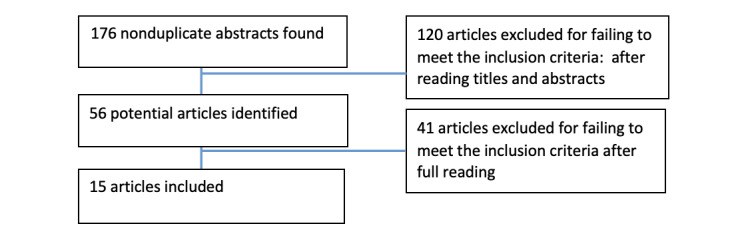
From the original 176 articles identified, 120 were eliminated after reading the article title and abstract, and 41 articles were excluded after they were fully read. In total, 15 articles were included in this study: 4 studies were literature reviews, 4 were surveys, 3 were qualitative studies, and 1 was a mixed methods study that combined qualitative and quantitative data, 1 brief communication, 1 quality improvement report, and 1 secondary analysis. In this scoping review, we identified a knowledge gap regarding the quality of interpretation and training in sign language interpretation for health care. It also shows that this area is underresearched, and evidence is scant. All evidence came from high-income countries, which is particularly problematic given that most DHH persons live in low- and middle-income countries.

CONCLUSIONS

Furthering our understanding of the use of VRI technology is pertinent and relevant. The available literature shows that VRI may enable deaf users to overcome interpretation barriers and can potentially improve communication outcomes between them and health personnel within health care services. For VRI to be acceptable, sign language users require a VRI system supported by devices with large screens and a reliable internet connection, as well as qualified interpreters trained on medical interpretation.

摘要

背景

与能听见的人相比,聋人更有可能回避医疗保健提供者,部分原因是缺乏与这些提供者沟通的手段,以及缺乏可用的口译员。由于视频远程口译(即电子设备上的摄像头)具有灵活性和比现场手语口译更有利的成本优势,因此它已迅速扩展,用于连接聋人患者和医疗保健提供者。因此,我们需要更多地了解这项技术如何能够有效地满足其用户的需求并对其做出回应。

目的

我们旨在确定有关在医疗保健环境中使用视频远程口译(VRI)的现有证据,并评估 VRI 技术是否可以使聋人用户克服口译障碍,并改善他们与医疗保健人员之间的沟通结果。

方法

我们在 2006 年从 7 个医学研究数据库(包括 MEDLINE、Web of Science、Embase 和 Google Scholar)中进行了搜索,包括相关论文的参考文献和引文。搜索包括英语、西班牙语和法语的文章。研究选择的纳入标准包括使用 VRI 为聋人或重听(DHH)手语用户进行或在医疗保健范围内进行的原始文章。

结果

从最初确定的 176 篇文章中,有 120 篇在阅读文章标题和摘要后被排除,有 41 篇在全文阅读后被排除。总共纳入了 15 篇文章:4 篇为文献综述,4 篇为调查,3 篇为定性研究,1 篇为结合定性和定量数据的混合方法研究,1 篇为简要交流,1 篇为质量改进报告,1 篇为二次分析。在本次范围综述中,我们发现了一个与医疗保健中的手语口译质量和培训有关的知识空白。它还表明,这一领域的研究不足,证据稀少。所有证据都来自高收入国家,这尤其成问题,因为大多数 DHH 人生活在中低收入国家。

结论

进一步了解 VRI 技术的使用是相关和重要的。现有文献表明,VRI 可能使聋人用户能够克服口译障碍,并有可能改善他们与医疗保健服务中的卫生人员之间的沟通结果。为了使 VRI 被接受,手语用户需要一个由具有大屏幕和可靠互联网连接的设备支持的 VRI 系统,以及经过医学口译培训的合格口译员。
https://cdn.ncbi.nlm.nih.gov/pmc/blobs/891d/9227653/aa931ec76f8f/jmir_v24i6e32439_fig1.jpg

相似文献

1
Video Relay Interpretation and Overcoming Barriers in Health Care for Deaf Users: Scoping Review.视频远程口译与克服聋人用户医疗保健障碍:范围综述。
J Med Internet Res. 2022 Jun 9;24(6):e32439. doi: 10.2196/32439.
2
Video Remote Sign Language Interpreting in Health Communication for Deaf People: Protocol for a Randomized Controlled Trial.面向聋人的健康交流中的视频远程手语口译:一项随机对照试验方案
JMIR Res Protoc. 2024 Dec 2;13:e64590. doi: 10.2196/64590.
3
Video Remote Interpreting Technology in Health Care: Cross-Sectional Study of Deaf Patients' Experiences.医疗保健中的视频远程口译技术:对聋人患者体验的横断面研究。
JMIR Rehabil Assist Technol. 2019 Mar 11;6(1):e13233. doi: 10.2196/13233.
4
Beyond the black stump: rapid reviews of health research issues affecting regional, rural and remote Australia.超越黑木树:影响澳大利亚地区、农村和偏远地区的健康研究问题的快速综述。
Med J Aust. 2020 Dec;213 Suppl 11:S3-S32.e1. doi: 10.5694/mja2.50881.
5
Healthcare providers' and deaf patients' interpreting preferences for critical care and non-critical care: Video remote interpreting.医护人员和聋人患者对重症监护和非重症监护的口译偏好:视频远程口译。
Disabil Health J. 2020 Apr;13(2):100870. doi: 10.1016/j.dhjo.2019.100870. Epub 2019 Nov 19.
6
Ask and ye shall not receive: Interpreter-related access barriers reported by Deaf users of American sign language.有求必不应:美国手语聋人用户报告的译员相关访问障碍。
Disabil Health J. 2020 Oct;13(4):100932. doi: 10.1016/j.dhjo.2020.100932. Epub 2020 Apr 20.
7
Communication barriers to optimal access to emergency rooms according to deaf and hard-of-hearing patients and health care workers: A mixed-methods study.根据失聪和听力障碍患者及医护人员的情况分析通往急诊室的最佳途径中的沟通障碍:一项混合方法研究。
Acad Emerg Med. 2025 Mar;32(3):246-259. doi: 10.1111/acem.15037. Epub 2024 Oct 31.
8
Folic acid supplementation and malaria susceptibility and severity among people taking antifolate antimalarial drugs in endemic areas.在流行地区,服用抗叶酸抗疟药物的人群中,叶酸补充剂与疟疾易感性和严重程度的关系。
Cochrane Database Syst Rev. 2022 Feb 1;2(2022):CD014217. doi: 10.1002/14651858.CD014217.
9
American Sign Language Interpreters Perceptions of Barriers to Healthcare Communication in Deaf and Hard of Hearing Patients.美国手语译员对聋人和重听患者医疗保健沟通障碍的看法。
J Community Health. 2018 Oct;43(5):956-961. doi: 10.1007/s10900-018-0511-3.
10
Barriers and facilitators to the inclusion of deaf people in clinical trials.将聋人纳入临床试验的障碍和促进因素。
Clin Trials. 2023 Oct;20(5):576-580. doi: 10.1177/17407745231177376. Epub 2023 May 26.

引用本文的文献

1
Everyday challenges and solutions for individuals aging with deafness.听力衰退的老年人面临的日常挑战及解决办法。
Innov Aging. 2025 Jun 30;9(7):igaf071. doi: 10.1093/geroni/igaf071. eCollection 2025 Jul.
2
Health disparities among Deaf communities from Colombia: assessing communication, technology and healthcare access.哥伦比亚聋人社区的健康差异:评估沟通、技术和医疗保健可及性。
BMJ Glob Health. 2025 May 12;10(5):e018377. doi: 10.1136/bmjgh-2024-018377.
3
Sign Language Recognition System for Deaf Patients: Protocol for a Systematic Review.

本文引用的文献

1
Caring for the Deaf, Hard-of-Hearing, Blind, and Low-Vision Patients in the Breast Center.在乳腺中心护理聋、重听、盲及低视力患者。
J Breast Imaging. 2020 Nov 21;2(6):598-602. doi: 10.1093/jbi/wbaa069.
2
Access to Translator (AT&T) project: Interpreter on Wheels during the COVID-19 pandemic.“访问翻译员(AT&T)”项目:疫情期间的“车轮上的口译员”。
BMJ Open Qual. 2021 Feb;10(1). doi: 10.1136/bmjoq-2020-001062.
3
Access to Effective Communication Aids and Services among American Sign Language Users across North Carolina: Disparities and Strategies to Address Them.
聋人患者手语识别系统:系统评价方案
JMIR Res Protoc. 2025 Jan 23;14:e55427. doi: 10.2196/55427.
4
Video Remote Sign Language Interpreting in Health Communication for Deaf People: Protocol for a Randomized Controlled Trial.面向聋人的健康交流中的视频远程手语口译:一项随机对照试验方案
JMIR Res Protoc. 2024 Dec 2;13:e64590. doi: 10.2196/64590.
5
Deaf and hard-of-hearing patients are unsatisfied with and avoid German health care: Results from an online survey in German Sign Language.聋人和重听患者对德国的医疗保健不满意并加以回避:基于德国手语的在线调查结果。
BMC Public Health. 2023 Oct 18;23(1):2026. doi: 10.1186/s12889-023-16924-w.
美国北卡罗来纳州的美国手语使用者获取有效沟通辅助器具和服务的机会:差异与应对策略。
Health Commun. 2022 Jul;37(8):962-971. doi: 10.1080/10410236.2021.1878594. Epub 2021 Feb 4.
4
Supporting patients who are deaf who use a signed language in general practice.在全科医疗中为使用手语的失聪患者提供支持。
Br J Gen Pract. 2019 Dec 26;70(690):10-11. doi: 10.3399/bjgp20X707285. Print 2020 Jan.
5
Healthcare providers' and deaf patients' interpreting preferences for critical care and non-critical care: Video remote interpreting.医护人员和聋人患者对重症监护和非重症监护的口译偏好:视频远程口译。
Disabil Health J. 2020 Apr;13(2):100870. doi: 10.1016/j.dhjo.2019.100870. Epub 2019 Nov 19.
6
Video Remote Interpreting Technology in Health Care: Cross-Sectional Study of Deaf Patients' Experiences.医疗保健中的视频远程口译技术:对聋人患者体验的横断面研究。
JMIR Rehabil Assist Technol. 2019 Mar 11;6(1):e13233. doi: 10.2196/13233.
7
Prostate-Specimen Antigen (PSA) Screening and Shared Decision Making Among Deaf and Hearing Male Patients.聋人和听力正常男性患者的前列腺特异性抗原(PSA)筛查与共同决策
J Cancer Educ. 2020 Feb;35(1):28-35. doi: 10.1007/s13187-018-1436-3.
8
American Sign Language Interpreters Perceptions of Barriers to Healthcare Communication in Deaf and Hard of Hearing Patients.美国手语译员对聋人和重听患者医疗保健沟通障碍的看法。
J Community Health. 2018 Oct;43(5):956-961. doi: 10.1007/s10900-018-0511-3.
9
Deaf patient-provider communication and lung cancer screening: Health Information National Trends survey in American Sign Language (HINTS-ASL).聋人患者-医护人员沟通与肺癌筛查:美国手语健康信息国家趋势调查(HINTS-ASL)。
Patient Educ Couns. 2018 Jul;101(7):1232-1239. doi: 10.1016/j.pec.2018.03.003. Epub 2018 Mar 5.
10
Everyday technology use among older deaf adults.老年聋人日常技术使用情况。
Disabil Rehabil Assist Technol. 2019 May;14(4):325-332. doi: 10.1080/17483107.2018.1447609. Epub 2018 Mar 9.