Department of Electrical Engineering and Computer Science, Lassonde School of Engineering, York University, Toronto, ON, Canada.
Department of Radiation Oncology, Sunnybrook Health Sciences Center, Toronto, ON, Canada.
Sci Rep. 2022 Jun 11;12(1):9690. doi: 10.1038/s41598-022-13917-4.
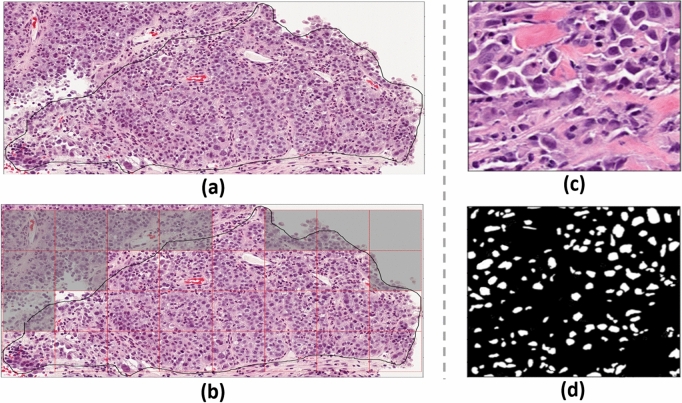
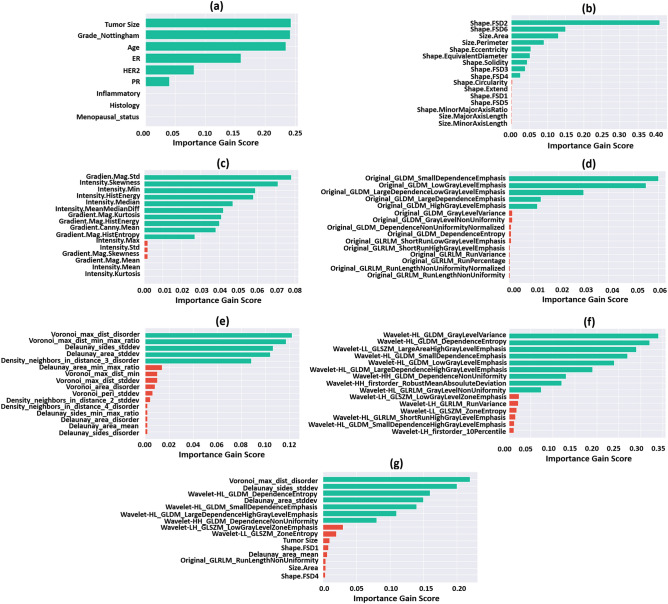
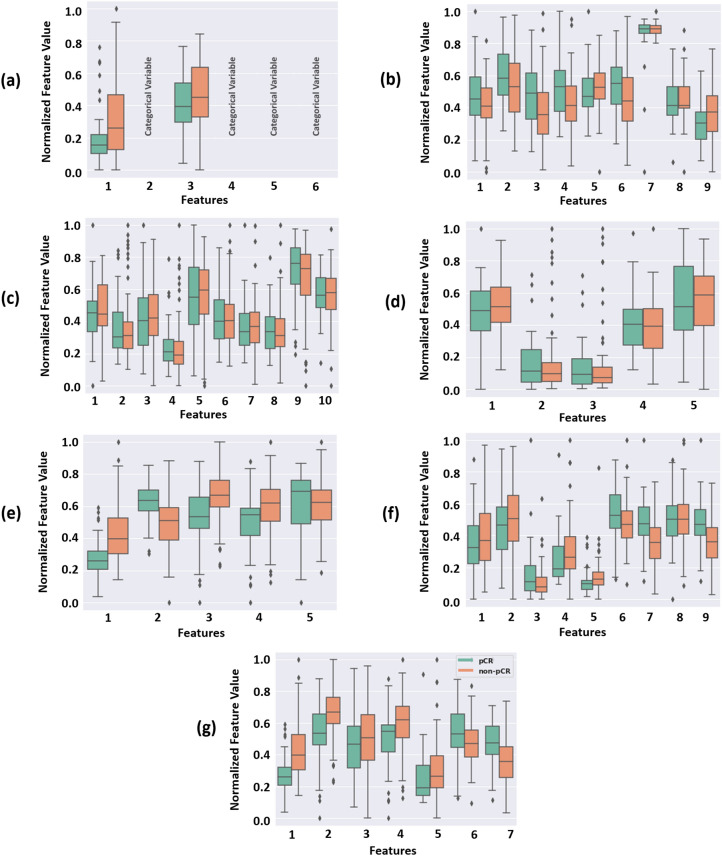
Complete pathological response (pCR) to neoadjuvant chemotherapy (NAC) is a prognostic factor for breast cancer (BC) patients and is correlated with improved survival. However, pCR rates are variable to standard NAC, depending on BC subtype. This study investigates quantitative digital histopathology coupled with machine learning (ML) to predict NAC response a priori. Clinicopathologic data and digitized slides of BC core needle biopsies were collected from 149 patients treated with NAC. The nuclei within the tumor regions were segmented on the histology images of biopsy samples using a weighted U-Net model. Five pathomic feature subsets were extracted from segmented digitized samples, including the morphological, intensity-based, texture, graph-based and wavelet features. Seven ML experiments were conducted with different feature sets to develop a prediction model of therapy response using a gradient boosting machine with decision trees. The models were trained and optimized using a five-fold cross validation on the training data and evaluated using an unseen independent test set. The prediction model developed with the best clinical features (tumor size, tumor grade, age, and ER, PR, HER2 status) demonstrated an area under the ROC curve (AUC) of 0.73. Various pathomic feature subsets resulted in models with AUCs in the range of 0.67 and 0.87, with the best results associated with the graph-based and wavelet features. The selected features among all subsets of the pathomic and clinicopathologic features included four wavelet and three graph-based features and no clinical features. The predictive model developed with these features outperformed the other models, with an AUC of 0.90, a sensitivity of 85% and a specificity of 82% on the independent test set. The results demonstrated the potential of quantitative digital histopathology features integrated with ML methods in predicting BC response to NAC. This study is a step forward towards precision oncology for BC patients to potentially guide future therapies.
完全病理学缓解(pCR)是乳腺癌(BC)患者的预后因素,与生存改善相关。然而,pCR 率因 BC 亚型和标准新辅助化疗(NAC)而有所不同。本研究通过定量数字组织病理学和机器学习(ML)来预测 NAC 反应。从 149 例接受 NAC 治疗的 BC 患者的临床病理数据和核心针活检的数字化切片中收集数据。使用加权 U-Net 模型对活检样本的组织学图像中的肿瘤区域内的细胞核进行分割。从分割的数字化样本中提取了 5 个病理特征子集,包括形态学、基于强度、纹理、基于图和小波特征。使用梯度提升机与决策树进行了 7 项 ML 实验,使用不同的特征集来开发治疗反应预测模型。使用五折交叉验证在训练数据上训练和优化模型,并在独立测试集上进行评估。使用最佳临床特征(肿瘤大小、肿瘤分级、年龄以及 ER、PR、HER2 状态)开发的预测模型的 ROC 曲线下面积(AUC)为 0.73。各种病理特征子集的模型 AUC 范围为 0.67 至 0.87,其中与基于图和小波特征的模型最佳。在所有病理和临床特征子集中选择的特征包括四个小波和三个基于图的特征,没有临床特征。使用这些特征开发的预测模型在独立测试集上的 AUC 为 0.90,灵敏度为 85%,特异性为 82%,表现优于其他模型。结果表明,定量数字组织病理学特征与 ML 方法相结合在预测 BC 对 NAC 的反应方面具有潜力。本研究是迈向 BC 患者精准肿瘤学的一步,有望指导未来的治疗。