Zhejiang Chinese Medical University, Hangzhou, 310000, Zhejiang, China.
Lishui Hospital, The Fifth Affiliated Hospital of Wenzhou Medical University, Lishui, 323000, Zhejiang, China.
BMC Cardiovasc Disord. 2022 Jun 11;22(1):264. doi: 10.1186/s12872-022-02703-9.
Our study aimed to investigate the association between epicardial adipose tissue (EAT) and atrial fibrillation (AF) recurrence risk after catheter ablation.
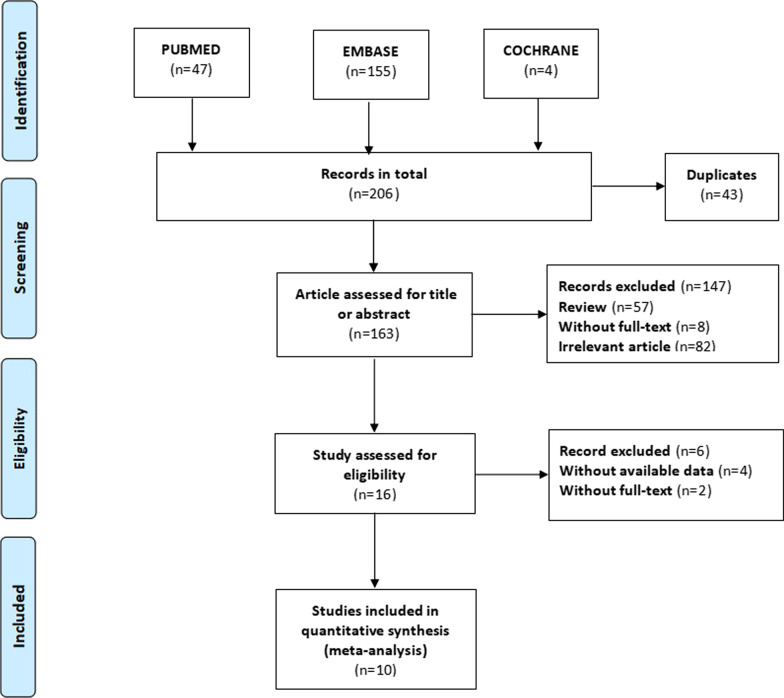
We searched PubMed, Embase, and Cochrane Library databases up to November 30, 2021 without language restrictions. Outcome was the relative risk (RR) of EAT contributes to AF recurrence after catheter ablation. The RR and 95% confidence interval (CI) was pooled by the random-effect model.
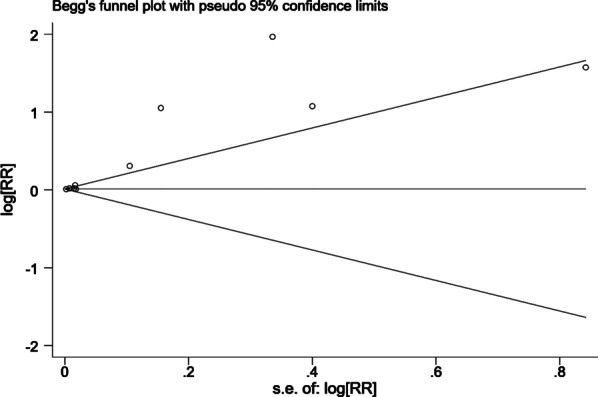
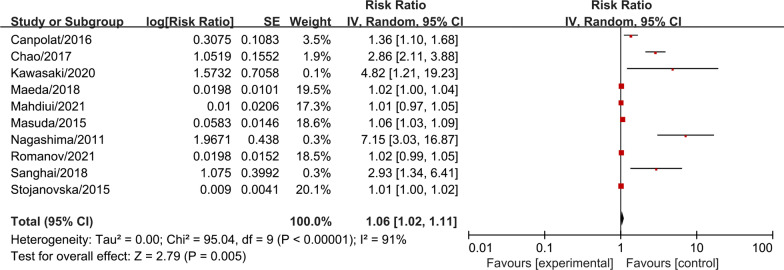
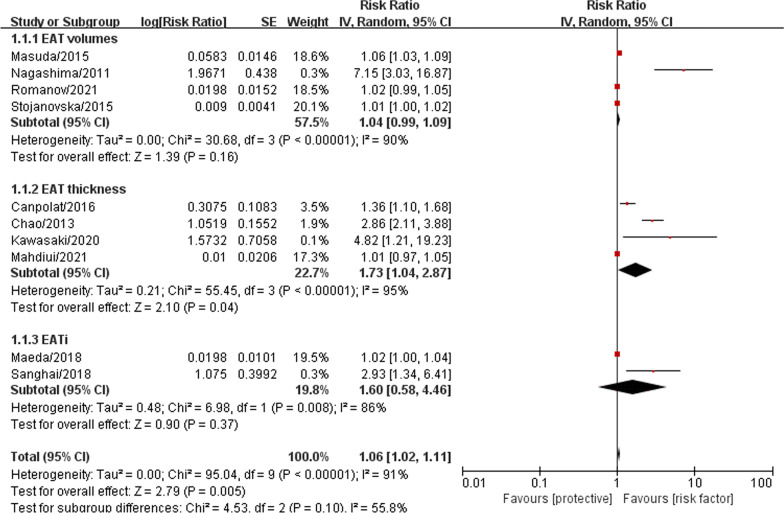
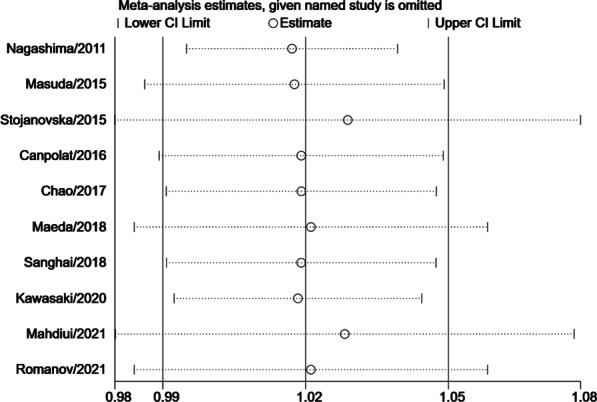
10 studies that contained 1840 AF patients were included in our study. The result of this study showed that EAT amount was associated with higher risk of AF recurrence after catheter ablation (RR = 1.06, 95% CI 1.02-1.11, P = 0.005) and EAT related thickness was a risk factor for AF recurrence after catheter ablation (RR = 1.73, 95% CI 1.04-2.87, P = 0.040). Sub-analysis showed that EAT was strongly associated with higher risk of AF recurrence common in Asian population (RR = 1.25, 95% CI 1.10-1.43, P < 0.001), patients aged ≤ 60 years old (RR = 2.01, 95% CI 1.18-3.44, P = 0.010), and follow-up more than 1 year (RR = 1.06, 95% CI 1.01-1.11, P = 0.020).
The meta-analysis demonstrated that EAT related thickness seems to be the marker most strongly associated with a greater risk of AF recurrences after catheter ablation. It should be included into risk stratification for predicting AF recurrent before catheter ablation.
本研究旨在探讨心外膜脂肪组织(EAT)与导管消融后心房颤动(AF)复发风险之间的关系。
我们检索了PubMed、Embase 和 Cochrane Library 数据库,检索时间截至 2021 年 11 月 30 日,无语言限制。主要结局为 EAT 与导管消融后 AF 复发的相对风险(RR)。采用随机效应模型汇总 RR 和 95%置信区间(CI)。
本研究纳入了 10 项包含 1840 例 AF 患者的研究。结果表明,EAT 量与导管消融后 AF 复发风险增加相关(RR=1.06,95%CI 1.02-1.11,P=0.005),EAT 相关厚度是导管消融后 AF 复发的危险因素(RR=1.73,95%CI 1.04-2.87,P=0.040)。亚组分析显示,EAT 与亚洲人群中 AF 复发风险增加高度相关(RR=1.25,95%CI 1.10-1.43,P<0.001),年龄≤60 岁的患者(RR=2.01,95%CI 1.18-3.44,P=0.010)和随访时间超过 1 年的患者(RR=1.06,95%CI 1.01-1.11,P=0.020)。
荟萃分析表明,EAT 相关厚度似乎是与导管消融后 AF 复发风险增加最密切相关的标志物。在导管消融前进行风险分层预测 AF 复发时,应将其纳入其中。