Tristán-Manzano María, Maldonado-Pérez Noelia, Justicia-Lirio Pedro, Muñoz Pilar, Cortijo-Gutiérrez Marina, Pavlovic Kristina, Jiménez-Moreno Rosario, Nogueras Sonia, Carmona M Dolores, Sánchez-Hernández Sabina, Aguilar-González Araceli, Castella María, Juan Manel, Marañón Concepción, Marchal Juan Antonio, Benabdellah Karim, Herrera Concha, Martin Francisco
Department of Genomic Medicine, Pfizer-University of Granada-Andalusian Regional Government Centre for Genomics and Oncological Research (GENYO), PTS, Avda. de la Ilustración 114, 18016 Granada, Spain.
LentiStem Biotech, Pfizer-University of Granada-Junta de Andalucía Centre for Genomics and Oncological Research (GENYO), PTS, Avda. de la Ilustración 114, 18016 Granada, Spain.
Mol Ther Oncolytics. 2022 May 18;25:335-349. doi: 10.1016/j.omto.2022.05.003. eCollection 2022 Jun 16.
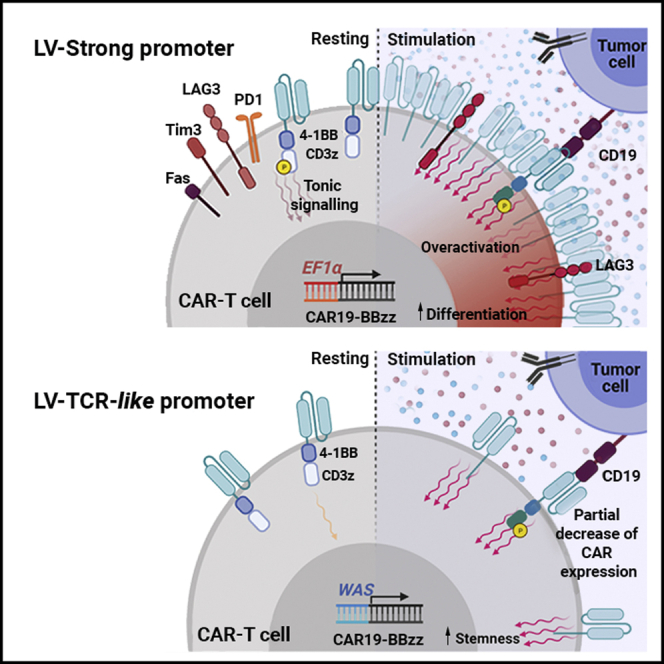
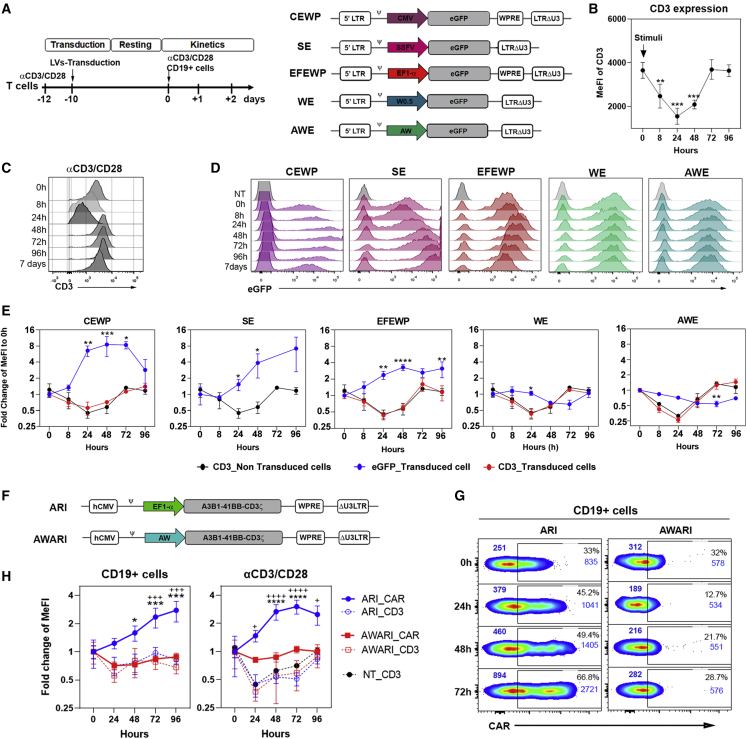
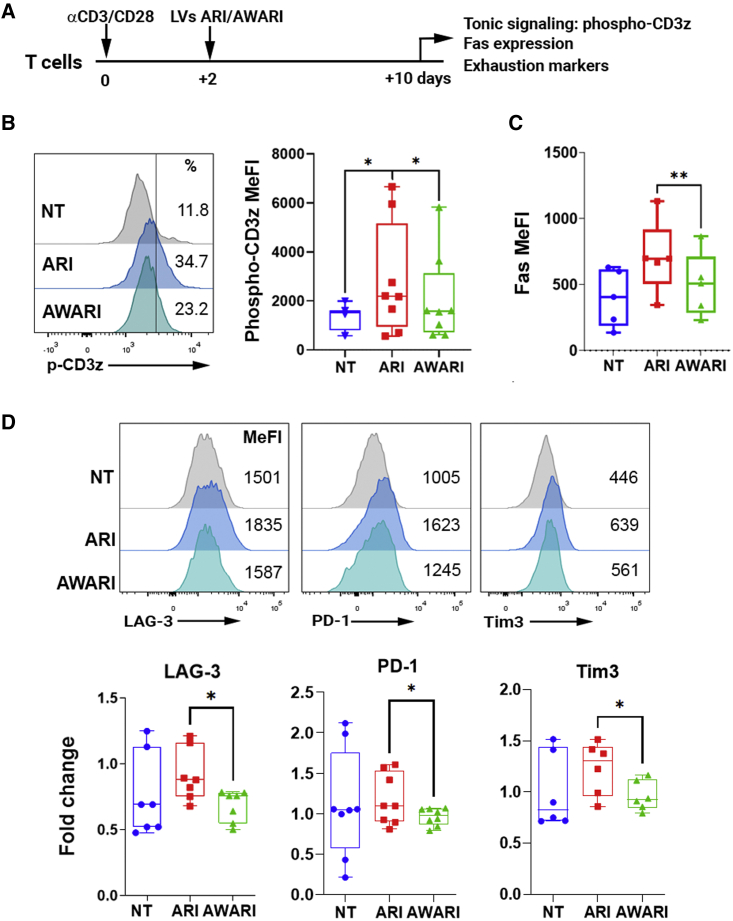
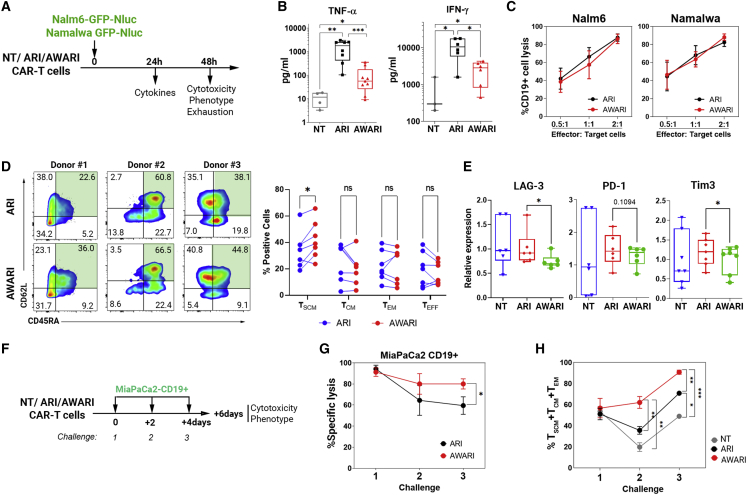
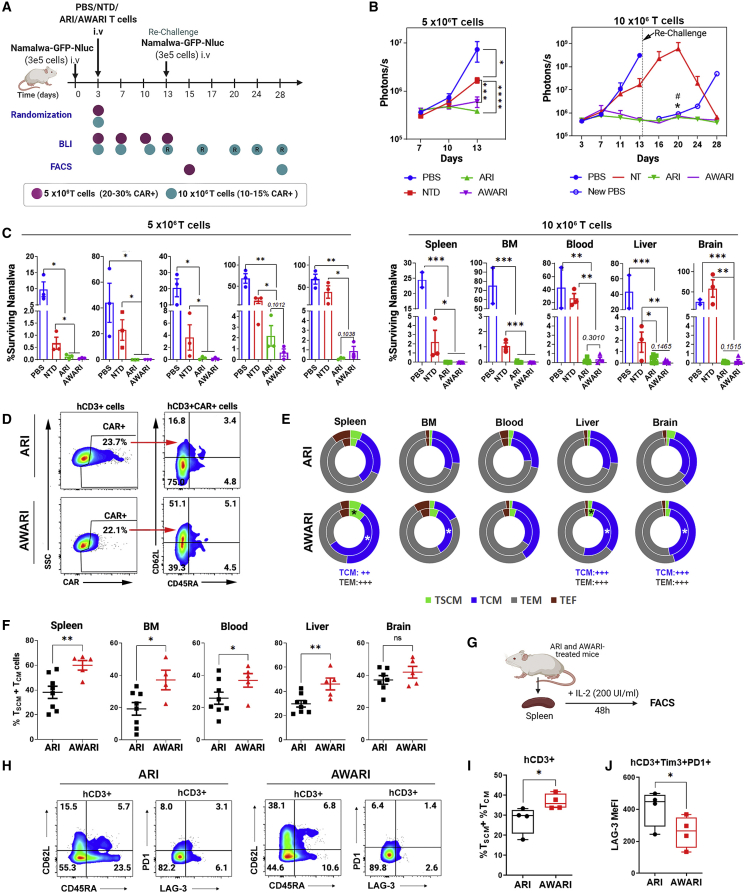
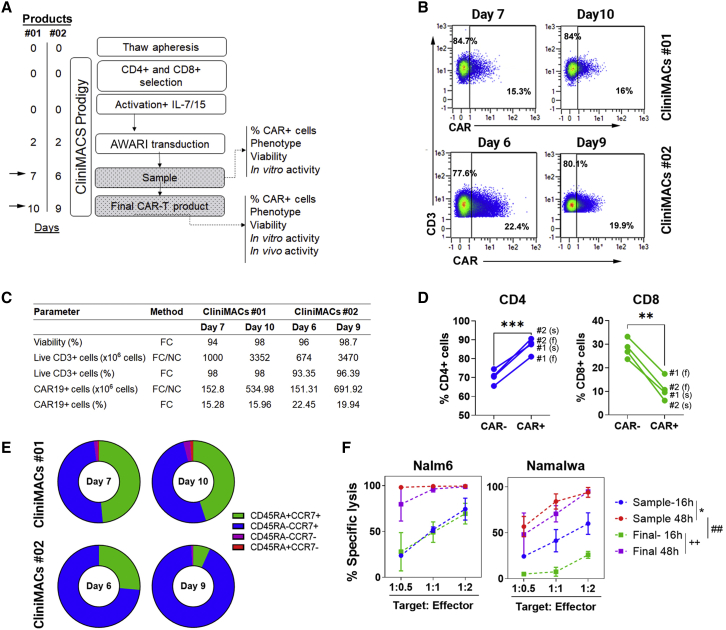
Anti-CD19 chimeric antigen receptor (CAR)-T cells have achieved impressive outcomes for the treatment of relapsed and refractory B-lineage neoplasms. However, important limitations still remain due to severe adverse events (i.e., cytokine release syndrome and neuroinflammation) and relapse of 40%-50% of the treated patients. Most CAR-T cells are generated using retroviral vectors with strong promoters that lead to high CAR expression levels, tonic signaling, premature exhaustion, and overstimulation, reducing efficacy and increasing side effects. Here, we show that lentiviral vectors (LVs) expressing the transgene through a gene promoter (AW-LVs) closely mimic the T cell receptor (TCR)/CD3 expression kinetic upon stimulation. These AW-LVs can generate improved CAR-T cells as a consequence of their moderate and TCR-like expression profile. Compared with CAR-T cells generated with human elongation factor α (EF1α)-driven-LVs, AW-CAR-T cells exhibited lower tonic signaling, higher proportion of naive and stem cell memory T cells, less exhausted phenotype, and milder secretion of tumor necrosis factor alpha (TNF-α) and interferon (IFN)-ɣ after efficient destruction of CD19 lymphoma cells, both and . Moreover, we also showed their improved efficiency using an CD19 pancreatic tumor model. We finally demonstrated the feasibility of large-scale manufacturing of AW-CAR-T cells in guanosine monophosphate (GMP)-like conditions. Based on these data, we propose the use of AW-LVs for the generation of improved CAR-T products.
抗CD19嵌合抗原受体(CAR)-T细胞在治疗复发难治性B系肿瘤方面取得了令人瞩目的成果。然而,由于严重不良事件(即细胞因子释放综合征和神经炎症)以及40%-50%的治疗患者复发,仍然存在重要局限性。大多数CAR-T细胞是使用具有强启动子的逆转录病毒载体产生的,这些载体导致高CAR表达水平、持续性信号传导、过早耗竭和过度刺激,从而降低疗效并增加副作用。在这里,我们表明通过基因启动子(AW-LVs)表达转基因的慢病毒载体(LVs)在刺激后紧密模拟T细胞受体(TCR)/CD3的表达动力学。由于其适度且类似TCR的表达谱,这些AW-LVs可以产生改良的CAR-T细胞。与用人伸长因子α(EF1α)驱动的LVs产生的CAR-T细胞相比,AW-CAR-T细胞表现出更低的持续性信号传导、更高比例的初始和干细胞记忆T细胞、更少的耗竭表型,并且在有效破坏CD19淋巴瘤细胞后肿瘤坏死因子α(TNF-α)和干扰素(IFN)-γ的分泌更温和。此外,我们还在CD19胰腺肿瘤模型中展示了它们提高的效率。我们最终证明了在类似鸟苷单磷酸(GMP)的条件下大规模生产AW-CAR-T细胞的可行性。基于这些数据,我们建议使用AW-LVs来产生改良的CAR-T产品。