Zong Nansu, Wen Andrew, Moon Sungrim, Fu Sunyang, Wang Liwei, Zhao Yiqing, Yu Yue, Huang Ming, Wang Yanshan, Zheng Gang, Mielke Michelle M, Cerhan James R, Liu Hongfang
Department of Artificial Intelligence and Informatics Research, Mayo Clinic, Rochester, MN, USA.
Department of Preventive Medicine, Northwestern Medicine, Northwestern University, Chicago, IL, USA.
NPJ Digit Med. 2022 Jun 14;5(1):77. doi: 10.1038/s41746-022-00617-6.
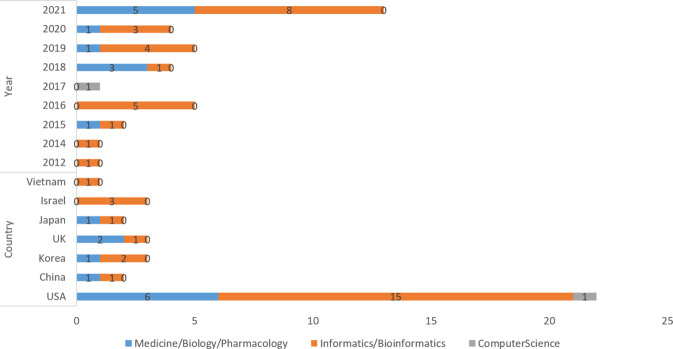
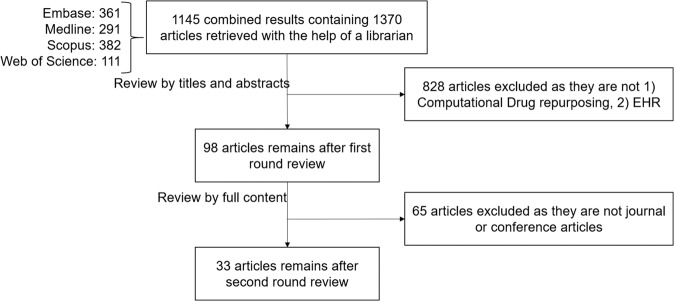
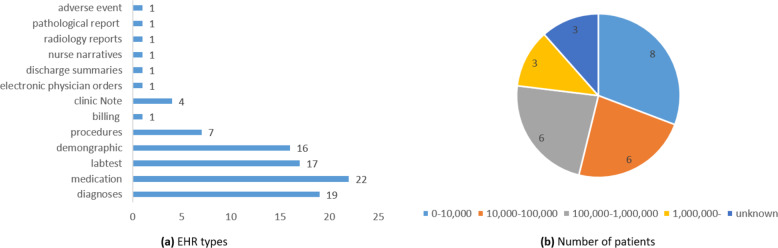
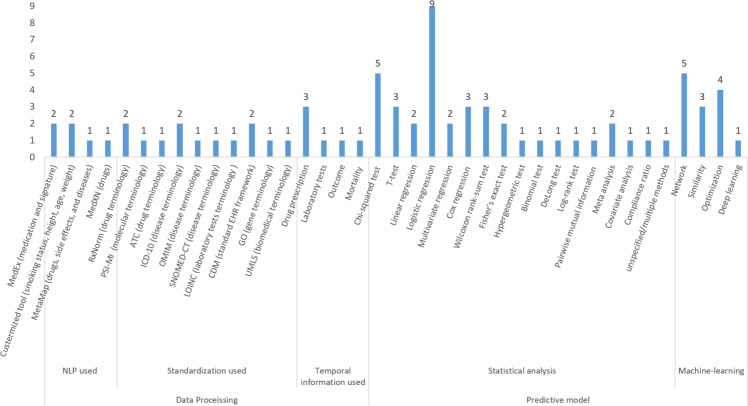
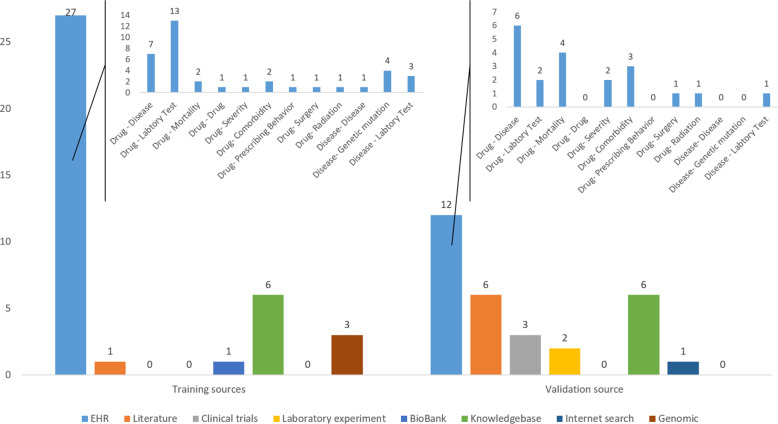
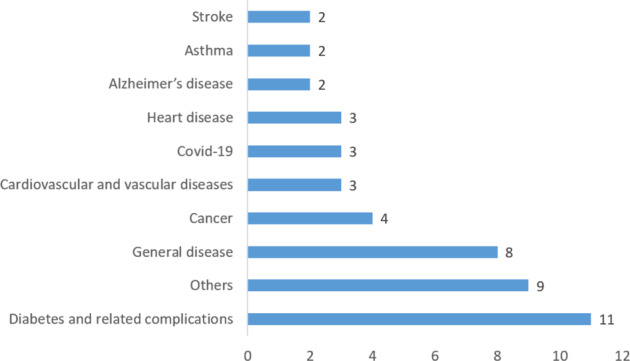
Computational drug repurposing methods adapt Artificial intelligence (AI) algorithms for the discovery of new applications of approved or investigational drugs. Among the heterogeneous datasets, electronic health records (EHRs) datasets provide rich longitudinal and pathophysiological data that facilitate the generation and validation of drug repurposing. Here, we present an appraisal of recently published research on computational drug repurposing utilizing the EHR. Thirty-three research articles, retrieved from Embase, Medline, Scopus, and Web of Science between January 2000 and January 2022, were included in the final review. Four themes, (1) publication venue, (2) data types and sources, (3) method for data processing and prediction, and (4) targeted disease, validation, and released tools were presented. The review summarized the contribution of EHR used in drug repurposing as well as revealed that the utilization is hindered by the validation, accessibility, and understanding of EHRs. These findings can support researchers in the utilization of medical data resources and the development of computational methods for drug repurposing.
计算性药物重新利用方法采用人工智能(AI)算法来发现已批准或正在研究的药物的新用途。在异构数据集中,电子健康记录(EHR)数据集提供了丰富的纵向和病理生理数据,有助于药物重新利用的生成和验证。在此,我们对最近发表的利用EHR进行计算性药物重新利用的研究进行评估。从2000年1月至2022年1月期间从Embase、Medline、Scopus和Web of Science检索到的33篇研究文章纳入了最终综述。呈现了四个主题,即(1)发表渠道,(2)数据类型和来源,(3)数据处理和预测方法,以及(4)目标疾病、验证和发布的工具。该综述总结了EHR在药物重新利用中的贡献,并揭示了EHR的验证、可及性和理解阻碍了其利用。这些发现可为研究人员利用医学数据资源以及开发药物重新利用的计算方法提供支持。