Department of Biological Sciences (Female Campus), Faculty of Basic and Applied Sciences, International Islamic University Islamabad, Islamabad, 44000, Pakistan.
Department of Pharmacy, Faculty of Biological Sciences, Quaid-I-Azam University, Islamabad, 45320, Pakistan.
Sci Rep. 2022 Jun 15;12(1):10024. doi: 10.1038/s41598-022-14193-y.
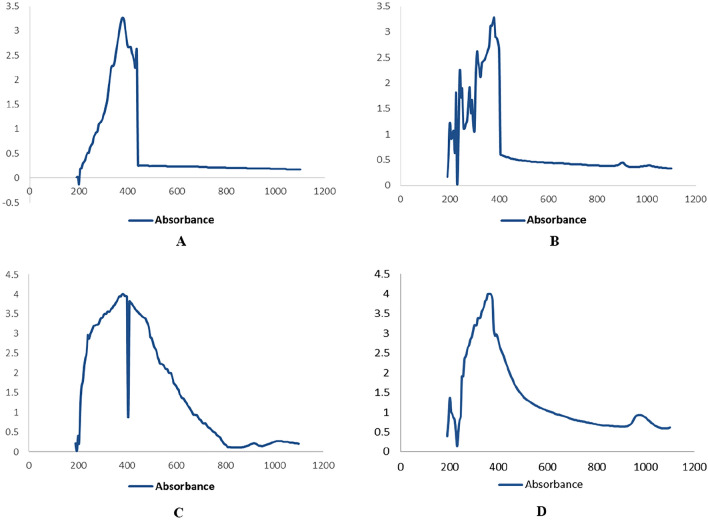
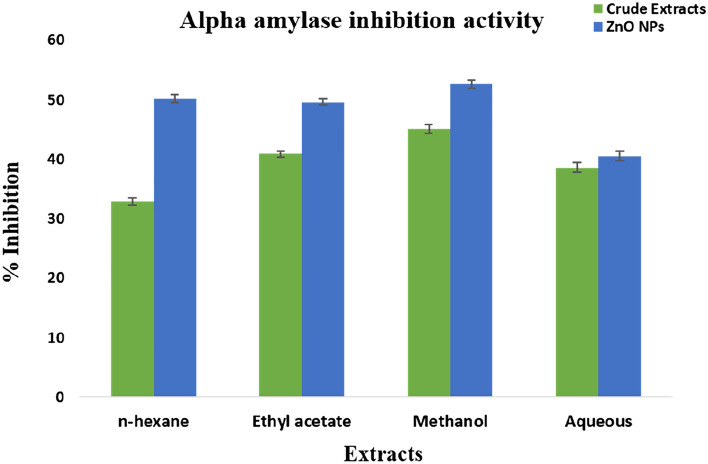
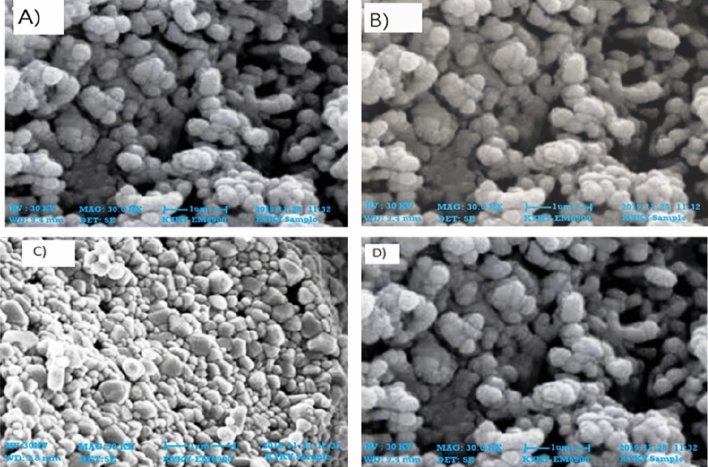
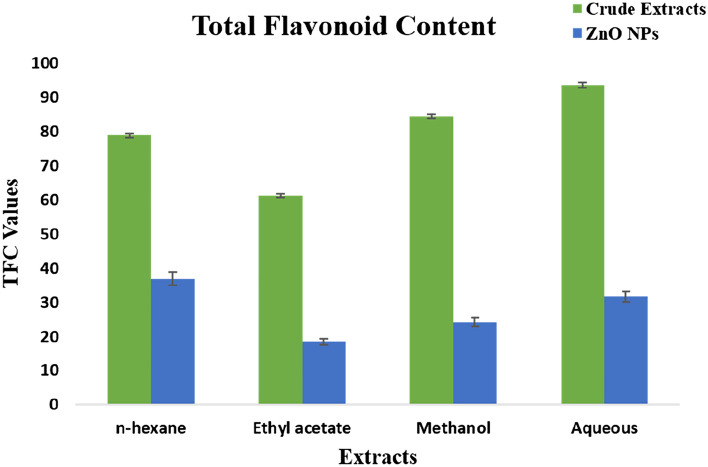
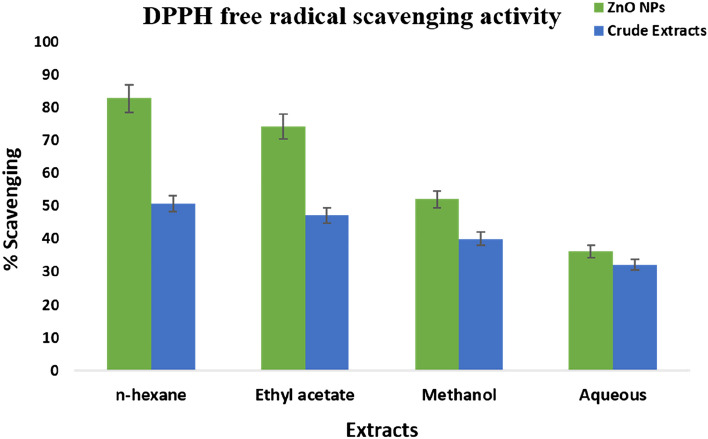
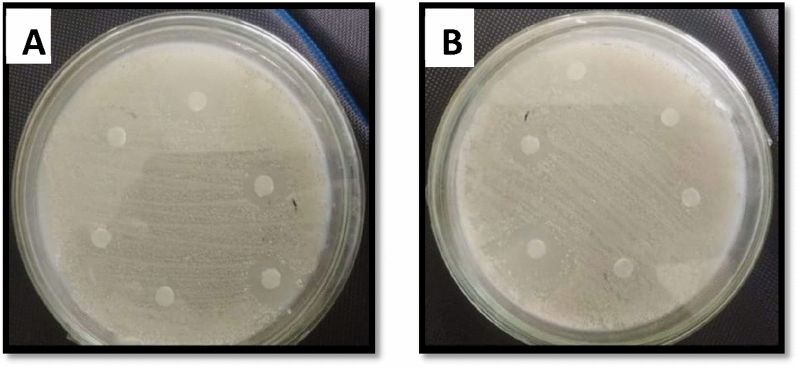
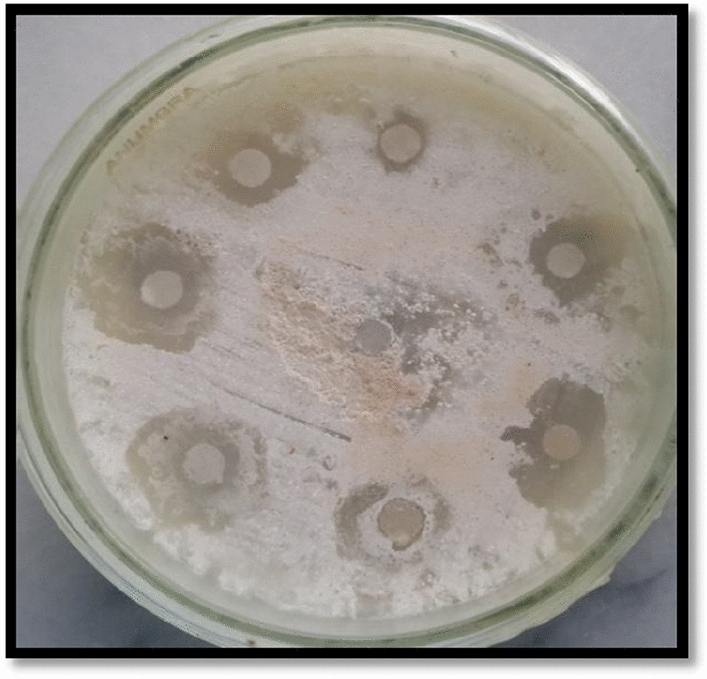
The use of the green approach for nanoparticle synthesis yielded noticeable concern due to its eco-friendliness, cost-effectiveness, and reduced production of toxic chemicals. The current study was designed to formulate Zinc oxide nanoparticles (ZnO NPs) by using Fagonia cretica extracts, evaluating its phytochemical content, and different biological activities. Four different solvents; methanol (MeOH), n-Hexane (n-H), aqueous (Aq), and ethyl acetate (EA), had been utilized in the extracting method. ZnO NPs were successfully synthesized and characterized by UV-vis spectroscopy and scanning electron microscopy (SEM). The UV-vis spectra showed absorbance peaks between 350-400 nm range and SEM analysis revealed spherical morphology with particle sizes ranging from 65-80 nm. In phytochemical analysis, crude extracts exhibited the highest phytochemical content as they contain enriched secondary metabolites. n-hexane extract showed the highest phenolic contents while aqueous extracts showed the highest flavonoid content. Maximum free radicle scavenging activity was observed in NPs synthesized from ethyl-acetate extract with an IC value of 35.10 µg/ml. Significant antibacterial activity was exhibited by NPs polar solvents against K. pneumonae, E. coli, and B. subtilis. Polar solvents showed considerable antifungal potential against A. flavus and F. solani. NPs synthesized from nH extract showed potential cytotoxic activity with an LC value of 42.41 µg/ml against brine shrimps. A noteworthy antidiabetic activity was exhibited by nanoparticles synthesized from methanol extract i.e., 52.61 ± 0.36%. Significant bald zones were observed in nanoparticles synthesized from methanol extract rendering protein kinase inhibition. The present study highlights the significance of F. indica as a natural source for synthesizing functional nanoparticles with substantial antioxidant, antimicrobial, cytotoxic, protein kinase inhibitory, and antidiabetic properties.
由于其环保性、成本效益和减少有毒化学物质的产生,绿色方法在纳米粒子合成中的应用引起了人们的关注。本研究旨在利用刺山柑提取物制备氧化锌纳米粒子(ZnO NPs),评估其植物化学物质含量和不同的生物活性。本研究采用甲醇(MeOH)、正己烷(n-H)、水(Aq)和乙酸乙酯(EA)四种不同溶剂进行提取。成功合成并通过紫外-可见分光光度法和扫描电子显微镜(SEM)对 ZnO NPs 进行了表征。紫外-可见光谱显示吸收峰在 350-400nm 范围内,SEM 分析显示球形形貌,粒径范围为 65-80nm。在植物化学分析中,粗提物表现出最高的植物化学物质含量,因为它们含有丰富的次生代谢物。正己烷提取物表现出最高的酚类含量,而水提取物表现出最高的类黄酮含量。从乙酸乙酯提取物合成的 NPs 表现出最大的自由基清除活性,IC 值为 35.10μg/ml。极性溶剂对 NPs 对 K. pneumonae、E. coli 和 B. subtilis 表现出显著的抗菌活性。极性溶剂对 A. flavus 和 F. solani 表现出相当大的抗真菌潜力。从 nH 提取物合成的 NPs 对卤虫表现出潜在的细胞毒性活性,LC 值为 42.41μg/ml。从甲醇提取物合成的纳米粒子表现出显著的抗糖尿病活性,即 52.61±0.36%。从甲醇提取物合成的纳米粒子观察到明显的光秃区,导致蛋白激酶抑制。本研究强调了 F. indica 作为一种天然来源,用于合成具有显著抗氧化、抗菌、细胞毒性、蛋白激酶抑制和抗糖尿病特性的功能性纳米粒子的重要性。