Yong Loo Lin School of Medicine, National University of Singapore, NUHS Tower Block, 1E Kent Ridge Road, Level 11, 119228, Singapore, Singapore.
Division of Supportive and Palliative Care, National Cancer Centre Singapore, 11 Hospital Dr, 169610, Singapore, Singapore.
BMC Med Educ. 2022 Jun 17;22(1):466. doi: 10.1186/s12909-022-03515-3.
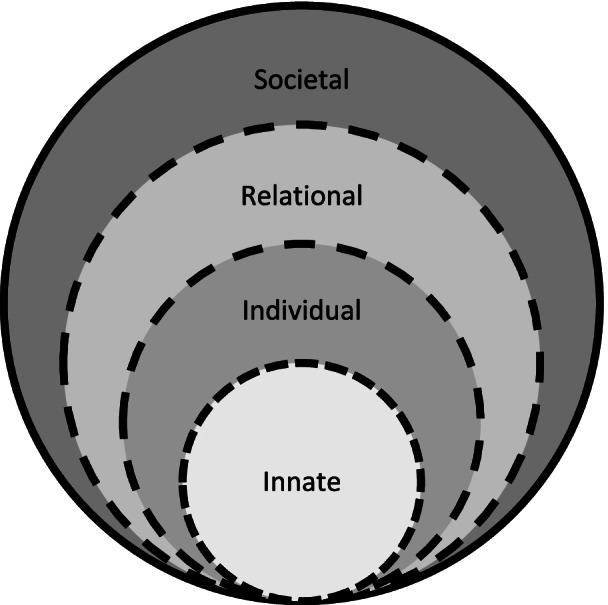
Characterised by feelings of helplessness in the face of clinical, organization and societal demands, medical students are especially prone to moral distress (MD). Despite risks of disillusionment and burnout, efforts to support them have been limited by a dearth of data and understanding of MD in medical students. Yet, new data on how healthcare professionals confront difficult care situations suggest that MD could be better understood through the lens of the Ring Theory of Personhood (RToP). A systematic scoping review (SSR) guided by the RToP is proposed to evaluate the present understanding of MD amongst medical students.
The Systematic Evidence-Based Approach (SEBA) is adopted to map prevailing accounts of MD in medical students. To enhance the transparency and reproducibility, the SEBA methodology employs a structured search approach, concurrent and independent thematic analysis and directed content analysis (Split Approach), the Jigsaw Perspective that combines complementary themes and categories, and the Funnelling Process that compares the results of the Jigsaw Perspective with tabulated summaries to ensure the accountability of these findings. The domains created guide the discussion.
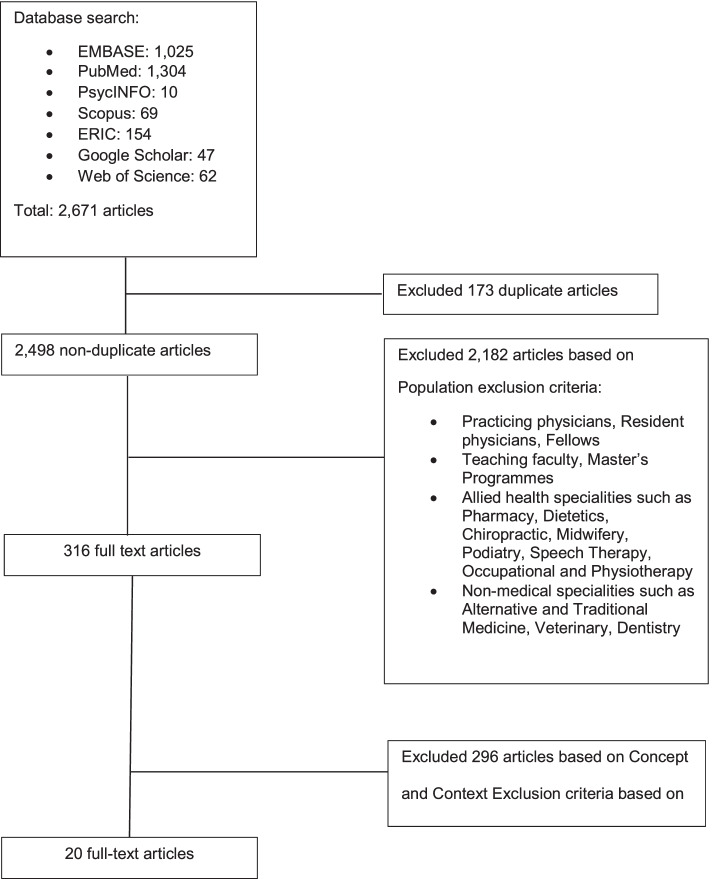
Two thousand six hundred seventy-one abstracts were identified from eight databases, 316 articles were reviewed, and 20 articles were included. The four domains identified include definitions, sources, recognition and, interventions for MD.
MD in medical students may be explained as conflicts between the values, duties, and principles contained within the different aspects of their identity. These conflicts which are characterised as disharmony (within) and dyssynchrony (between) the rings of RToP underline the need for personalised and longitudinal evaluations and support of medical students throughout their training. This longitudinal oversight and support should be supported by the host organization that must also ensure access to trained faculty, a nurturing and safe environment for medical students to facilitate speak-up culture, anonymous reporting, feedback opportunities and supplementing positive role modelling and mentoring within the training program.
面对临床、组织和社会需求,医学生特别容易感到无助,因此特别容易感到道德困境(MD)。尽管存在幻灭和倦怠的风险,但由于缺乏有关医学生 MD 的数据和理解,支持他们的努力受到限制。然而,有关医疗保健专业人员如何应对困难护理情况的新数据表明,通过人格的环理论(RToP)的视角可以更好地理解 MD。提出了一项基于 RToP 的系统范围审查(SSR),以评估当前医学生对 MD 的理解。
采用系统证据基础方法(SEBA)来映射医学生 MD 的普遍说法。为了提高透明度和可重复性,SEBA 方法采用结构化搜索方法、同时和独立的主题分析以及定向内容分析(Split 方法)、结合互补主题和类别的拼图视角,以及比较拼图视角的结果和列表摘要的漏斗过程,以确保这些发现的问责制。创建的域指导讨论。
从八个数据库中确定了 2671 个摘要,审查了 316 篇文章,纳入了 20 篇文章。确定的四个域包括 MD 的定义、来源、识别和干预。
医学生的 MD 可以解释为他们身份的不同方面所包含的价值观、职责和原则之间的冲突。这些冲突的特点是 RToP 环内的不和谐(内部)和环之间的不同步(外部),强调需要对医学生进行个性化和纵向评估和支持贯穿他们的培训。这种纵向监督和支持应由主办组织提供,主办组织还必须确保为医学生提供经过培训的教师、培养和安全的环境,以促进直言不讳的文化、匿名报告、提供反馈机会以及在培训计划中补充积极的榜样和指导。