Yong Loo Lin School of Medicine, National University of Singapore, 10 Medical Dr, Singapore, Singapore.
Division of Supportive and Palliative Care, National Cancer Centre Singapore, Singapore, Singapore.
BMC Med Educ. 2023 Oct 25;23(1):799. doi: 10.1186/s12909-023-04748-6.
Medical education has enjoyed mixed fortunes nurturing professional identity formation (PIF), or how medical students think, feel and act as physicians. New data suggests that structured mentoring programs like the Palliative Medicine Initiative (PMI) may offer a means of developing PIF in a consistent manner. To better understand how a well-established structured research mentoring program shapes PIF, a study of the experiences of PMI mentees is proposed.
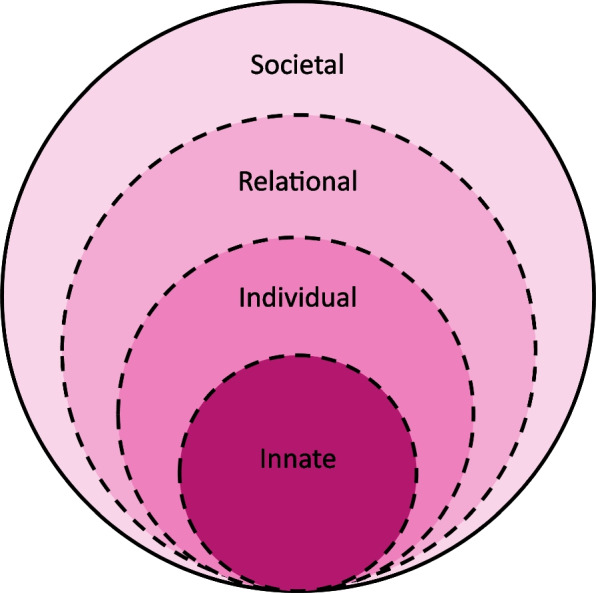
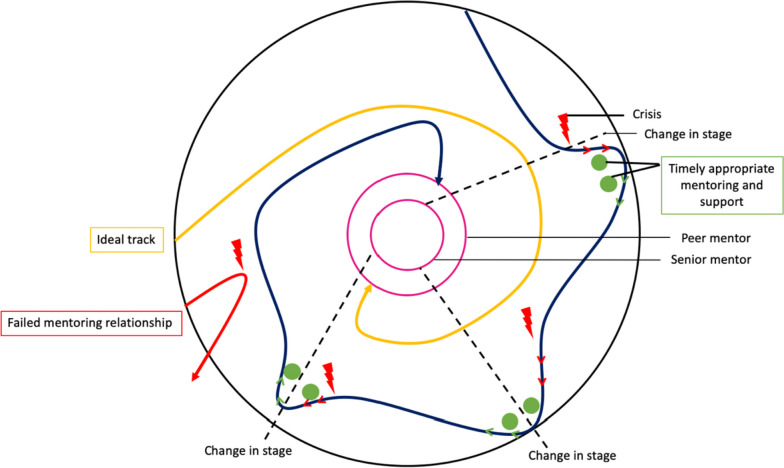
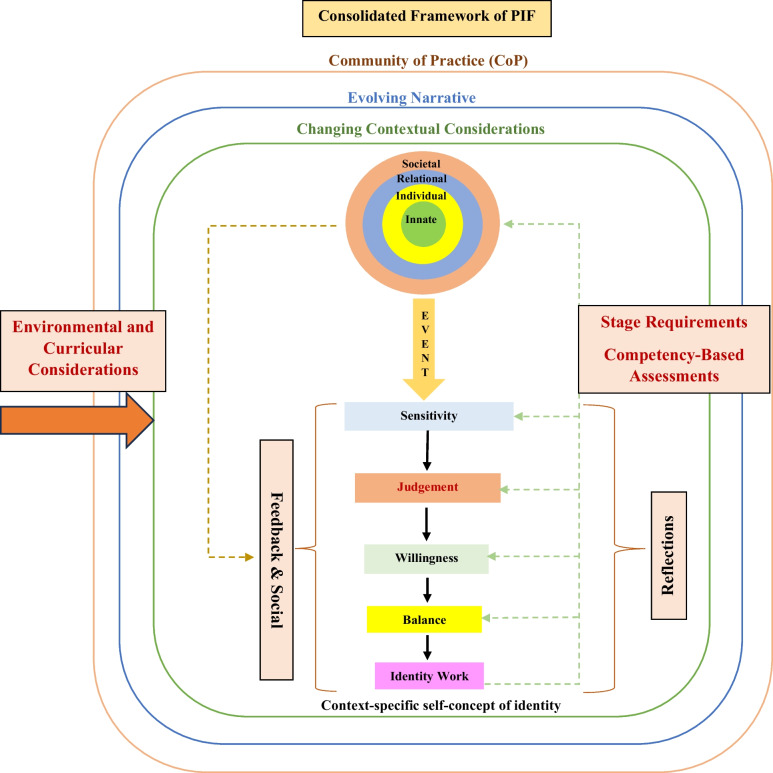
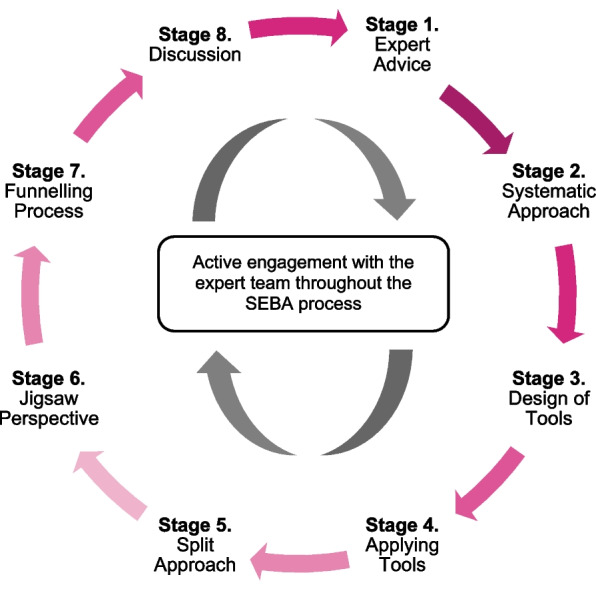
Acknowledging PIF as a sociocultural construct, a Constructivist approach and Relativist lens were adopted for this study. In the absence of an effective tool, the Ring Theory of Personhood (RToP) and Krishna-Pisupati Model (KPM) model were used to direct this dual Systematic Evidence-Based Approach (Dual-SEBA) study in designing, employing and analysing semi-structured interviews with PMI mentees and mentoring diaries. These served to capture changes in PIF over the course of the PMI's mentoring stages. Transcripts of the interviews and mentoring diaries were concurrently analysed using content and thematic analysis. Complementary themes and categories identified from the Split Approach were combined using the Jigsaw Approach and subsequently compared with mentoring diaries in the Funnelling Process. The domains created framed the discussion.
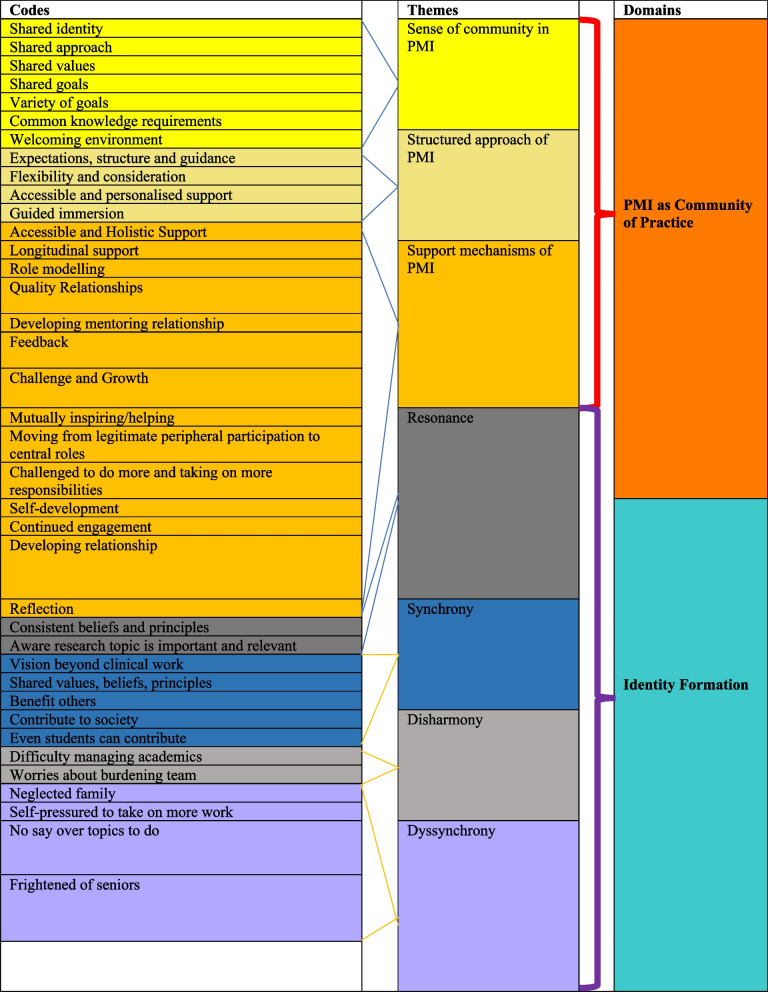
A total of 12 mentee interviews and 17 mentoring diaries were analysed, revealing two domains-PMI as a Community of Practice (CoP) and Identity Formation. The domains confirmed the centrality of a structured CoP capable of facilitating longitudinal mentoring support and supporting the Socialisation Process along the mentoring trajectory whilst cultivating personalised and enduring mentoring relationships.
The provision of a consistent mentoring approach and personalised, longitudinal mentoring support guided along the mentoring trajectory by structured mentoring assessments lay the foundations for more effective mentoring programs. The onus must now be on developing assessment tools, such as a KPM-based tool, to guide support and oversight of mentoring relationships.
医学教育在培养专业身份认同(PIF)方面喜忧参半,或者说,医学生如何思考、感受和表现为医生。新数据表明,像缓和医学倡议(PMI)这样的结构化指导计划可能提供一种以一致的方式发展 PIF 的方法。为了更好地了解一个成熟的结构化研究指导计划如何塑造 PIF,提议对 PMI 受指导者的经验进行研究。
承认 PIF 是一种社会文化结构,本研究采用建构主义方法和相对主义视角。由于缺乏有效的工具,因此使用了人格的环形理论(RToP)和克里希纳-皮苏帕蒂模型(KPM)来指导这种双重基于证据的系统方法(Dual-SEBA)研究,以设计、采用和分析与 PMI 受指导者的半结构化访谈和指导日记。这些方法用于捕捉 PMI 指导阶段过程中 PIF 的变化。使用内容和主题分析同时分析访谈和指导日记的转录本。使用拼图方法组合从拆分方法中识别出的补充主题和类别,并随后在漏斗过程中与指导日记进行比较。创建的领域构成了讨论的框架。
总共分析了 12 名受指导者的访谈和 17 份指导日记,揭示了两个领域-PMI 作为实践共同体(CoP)和身份形成。这些领域证实了结构化 CoP 的核心地位,该 CoP能够提供纵向指导支持,并在指导轨迹上支持社会化过程,同时培养个性化和持久的指导关系。
提供一致的指导方法和个性化、纵向指导支持,并沿着结构化指导评估指导的指导轨迹,为更有效的指导计划奠定了基础。现在的重点必须放在开发评估工具上,例如基于 KPM 的工具,以指导支持和监督指导关系。