Geevimaan Khamushavalli, Guo Jing-You, Shen Chia-Ning, Jiang Jeng-Kai, Fann Cathy S J, Hwang Ming-Jing, Shui Jr-Wen, Lin Hsiu-Ting, Wang Mei-Jung, Shih Hsuan-Cheng, Li Anna Fen-Yau, Chang Shih-Ching, Yang Shung-Haur, Chen Jeou-Yuan
Institute of Biomedical Sciences, Academia Sinica, Taipei, Taiwan.
Genomic Research Center, Academia Sinica, Taipei, Taiwan.
Front Oncol. 2022 Jun 1;12:883437. doi: 10.3389/fonc.2022.883437. eCollection 2022.
Addition of oxaliplatin to adjuvant 5-FU has significantly improved the disease-free survival and served as the first line adjuvant chemotherapy in advanced colorectal cancer (CRC) patients. However, a fraction of patients remains refractory to oxaliplatin-based treatment. It is urgent to establish a preclinical platform to predict the responsiveness toward oxaliplatin in CRC patients as well as to improve the efficacy in the resistant patients.
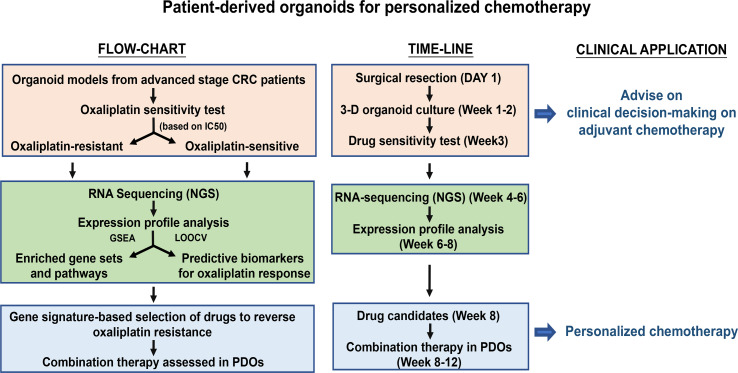
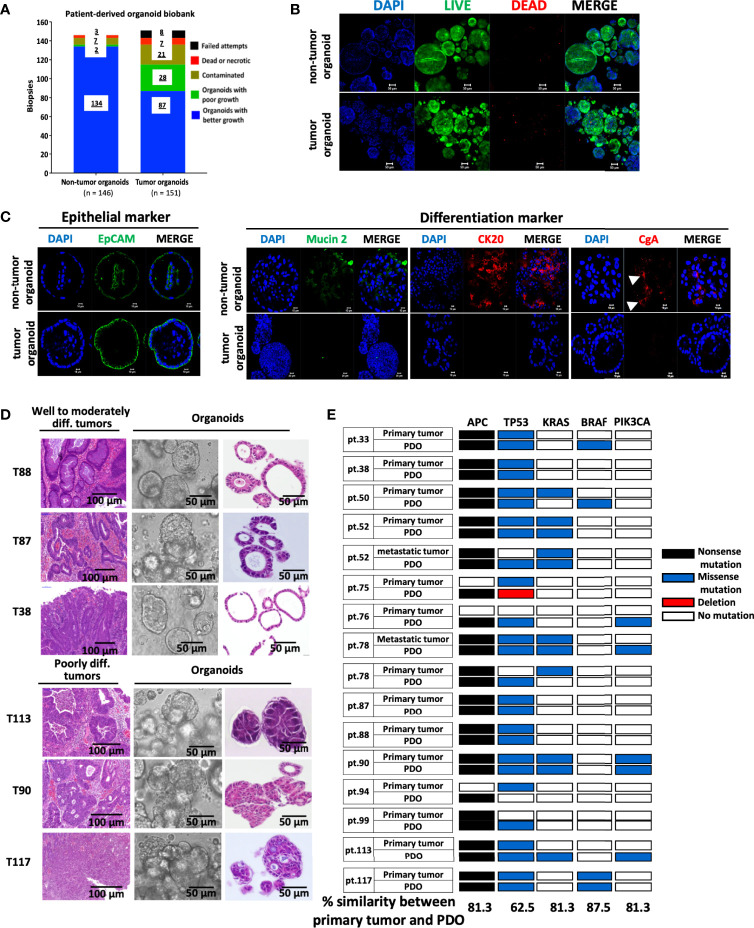
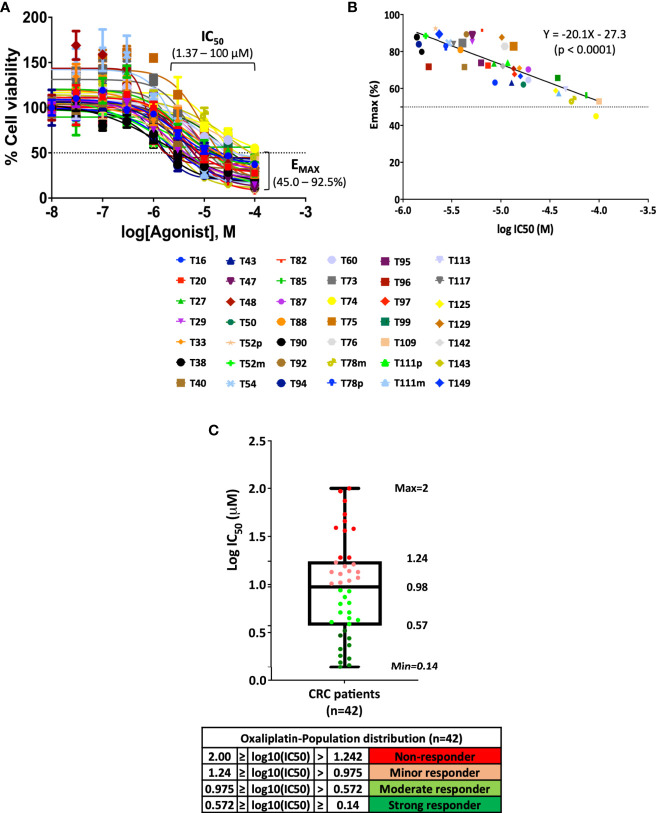
A living biobank of organoid lines were established from advanced CRC patients. Oxaliplatin sensitivity was assessed in patient-derived tumor organoids (PDOs) and in PDO-xenografted tumors in mice. Based on oxaliplatin IC values, PDOs were classified into either oxaliplatin-resistant (OR) or oxaliplatin-sensitive (OS) PDOs. The outcomes of patients undergone oxaliplatin-based treatment was followed. RNA-sequencing and bioinformatics tools were performed for molecular profiling of OR and OS PDOs. Oxaliplatin response signatures were submitted to Connectivity Map algorithm to identify perturbagens that may antagonize oxaliplatin resistance.
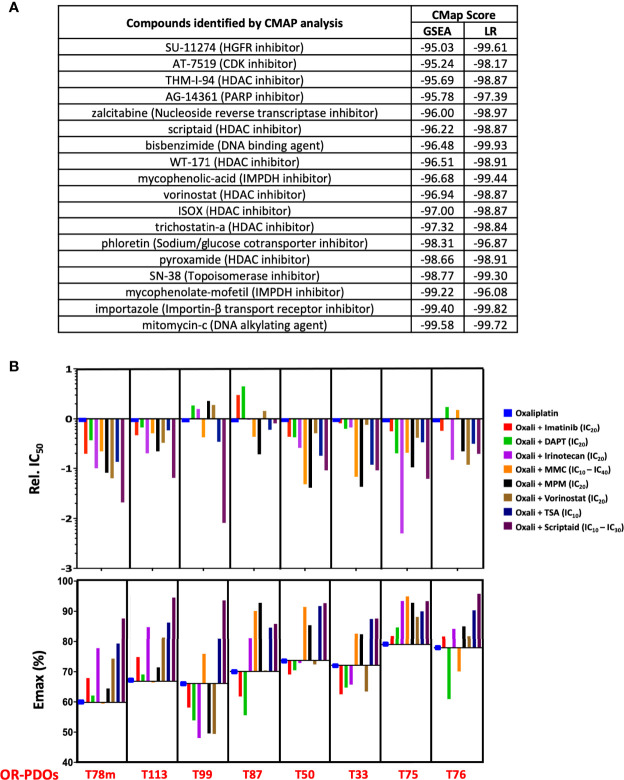
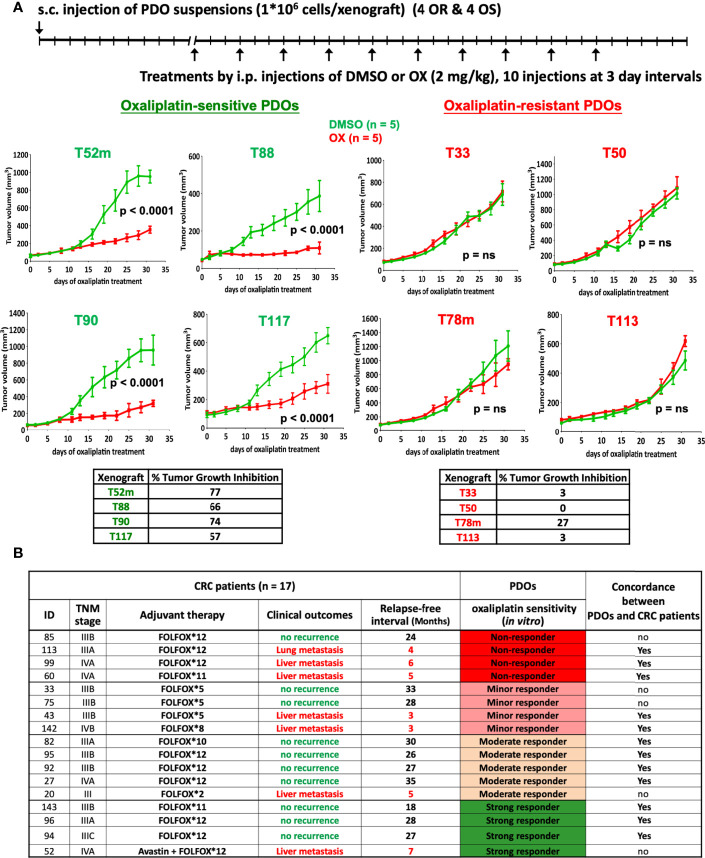
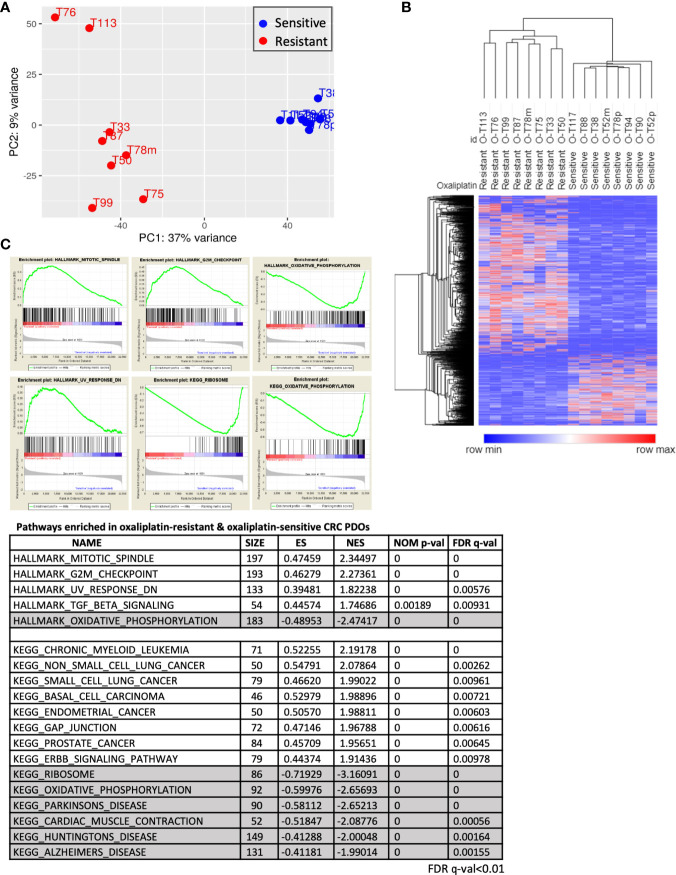
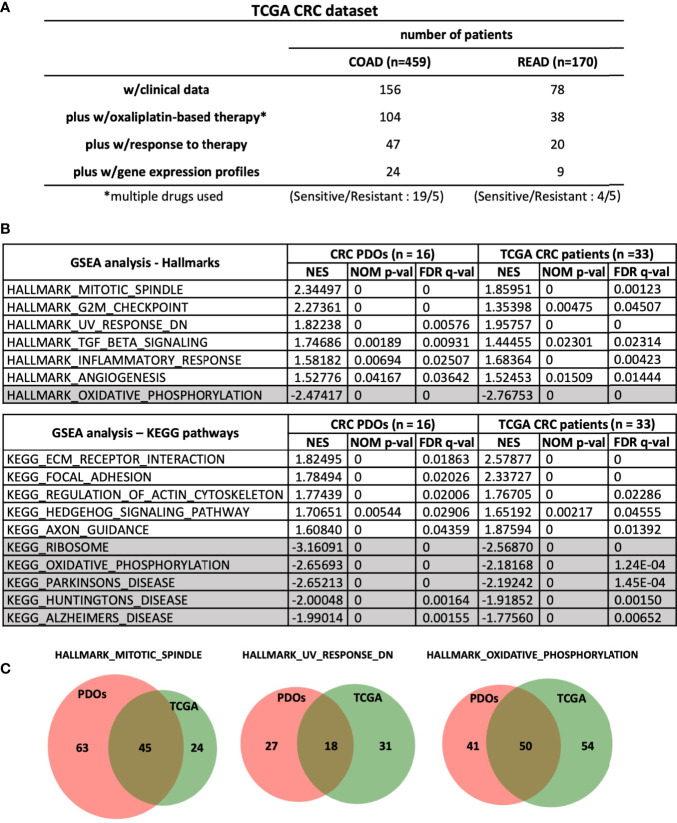
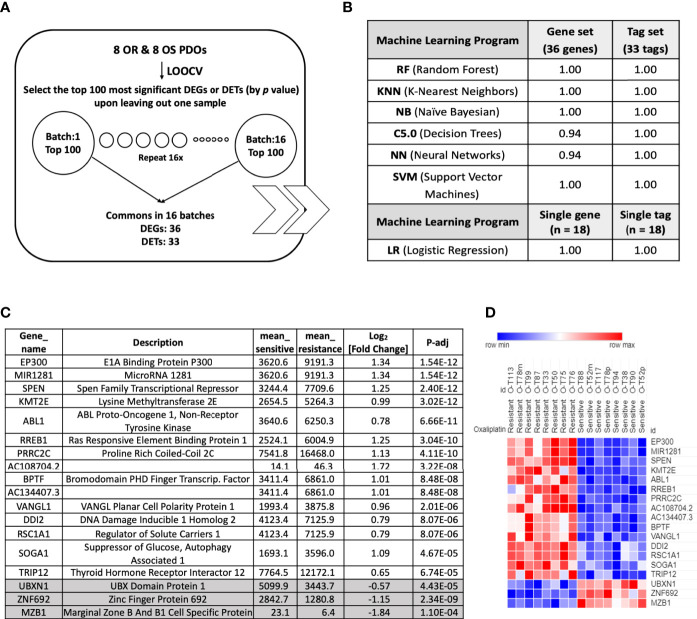
Oxaliplatin sensitivity in PDOs was shown to correlate to oxaliplatin-mediated inhibition on PDO xenograft tumors in mice, and parallelled clinical outcomes of CRC patients who received FOLFOX treatment. Molecular profiling of transcriptomes revealed oxaliplatin-resistant and -sensitive PDOs as two separate entities, each being characterized with distinct hallmarks and gene sets. Using Leave-One-Out Cross Validation algorithm and Logistic Regression model, 18 gene signatures were identified as predictive biomarkers for oxaliplatin response. Candidate drugs identified by oxaliplatin response signature-based strategies, including inhibitors targeting c-ABL and Notch pathway, DNA/RNA synthesis inhibitors, and HDAC inhibitors, were demonstrated to potently and effectively increase oxaliplatin sensitivity in the resistant PDOs.
PDOs are useful in informing decision-making on oxaliplatin-based chemotherapy and in designing personalized chemotherapy in CRC patients.
在辅助性5-氟尿嘧啶(5-FU)基础上加用奥沙利铂显著提高了无病生存期,并成为晚期结直肠癌(CRC)患者的一线辅助化疗方案。然而,仍有一部分患者对基于奥沙利铂的治疗无效。迫切需要建立一个临床前平台,以预测CRC患者对奥沙利铂的反应性,并提高耐药患者的疗效。
从晚期CRC患者中建立了一个类器官系的生物样本库。在患者来源的肿瘤类器官(PDO)以及小鼠体内的PDO异种移植瘤中评估奥沙利铂敏感性。根据奥沙利铂的半数抑制浓度(IC)值,将PDO分为奥沙利铂耐药(OR)或奥沙利铂敏感(OS)的PDO。对接受基于奥沙利铂治疗的患者的预后进行随访。对OR和OS PDO进行RNA测序和生物信息学分析以进行分子特征分析。将奥沙利铂反应特征提交给连通性图谱算法,以识别可能拮抗奥沙利铂耐药性的干扰物。
PDO中的奥沙利铂敏感性与奥沙利铂对小鼠PDO异种移植瘤的抑制作用相关,并与接受FOLFOX治疗的CRC患者的临床结果平行。转录组的分子特征分析显示,奥沙利铂耐药和敏感的PDO是两个不同的实体,每个实体都有独特的特征和基因集。使用留一法交叉验证算法和逻辑回归模型,确定了18个基因特征作为奥沙利铂反应的预测生物标志物。基于奥沙利铂反应特征策略鉴定的候选药物,包括靶向c-ABL和Notch通路的抑制剂、DNA/RNA合成抑制剂和组蛋白去乙酰化酶(HDAC)抑制剂,被证明能有效提高耐药PDO对奥沙利铂的敏感性。
PDO有助于指导基于奥沙利铂的化疗决策,并为CRC患者设计个性化化疗方案。