Hao Yanwei, Li Jiaxin, Yue Shengnan, Wang Shaofeng, Hu Shuangyuan, Li Bin
School of Clinical Medicine, Chengdu University of Traditional Chinese Medicine, Chengdu, China.
Hospital of Chengdu University of Traditional Chinese Medicine, Chengdu, China.
Front Pharmacol. 2022 Jun 6;13:917375. doi: 10.3389/fphar.2022.917375. eCollection 2022.
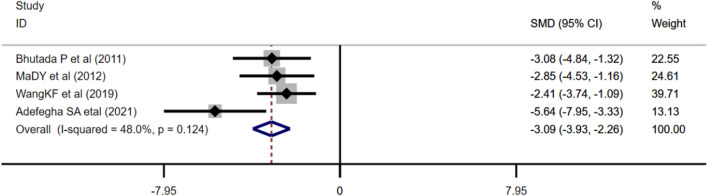
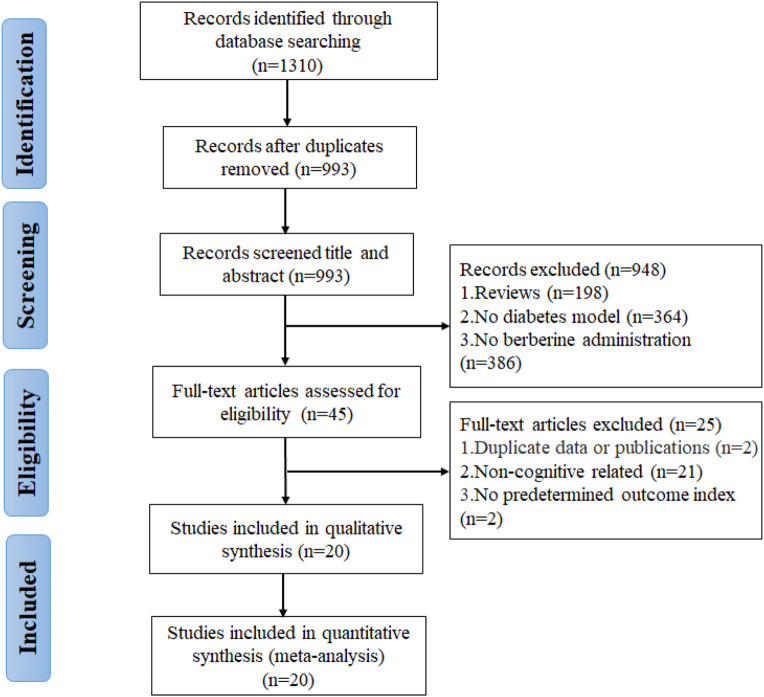
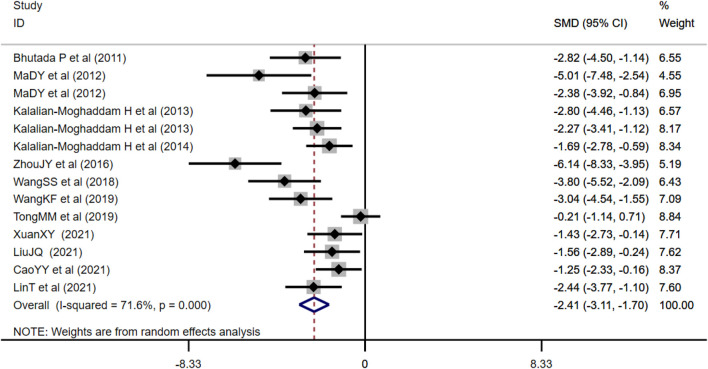
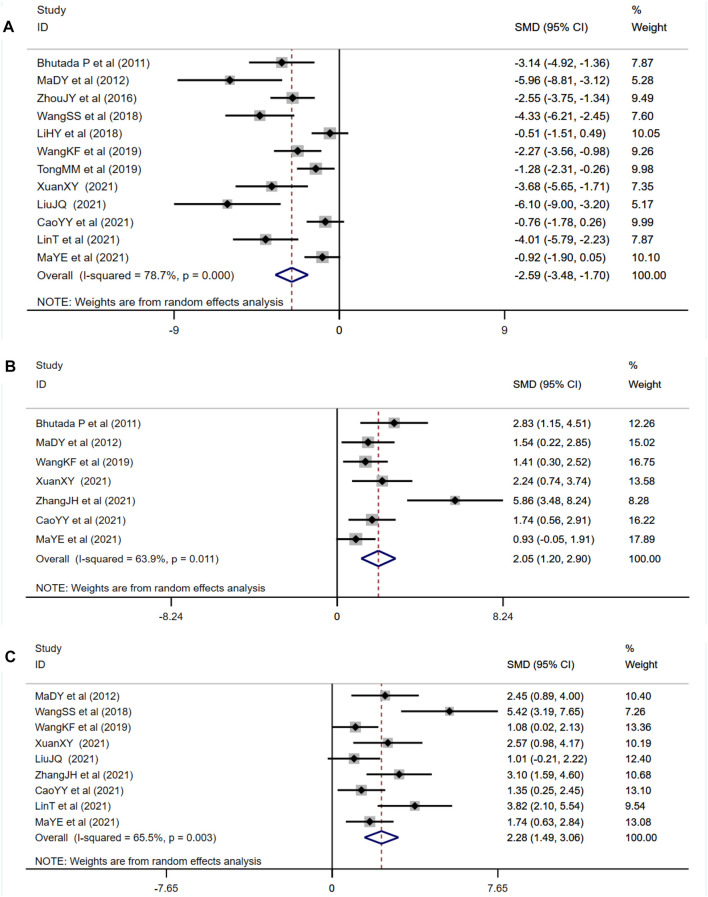
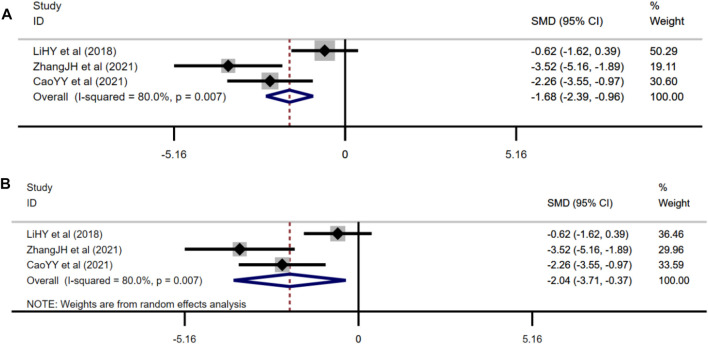
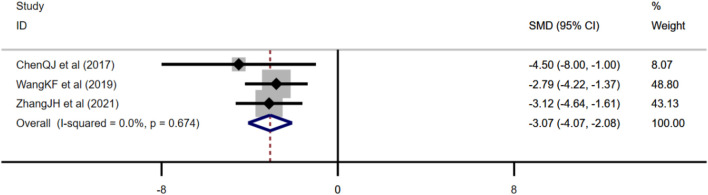
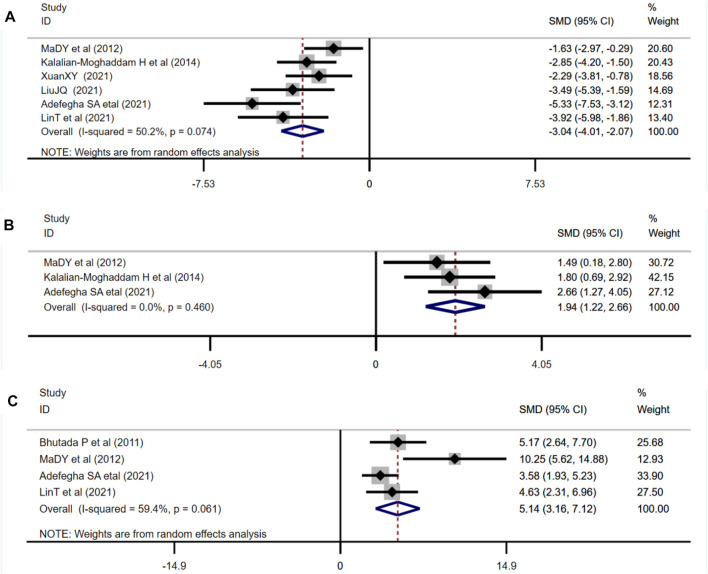
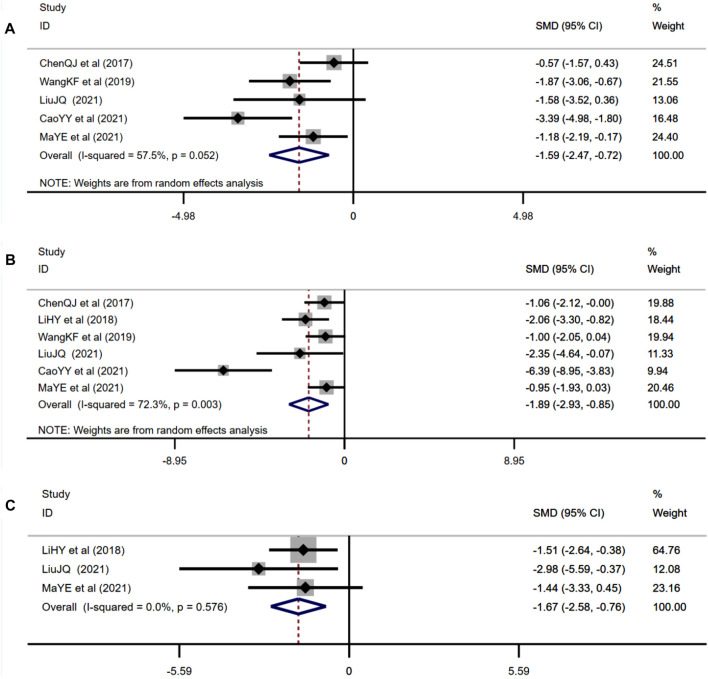
Berberine, the main bioactive component of Franch., is widely used in the treatment of diabetes. Previous studies have reported that berberine supplementation may play a multitarget therapeutic role in diabetes-related cognitive impairment (DCI). This systematic review and meta-analysis evaluated the effect and possible mechanisms of berberine in animal models of DCI. Relevant studies were searched through PubMed, Web of Science, Embase, and three Chinese databases (CNKI, Wanfang, and VIP) until March 2022. Twenty studies involving 442 animals were included, and SYRCLE's risk of bias tool was used to assess methodological quality. The statistical analysis was performed using STATA 15.0 to calculate the weighted standard mean difference (SMD) with a 95% confidence interval (CI). The fasting blood glucose (FBG) and Morris water maze test (MWM) were the main outcomes to be analyzed. The overall results showed that berberine could significantly improve FBG, escape latency, the times of crossing the platform, the time spent in the target quadrant, serum insulin, 2hBG of oral glucose tolerance test (OGTT), amyloid β (Aβ), acetylcholinesterase (AChE), oxidative stress, and inflammation levels. The present meta-analysis demonstrated that berberine could not only lower blood glucose levels but also improve learning and memory in DCI animal models, which might involve regulating glucose and lipid metabolism, improving insulin resistance, anti-oxidation, anti-neuroinflammation, inhibiting endoplasmic reticulum (ER) stress; and improving the cholinergic system. However, additional attention should be paid to these outcomes due to the significant heterogeneity.
小檗碱是黄连的主要生物活性成分,广泛用于治疗糖尿病。先前的研究报道,补充小檗碱可能在糖尿病相关认知障碍(DCI)中发挥多靶点治疗作用。本系统评价和荟萃分析评估了小檗碱在DCI动物模型中的作用及可能机制。通过PubMed、Web of Science、Embase和三个中文数据库(CNKI、万方和维普)检索相关研究,检索截至2022年3月。纳入了20项涉及442只动物的研究,并使用SYRCLE偏倚风险工具评估方法学质量。使用STATA 15.0进行统计分析,以计算加权标准均数差(SMD)及其95%置信区间(CI)。空腹血糖(FBG)和莫里斯水迷宫试验(MWM)是主要分析指标。总体结果表明,小檗碱可显著改善FBG、逃避潜伏期、穿越平台次数、在目标象限停留时间、血清胰岛素、口服葡萄糖耐量试验(OGTT)的2hBG、淀粉样β蛋白(Aβ)、乙酰胆碱酯酶(AChE)、氧化应激和炎症水平。本荟萃分析表明,小檗碱不仅可以降低血糖水平,还可以改善DCI动物模型的学习和记忆,这可能涉及调节糖脂代谢、改善胰岛素抵抗、抗氧化、抗神经炎症、抑制内质网(ER)应激以及改善胆碱能系统。然而,由于存在显著异质性,应关注这些结果。