State Key Laboratory of Oral Diseases, National Clinical Research Center for Oral Diseases, Chinese Academy of Medical Sciences Research Unit of Oral Carcinogenesis and Management, West China Hospital of Stomatology, Sichuan University, Chengdu 610041, China.
Nutrients. 2022 Jun 14;14(12):2466. doi: 10.3390/nu14122466.
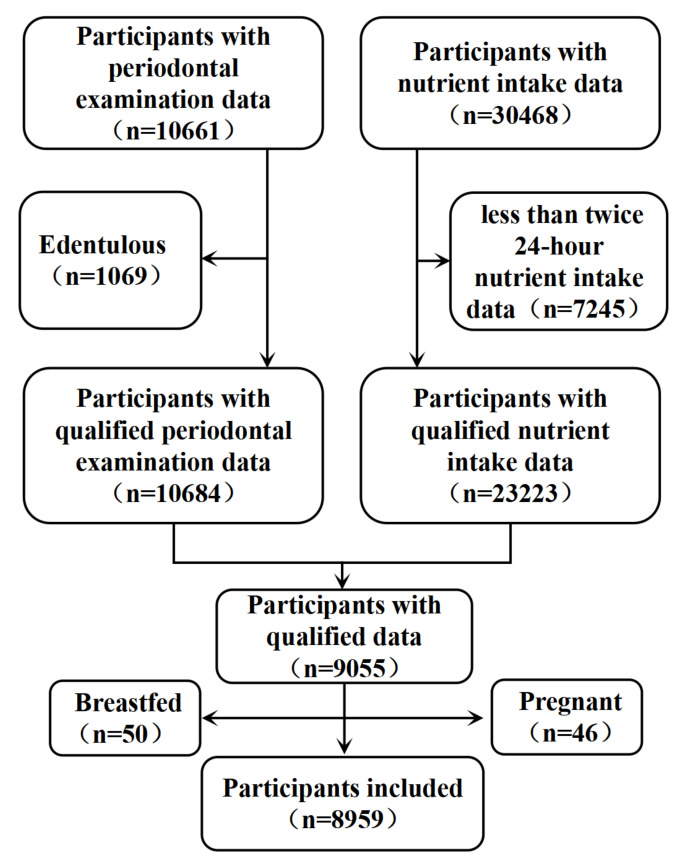
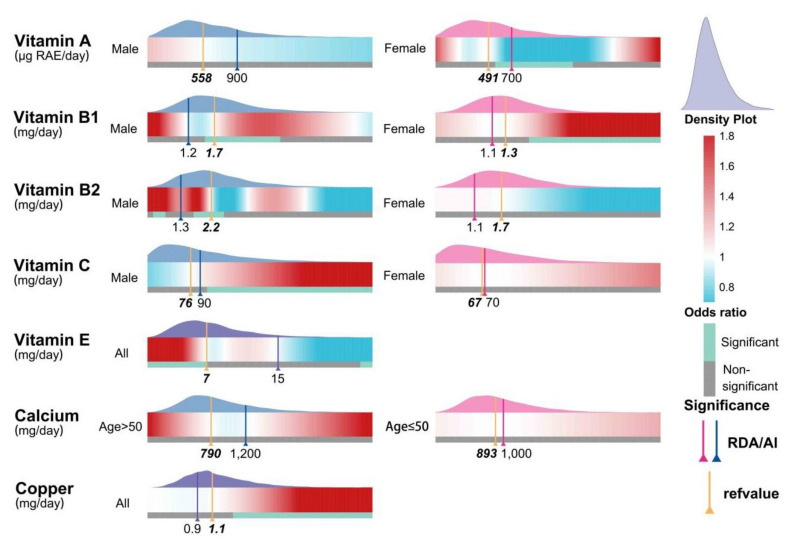
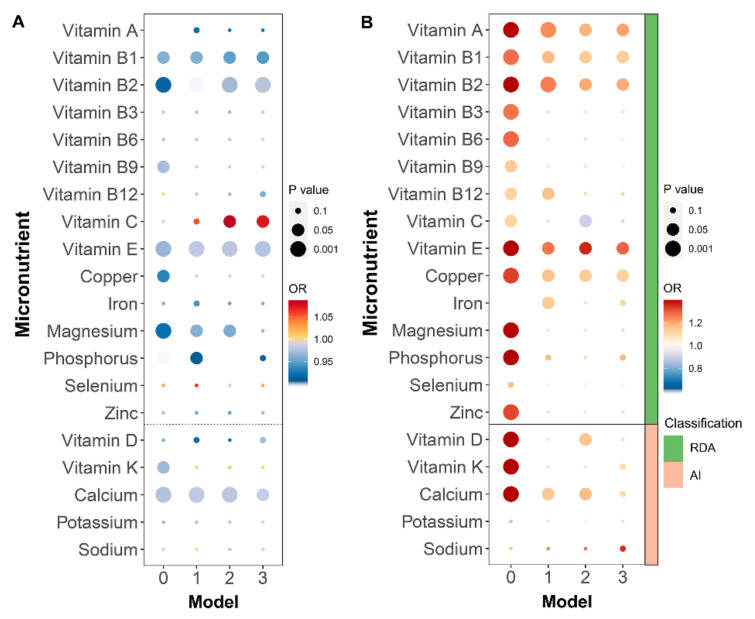
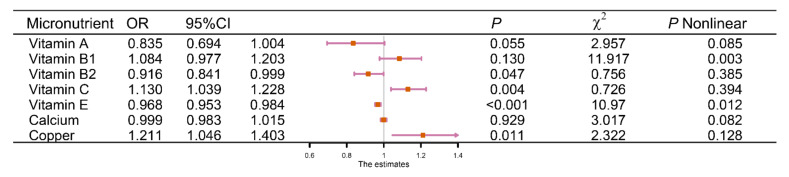
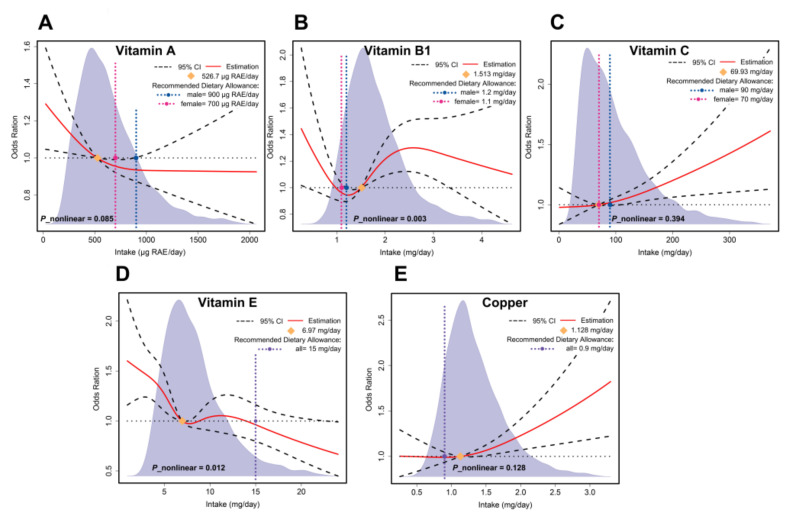
The association between micronutrient intake and the risk of periodontitis has received much attention in recent years. However, most studies focused on the linear relationship between them. This study aimed to explore the dose-response association between micronutrient intake and periodontitis. A total of 8959 participants who underwent a periodontal examination, and reported their micronutrient intake levels were derived from the US National Health and Nutrition Examination Survey (NHANES, 2009-2014) database. Logistic regression was performed to evaluate associations between micronutrient intake and periodontitis after propensity score matching (PSM), and restricted cubic splines (RCS) analysis was conducted to explore the dose-response associations. Following PSM, 5530 participants were included in the RCS analysis. The risk of periodontitis was reduced with sufficient intake of the following micronutrients: vitamin A, vitamin B1, vitamin B2, and vitamin E. In addition, the risk of periodontitis was increased with excessive intake of the following micronutrients: vitamin B1 (1.8 mg/day, males; 1.3 mg/day, females), vitamin C (90 mg/day, males), and copper (1.1 mg/day, combined). In conclusion, a linear association was found between vitamin A, vitamin B2, vitamin C, and copper and periodontitis-namely, a sufficient intake of vitamin A and vitamin B2 might help reduce the prevalence of periodontitis; by contrast, a high intake of vitamin C and copper increased the risk. In addition, a nonlinear dose-response association was found for the incidence of periodontitis with vitamin B1 and vitamin E. When within reasonable limits, supplemental intake helped reduce the prevalence of periodontitis, while excessive intake did not help significantly and might even increase the risk. However, confounding factors, such as health awareness, should still be considered.
近年来,人们对微量营养素摄入与牙周炎风险之间的关系给予了高度关注。然而,大多数研究都集中在线性关系上。本研究旨在探讨微量营养素摄入与牙周炎之间的剂量-反应关系。
本研究从美国国家健康与营养调查(NHANES,2009-2014 年)数据库中提取了 8959 名接受牙周检查并报告其微量营养素摄入量的参与者的数据。采用逻辑回归在倾向评分匹配(PSM)后评估微量营养素摄入与牙周炎之间的关联,并采用限制性立方样条(RCS)分析探讨剂量-反应关系。
PSM 后,共有 5530 名参与者纳入 RCS 分析。足够摄入以下微量营养素可降低牙周炎的风险:维生素 A、维生素 B1、维生素 B2 和维生素 E。此外,过量摄入以下微量营养素会增加牙周炎的风险:维生素 B1(男性 1.8 毫克/天,女性 1.3 毫克/天)、维生素 C(男性 90 毫克/天)和铜(1.1 毫克/天,混合)。
综上所述,我们发现维生素 A、维生素 B2、维生素 C 和铜与牙周炎之间存在线性关联,即充足摄入维生素 A 和维生素 B2 可能有助于降低牙周炎的患病率;相比之下,高维生素 C 和铜的摄入会增加患病风险。此外,还发现维生素 B1 和维生素 E 与牙周炎的发生呈非线性剂量-反应关系。在合理范围内,补充摄入有助于降低牙周炎的患病率,而过量摄入则无明显帮助,甚至可能增加患病风险。然而,仍应考虑健康意识等混杂因素。