Department of Health Sciences, Ribeirao Preto Medical School, University of Sao Paulo, Ribeirão Preto 14049-900, Brazil.
Department of Internal Medicine, Ribeirao Preto Medical School, University of Sao Paulo, Ribeirão Preto 14049-900, Brazil.
Nutrients. 2022 Jun 15;14(12):2472. doi: 10.3390/nu14122472.
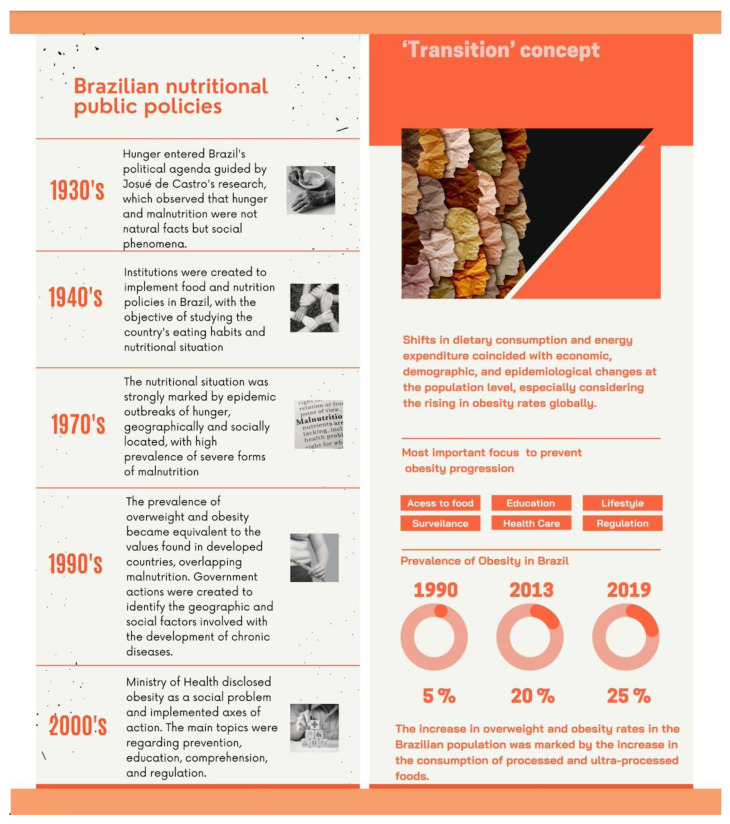
"Nutrition transition" describes the shifts in dietary consumption and energy expenditure influenced by economic, demographic, and epidemiological changes at a population level. This phenomenon has been associated with rising obesity rates worldwide, especially in developed countries. In Brazil, the historical analysis of temporal trends between malnutrition and obesity characterized the nutrition transition in the country and interweaved it with the formulation and implementation of public food and nutrition policies. Such analysis is crucial for understanding certain principles in each context. Thus, this review contextualized the consolidation of obesity as a critical health and public policy issue in Brazil. Our review suggested that the country may still be at the initial stage of care for obesity, and more efforts are needed to contain the advance of the disease in Brazil.
"营养转型"描述了人口层面上受经济、人口和流行病学变化影响的饮食消费和能量消耗的转变。这种现象与全球肥胖率的上升有关,尤其是在发达国家。在巴西,营养不良和肥胖之间的时间趋势的历史分析描述了该国的营养转型,并将其与公共食品和营养政策的制定和实施交织在一起。这种分析对于理解每个背景下的某些原则至关重要。因此,本综述使肥胖作为巴西一个重要的健康和公共政策问题得到了巩固。我们的综述表明,巴西可能仍处于肥胖治疗的初始阶段,需要付出更多努力来遏制该疾病在巴西的蔓延。