Edward A. Doisy Department of Biochemistry and Molecular Biology, Saint Louis University School of Medicine, St. Louis, Missouri, USA.
Department of Molecular Microbiology, Washington University School of Medicine, St. Louis, Missouri, USA.
mSphere. 2022 Aug 31;7(4):e0013422. doi: 10.1128/msphere.00134-22. Epub 2022 Jun 27.
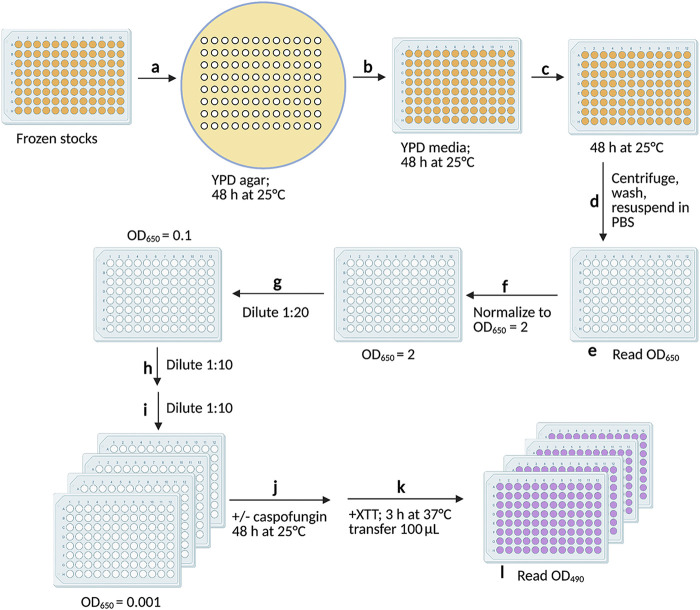
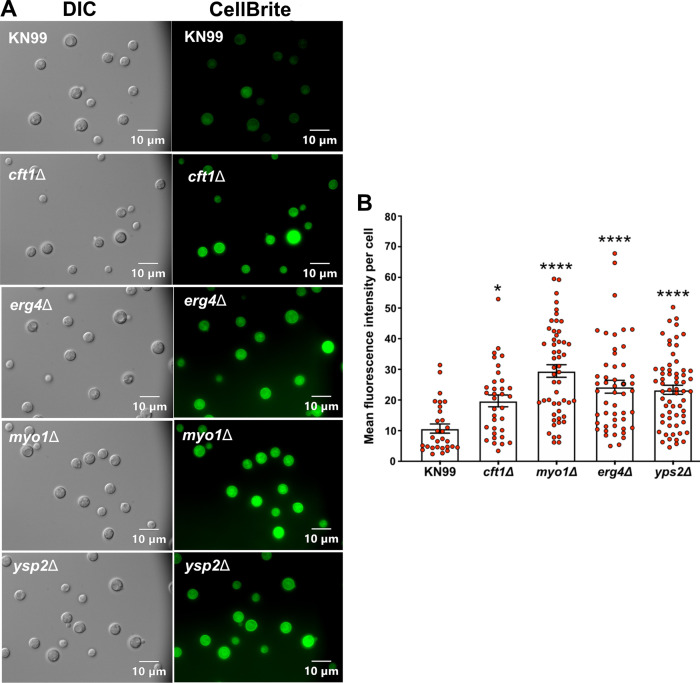
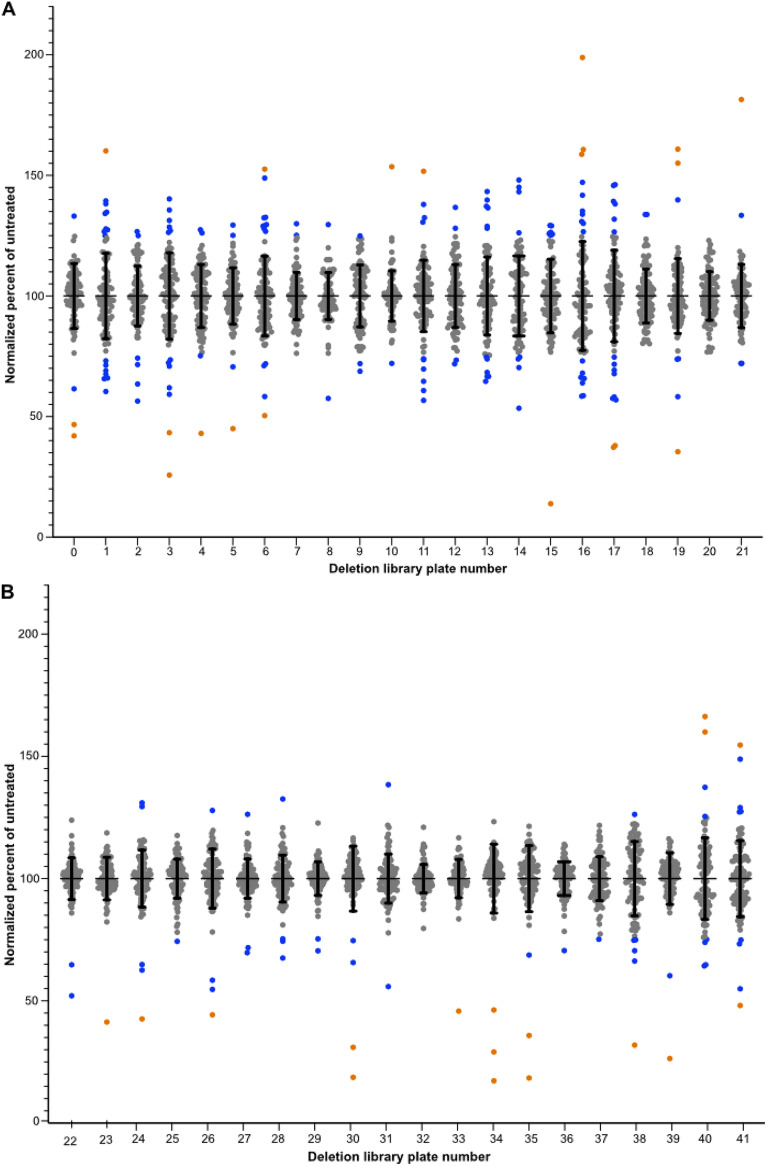
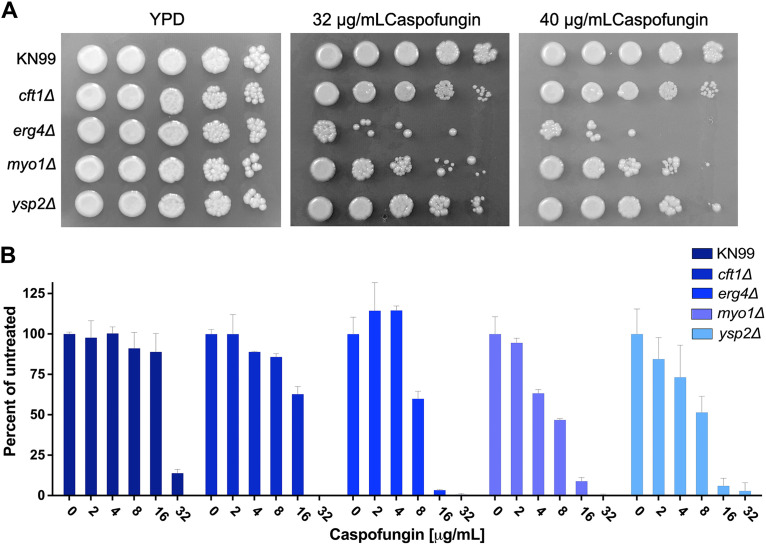
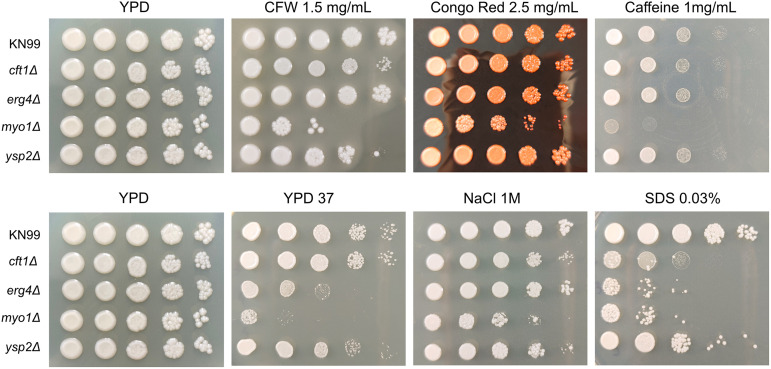
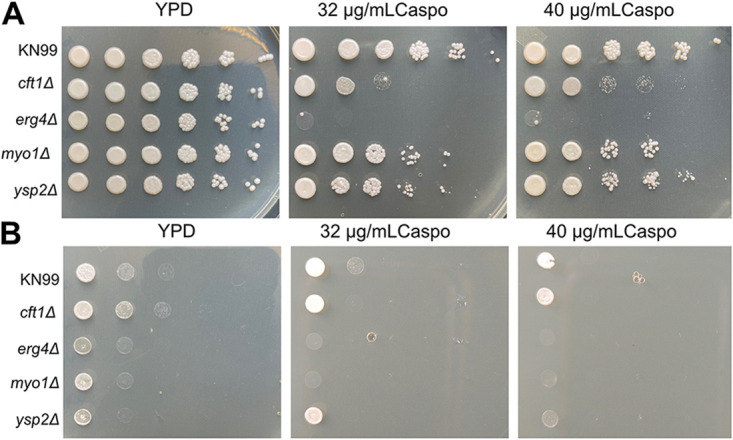
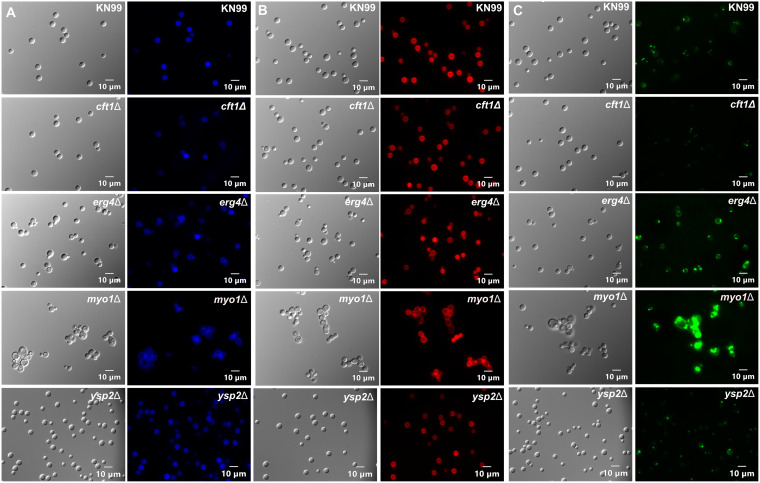
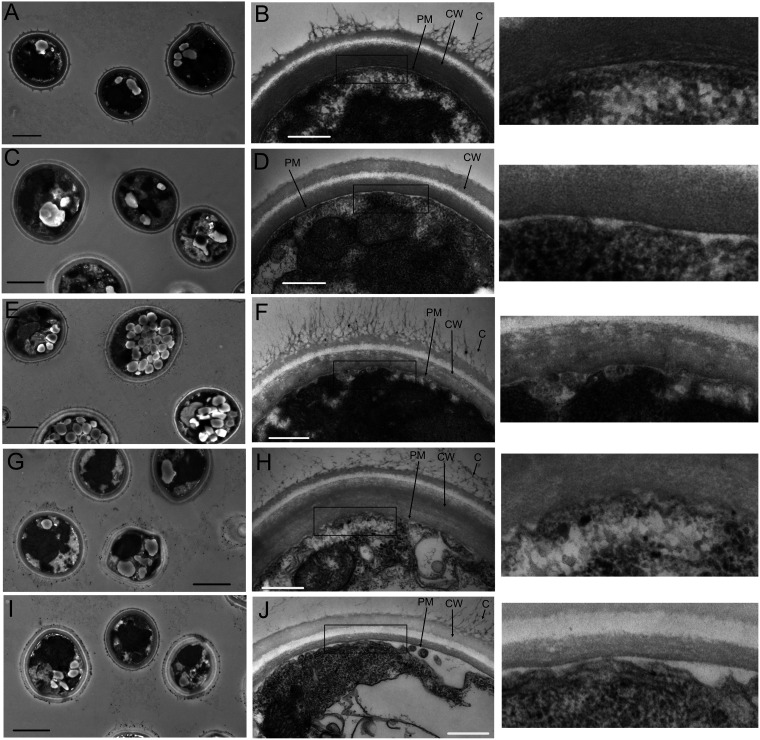
The fungal pathogen Cryptococcus neoformans causes up to 278 000 infections each year globally, resulting in up to 180,000 deaths annually, mostly impacting immunocompromised people. Therapeutic options for C. neoformans infections are very limited. Caspofungin, a member of the echinocandin class of antifungals, is generally well tolerated but clinically ineffective against C. neoformans. We sought to identify biological processes that can be targeted to render the cell more susceptible to echinocandins by screening the available libraries of gene deletion mutants made in the KN99α background for caspofungin sensitivity. We adapted a Candida albicans fungal biofilm assay for the growth characteristics of C. neoformans and systematically screened 4,030 individual gene deletion mutants in triplicate plate assays. We identified 25 strains that showed caspofungin sensitivity. We followed up with a dose dependence assay, and 17 of the 25 were confirmed sensitive, 5 of which were also sensitive in an agar plate assay. We made new deletion mutant strains for four of these genes: , encoding an iron transporter; , encoding a sterol desaturase; , encoding a myosin heavy chain; and , encoding a sterol transporter. All were more sensitive to membrane stress and showed significantly increased sensitivity to caspofungin at higher temperatures. Surprisingly, none showed any obvious cell wall defects such as would be expected for caspofungin-sensitive strains. Our microscopy analyses suggested that loss of membrane integrity contributed to the caspofungin sensitivity, either by allowing more caspofungin to enter or remain in the cell or by altering the location or orientation of the enzyme target to render it more susceptible to inhibition. The intrinsic resistance of Cryptococcus neoformans to the cell wall inhibitor caspofungin limits the available therapies for treating cryptococcal infections. We screened a collection of more than 4,000 gene deletion strains for altered caspofungin sensitivity to identify biological processes that could be targeted to render the cell more susceptible to caspofungin. We identified multiple genes with an effect on caspofungin susceptibility and found that they were associated with altered membrane permeability rather than the expected cell wall defects. This suggests that targeting these genes or other genes affecting membrane permeability is a viable path for developing novel therapies for treating this global fungal pathogen.
新型隐球菌病原体每年在全球范围内导致多达 27.8 万例感染,每年导致多达 18 万人死亡,主要影响免疫功能低下者。新型隐球菌感染的治疗选择非常有限。棘白菌素类抗真菌药物中的卡泊芬净通常耐受性良好,但对新型隐球菌临床无效。我们通过筛选在 KN99α 背景下构建的可用基因缺失突变体文库,以寻找可使细胞对棘白菌素更敏感的生物过程,从而鉴定出可用于治疗新型隐球菌感染的新型药物。我们适应了一种白色念珠菌真菌生物膜测定法来测定新型隐球菌的生长特性,并系统地在三重复平板测定中筛选了 4030 个单个基因缺失突变体。我们发现 25 株具有卡泊芬净敏感性。我们进行了剂量依赖性测定,其中 25 株中有 17 株对卡泊芬净敏感,其中 5 株在琼脂平板测定中也敏感。我们针对其中 4 个基因中的 4 个基因构建了新的缺失突变体菌株: ,编码铁转运蛋白; ,编码甾醇去饱和酶; ,编码肌球蛋白重链;和 ,编码甾醇转运蛋白。所有这些菌株对膜应激更敏感,在较高温度下对卡泊芬净的敏感性显著增加。令人惊讶的是,没有一个菌株表现出任何明显的细胞壁缺陷,如预期的那样,卡泊芬净敏感菌株会表现出细胞壁缺陷。我们的显微镜分析表明,细胞膜完整性的丧失导致对卡泊芬净的敏感性增加,要么是因为允许更多的卡泊芬净进入或留在细胞内,要么是因为改变了酶靶标的位置或方向,从而使其更容易受到抑制。新型隐球菌对细胞壁抑制剂卡泊芬净的固有耐药性限制了治疗新型隐球菌感染的现有疗法。我们筛选了超过 4000 个基因缺失株,以确定对卡泊芬净敏感性改变的生物过程,以确定可使细胞对卡泊芬净更敏感的生物过程。我们确定了多个对卡泊芬净敏感性有影响的基因,并发现它们与改变的膜通透性有关,而不是预期的细胞壁缺陷。这表明,靶向这些基因或其他影响膜通透性的基因是开发治疗这种全球真菌病原体的新型疗法的可行途径。