
从 中绿色合成的金纳米粒子通过免疫调节显示出对肝癌的潜在疗效。
Green synthesized gold nanoparticles from show efficacy against hepatic carcinoma potentially through immunoregulation.
机构信息
Department of Clinical Laboratory, The Second Affiliated Hospital of Chongqing Medical University, Chongqing, China.
Department of Gastroenterology, The Third Affiliated Hospital of Chongqing Medical University, Chongqing, China.
出版信息
Drug Deliv. 2022 Dec;29(1):1983-1993. doi: 10.1080/10717544.2022.2092238.
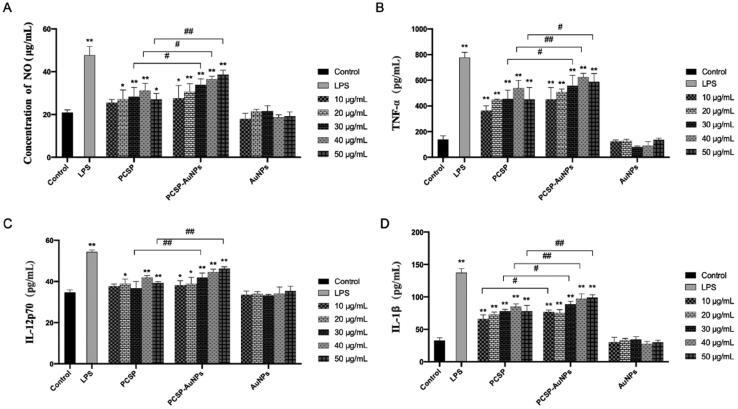
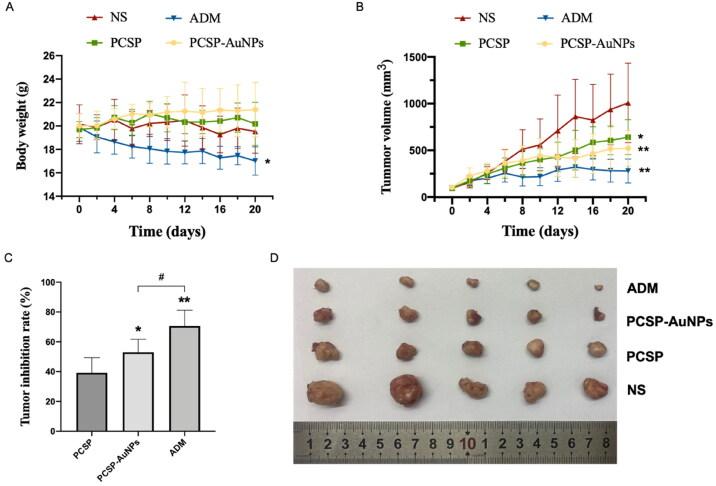
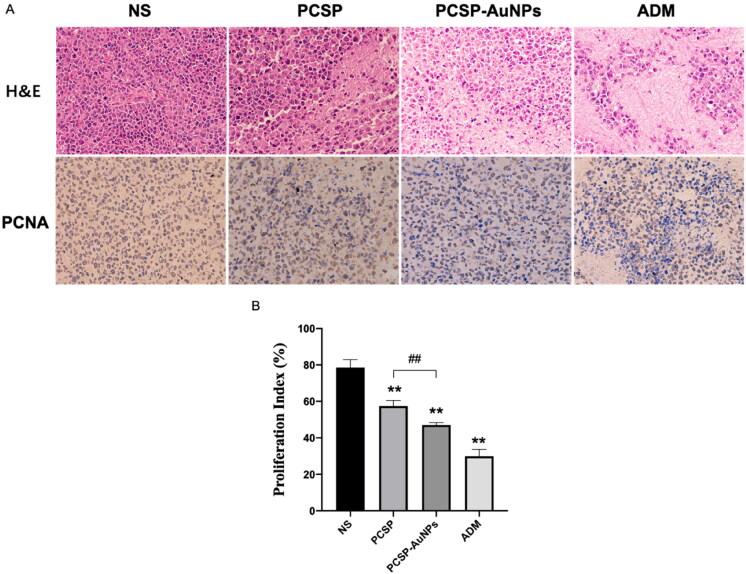
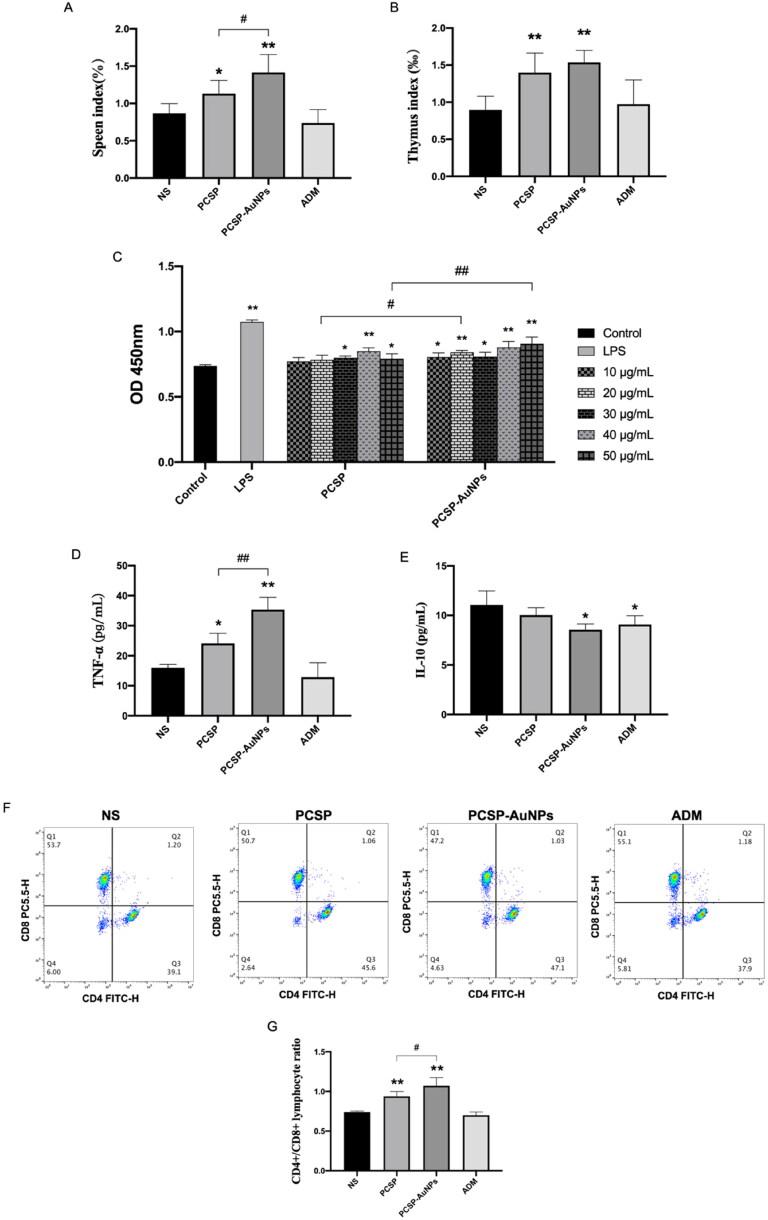
Nanobiotechnology, the interface between biology and nanotechnology, has recently emerged in full bloom in the medical field due to its minimal side-effects and high efficiency. To broaden the application of nanobiotechnology, we composed gold nanoparticles from the extract of (PCSP) using an efficient and green procedure. The biosynthesized Au nanoparticles containing PCSP (PCSP-AuNPs) were characterized by UV-vis spectroscopic, transmission electron microscopy (TEM), atomic force microscopy (AFM), dynamic light scattering (DLS), Fourier transform infrared spectroscopy (FT-IR), and Energy Dispersive X-ray (EDAX). After verifying the stability of PCSP-AuNPs, we detected its biosafety and immune-modulatory effects on RAW264.7 using NO assay, ELISA (TNF-α, IL-12p70, and IL-1β), and CCK-8 test. Furthermore, we examined the direct effects of PCSP-AuNPs on hepatocellular carcinomas (HCCs). Finally, we evaluated the immune regulation of PCSP-AuNPs using a mouse model with H22-tumor by testing the index of immune organs, splenic lymphocyte proliferation, cytokines levels (TNF-α and IL-10), and the CD4+/CD8+ cell ratio in the peripheral blood. Immunohistochemical analyses including H&E and PCNA staining were performed to investigate the anti-cancer efficacy and biocompatibility of PCSP-AuNPs. We found that PCSP-AuNPs not just possessed low toxicity, but also improved the immune-mediated antitumor response as compared to PCSP alone, suggesting its potential as a novel and efficient drug for liver cancer therapy.
纳米生物技术是生物学和纳米技术的交叉领域,由于其副作用极小、效率高,最近在医学领域蓬勃发展。为了拓宽纳米生物技术的应用,我们使用高效、绿色的方法从(PCSP)提取物中合成了金纳米粒子。用紫外可见光谱、透射电子显微镜(TEM)、原子力显微镜(AFM)、动态光散射(DLS)、傅里叶变换红外光谱(FT-IR)和能量色散 X 射线(EDAX)对含有 PCSP 的生物合成 Au 纳米粒子(PCSP-AuNPs)进行了表征。在验证了 PCSP-AuNPs 的稳定性之后,我们使用 RAW264.7 细胞通过 NO 测定、ELISA(TNF-α、IL-12p70 和 IL-1β)和 CCK-8 试验检测了其生物安全性和免疫调节作用。此外,我们还研究了 PCSP-AuNPs 对肝癌细胞(HCCs)的直接作用。最后,我们通过检测免疫器官指数、脾淋巴细胞增殖、细胞因子水平(TNF-α和 IL-10)以及外周血中 CD4+/CD8+细胞比值,在 H22 肿瘤小鼠模型中评估了 PCSP-AuNPs 的免疫调节作用。进行了包括 H&E 和 PCNA 染色在内的免疫组织化学分析,以研究 PCSP-AuNPs 的抗癌功效和生物相容性。我们发现,PCSP-AuNPs 不仅具有低毒性,而且与单独使用 PCSP 相比,还能增强免疫介导的抗肿瘤反应,这表明其具有作为治疗肝癌的新型高效药物的潜力。



 Zotero 插件