Begasse de Dhaem Olivia, Sakai Fumihiko
Department of Neurology, Hartford HealthCare, Milford, CT, USA.
Saitama International Headache Center, Saitama Neuropsychiatric Institute, Saitama, Japan.
eNeurologicalSci. 2022 Jun 6;27:100408. doi: 10.1016/j.ensci.2022.100408. eCollection 2022 Jun.
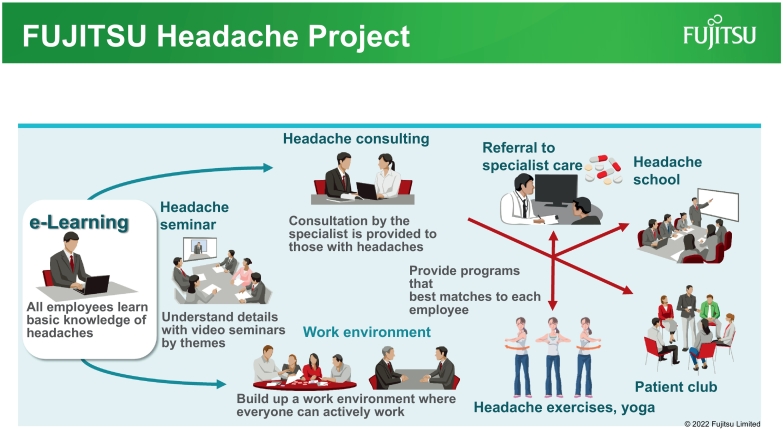
Migraine is prevalent, disabling, and peaks during people's peak productive years. The impact of migraine on people's professional lives, work productivity, and interpersonal relationships at work eventually affects everyone, has a significant detrimental effect on people with migraine, and a huge cost in terms of lost productivity. People with migraine want to work, so they do their best to work despite the varied migraine related and associated symptoms. Most of migraine-related productivity loss (89%) is due to presenteeism. People are less than half effective during a migraine attack due to the pain, migraine symptoms, attack unpredictability, migraine comorbidities, emotional impact, under-diagnosis and under-management, and the stigma. Migraine-related productivity loss may negatively affect people's career choice, job status and/or security, financial status, work relationships, mood, and confidence. Migraine is estimated to represent 16% of total US workforce presenteeism. Thankfully, there are ways to help support people with migraine in the workplace and increase their productivity such as: workplace migraine education programs, workplace migraine education and management programs, migraine-friendly work environment, migraine treatment optimization and advocacy. The example of the successful workplace migraine education and management program developed and run in collaboration between Fujitsu, the Japanase Headache Society, and the International Headache Society Global Patient Advocacy Coalition is discussed.
偏头痛很常见,会使人丧失能力,且在人们生产力高峰期时达到发病高峰。偏头痛对人们职业生涯、工作效率以及工作中的人际关系产生的影响最终会波及每一个人,对偏头痛患者有显著的不利影响,且在生产力损失方面成本巨大。偏头痛患者想要工作,所以尽管有各种与偏头痛相关及伴发的症状,他们仍尽力工作。与偏头痛相关的生产力损失大多(89%)是由于出勤主义(人在患病时仍坚持工作)。由于疼痛、偏头痛症状、发作不可预测性、偏头痛合并症、情绪影响、诊断不足和管理不善以及污名化,人们在偏头痛发作期间的效率不到正常时的一半。与偏头痛相关的生产力损失可能会对人们的职业选择、工作状态和/或安全感、财务状况、工作关系、情绪和信心产生负面影响。据估计,偏头痛占美国劳动力出勤主义造成的总损失的16%。幸运的是,有一些方法可以在工作场所帮助支持偏头痛患者并提高他们的生产力,比如:工作场所偏头痛教育项目、工作场所偏头痛教育和管理项目、对偏头痛友好的工作环境、偏头痛治疗优化及宣传。文中讨论了富士通、日本头痛协会和国际头痛协会全球患者倡导联盟合作开发并实施的成功的工作场所偏头痛教育和管理项目的案例。