Department of Integrated Mathematical Oncology, H Lee Moffitt Cancer Center & Research Institute, Tampa, Florida, USA.
Cancer Biology Ph.D. Program, University of South Florida, Tampa, Florida, USA.
J Immunother Cancer. 2022 Jul;10(7). doi: 10.1136/jitc-2022-005107.
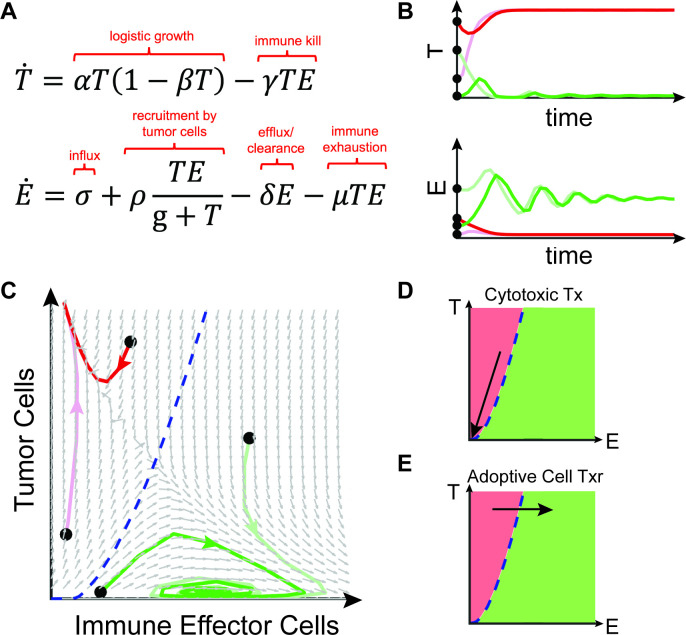
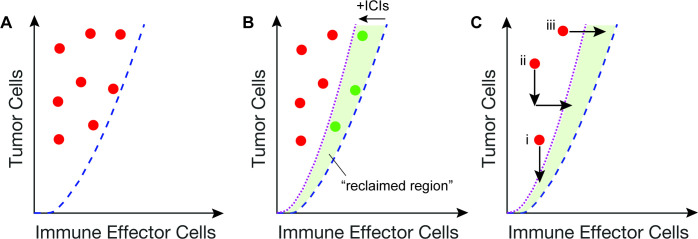
Immunotherapies are a major breakthrough in oncology, yielding unprecedented response rates for some cancers. Especially in combination with conventional treatments or targeted agents, immunotherapeutics offer invaluable tools to improve outcomes for many patients. However, why not all patients have a favorable response remains unclear. There is an increasing appreciation of the contributions of the complex tumor microenvironment, and the tumor-immune ecosystem in particular, to treatment outcome. To date, however, there exists no immune biomarker to explain why two patients with similar clinical stage and molecular profile would have different treatment outcomes. We hypothesize that it is critical to understand both the immune and tumor states to understand how the complex system will respond to treatment. Here, we present how integrated mathematical oncology approaches can help conceptualize the effect of various immunotherapies on a patient's tumor and local immune environment, and how combinations of immunotherapy and cytotoxic therapy may be used to improve tumor response and control and limit toxicity on a per patient basis.
免疫疗法是肿瘤学的重大突破,为一些癌症带来了前所未有的反应率。特别是与传统治疗或靶向药物联合使用,免疫疗法为许多患者提供了改善治疗效果的宝贵工具。然而,为什么并非所有患者都有良好的反应仍然不清楚。人们越来越认识到复杂的肿瘤微环境,特别是肿瘤免疫生态系统,对治疗结果的贡献。然而,迄今为止,还没有免疫生物标志物可以解释为什么两个具有相似临床阶段和分子特征的患者会有不同的治疗结果。我们假设,了解免疫和肿瘤状态对于理解复杂系统将如何对治疗做出反应至关重要。在这里,我们介绍了综合数学肿瘤学方法如何帮助概念化各种免疫疗法对患者肿瘤和局部免疫环境的影响,以及免疫疗法和细胞毒性疗法的联合使用如何改善肿瘤反应和控制,并在个体患者的基础上限制毒性。