
壳聚糖/氧化石墨烯导管的电沉积以促进周围神经再生。
Electrodeposition of chitosan/graphene oxide conduit to enhance peripheral nerve regeneration.
作者信息
Zhao Ya-Nan, Wu Ping, Zhao Zi-Yuan, Chen Fei-Xiang, Xiao Ao, Yue Zhi-Yi, Han Xin-Wei, Zheng Yong, Chen Yun
机构信息
Department of Biomedical Engineering and Hubei Province Key Laboratory of Allergy and Immune Related Disease, School of Basic Medical Sciences, Wuhan University, Wuhan; Department of Interventional Radiology, The First Affiliated Hospital of Zhengzhou University, Zhengzhou, Henan Province, China.
Department of Biomedical Engineering and Hubei Province Key Laboratory of Allergy and Immune Related Disease, School of Basic Medical Sciences, Wuhan University, Wuhan, Hubei Province, China.
出版信息
Neural Regen Res. 2023 Jan;18(1):207-212. doi: 10.4103/1673-5374.344836.
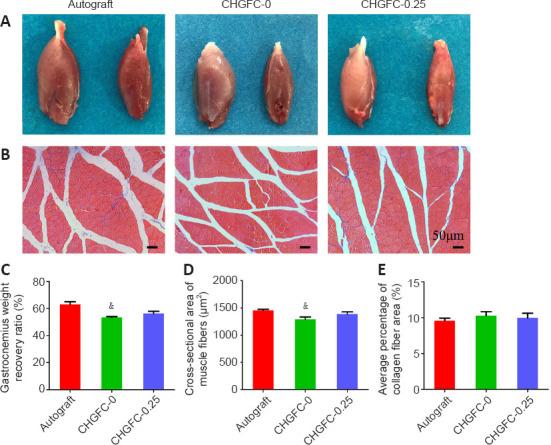
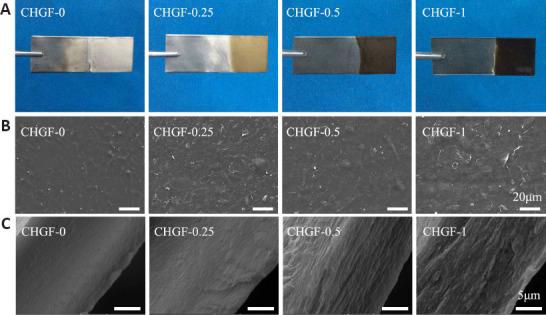
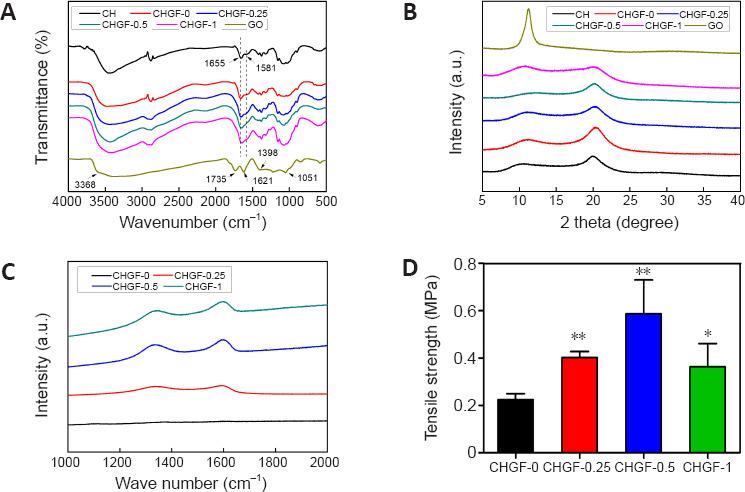
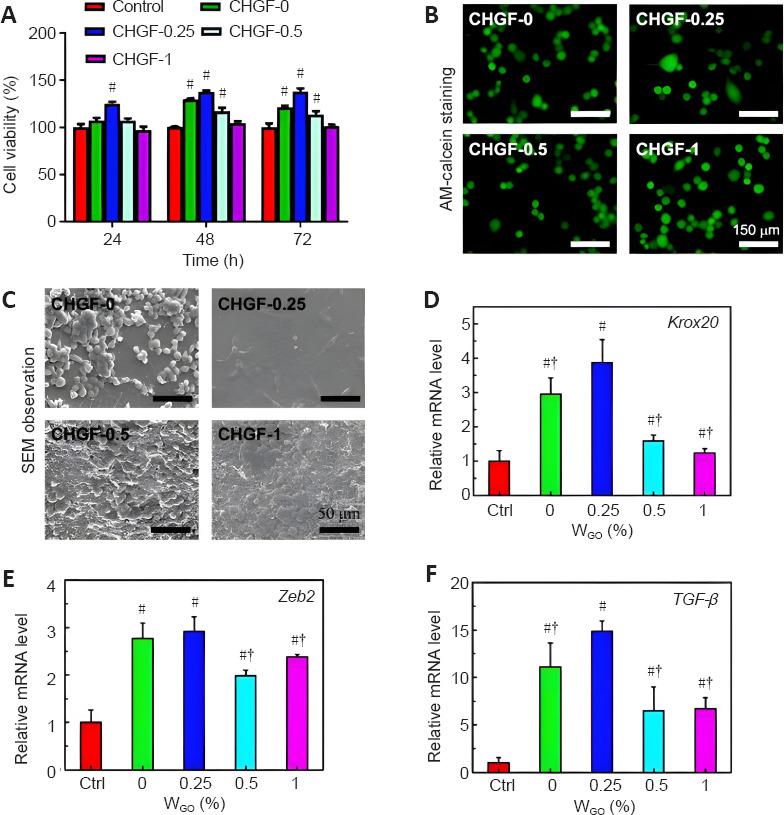
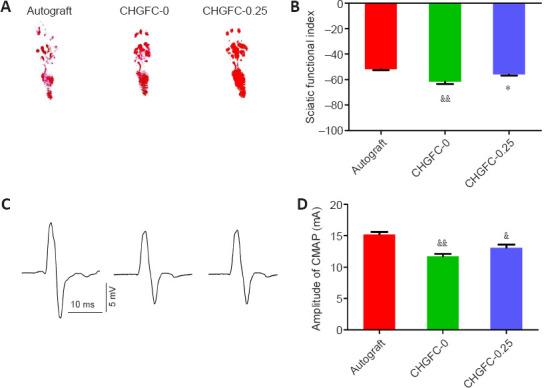
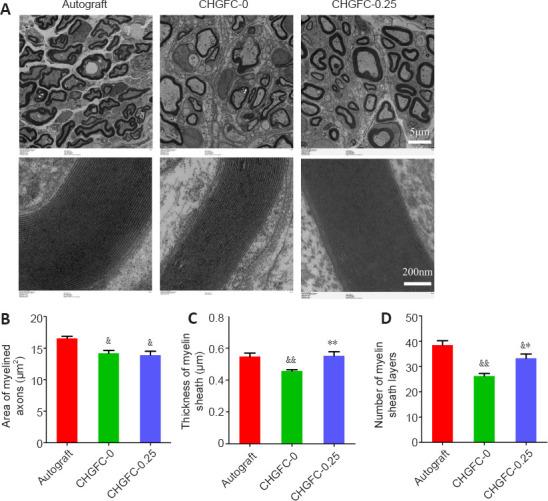
Currently available commercial nerve guidance conduits have been applied in the repair of peripheral nerve defects. However, a conduit exhibiting good biocompatibility remains to be developed. In this work, a series of chitosan/graphene oxide (GO) films with concentrations of GO varying from 0-1 wt% (collectively referred to as CHGF-n) were prepared by an electrodeposition technique. The effects of CHGF-n on proliferation and adhesion abilities of Schwann cells were evaluated. The results showed that Schwann cells exhibited elongated spindle shapes and upregulated expression of nerve regeneration-related factors such as Krox20 (a key myelination factor), Zeb2 (essential for Schwann cell differentiation, myelination, and nerve repair), and transforming growth factor β (a cytokine with regenerative functions). In addition, a nerve guidance conduit with a GO content of 0.25% (CHGFC-0.25) was implanted to repair a 10-mm sciatic nerve defect in rats. The results indicated improvements in sciatic functional index, electrophysiology, and sciatic nerve and gastrocnemius muscle histology compared with the CHGFC-0 group, and similar outcomes to the autograft group. In conclusion, we provide a candidate method for the repair of peripheral nerve defects using free-standing chitosan/GO nerve conduits produced by electrodeposition.
目前可用的商业神经导管已应用于周围神经缺损的修复。然而,仍有待开发一种具有良好生物相容性的导管。在这项工作中,通过电沉积技术制备了一系列氧化石墨烯(GO)浓度从0到1 wt%不等的壳聚糖/氧化石墨烯(GO)薄膜(统称为CHGF-n)。评估了CHGF-n对雪旺细胞增殖和黏附能力的影响。结果表明,雪旺细胞呈现出细长的纺锤形,并且神经再生相关因子如Krox20(一种关键的髓鞘形成因子)、Zeb2(雪旺细胞分化、髓鞘形成和神经修复所必需的)以及转化生长因子β(一种具有再生功能的细胞因子)的表达上调。此外,植入了GO含量为0.25%的神经导管(CHGFC-0.25)以修复大鼠10毫米的坐骨神经缺损。结果表明,与CHGFC-0组相比,坐骨神经功能指数、电生理学以及坐骨神经和腓肠肌组织学均有改善,且与自体移植组的结果相似。总之,我们提供了一种使用通过电沉积制备的独立壳聚糖/GO神经导管修复周围神经缺损的候选方法。
 Zotero 插件