Costea Liliana, Chițescu Carmen Lidia, Boscencu Rica, Ghica Manuela, Lupuliasa Dumitru, Mihai Dragoș Paul, Deculescu-Ioniță Teodora, Duțu Ligia Elena, Popescu Maria Lidia, Luță Emanuela-Alice, Nițulescu George Mihai, Olaru Octavian Tudorel, Gîrd Cerasela Elena
Faculty of Pharmacy, "Carol Davila" University of Medicine and Pharmacy, Traian Vuia 6, 020956 Bucharest, Romania.
Faculty of Medicine and Pharmacy, "Dunărea de Jos", University of Galați, 35 A.I. Cuza Str., 800010 Galați, Romania.
Plants (Basel). 2022 Jun 24;11(13):1680. doi: 10.3390/plants11131680.
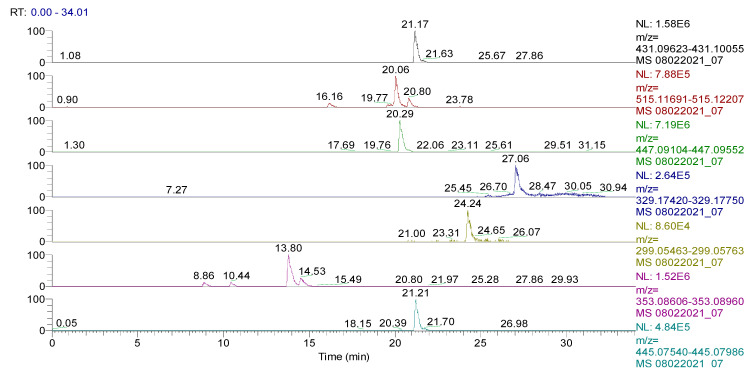
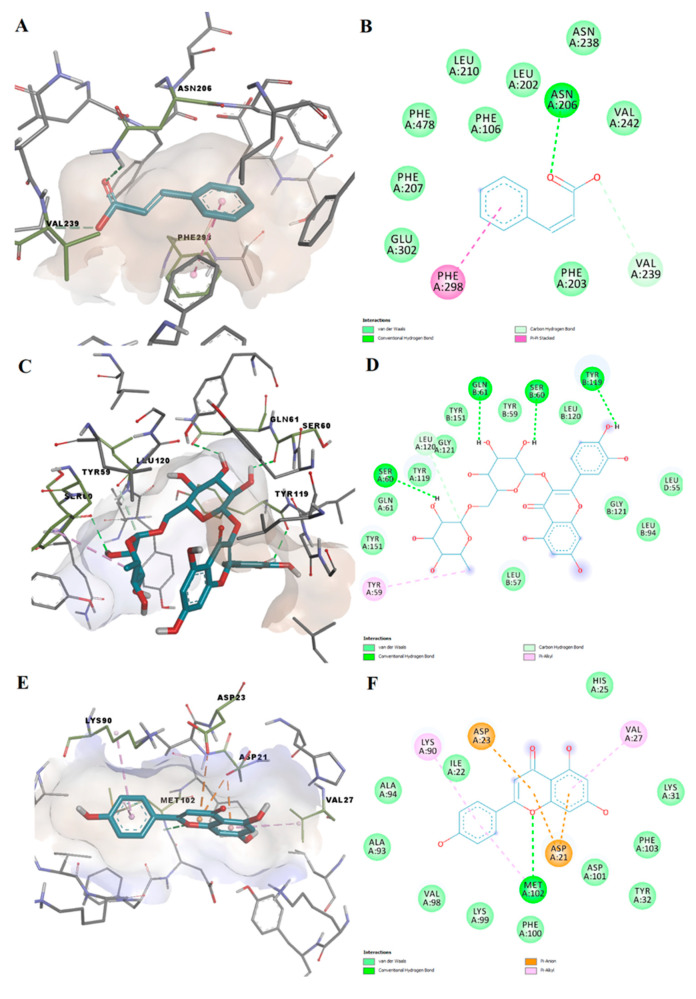
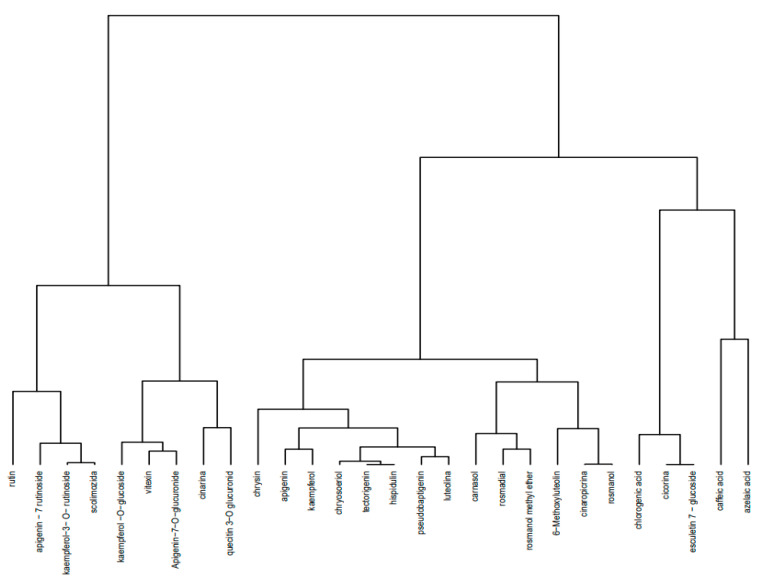
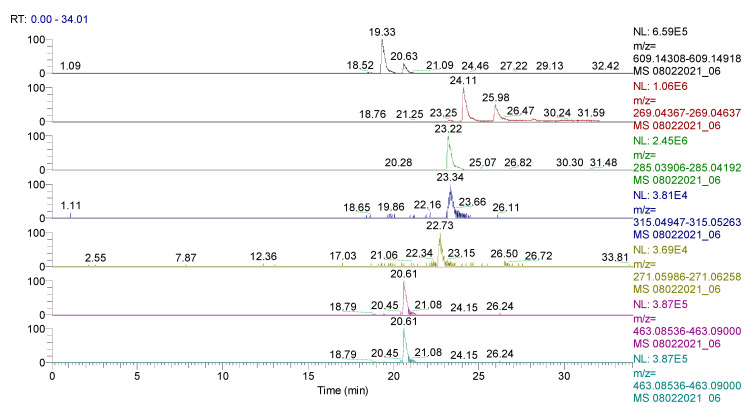
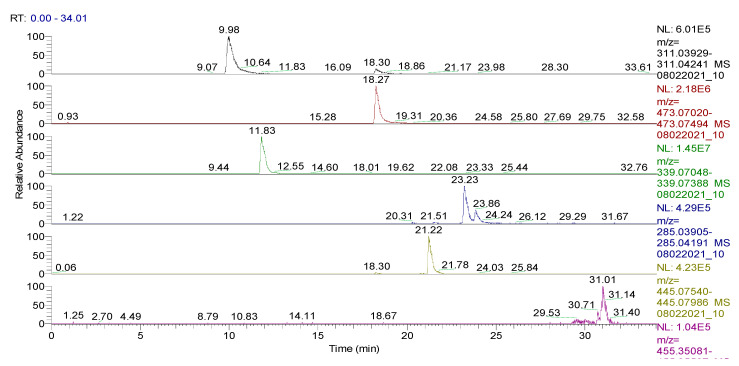
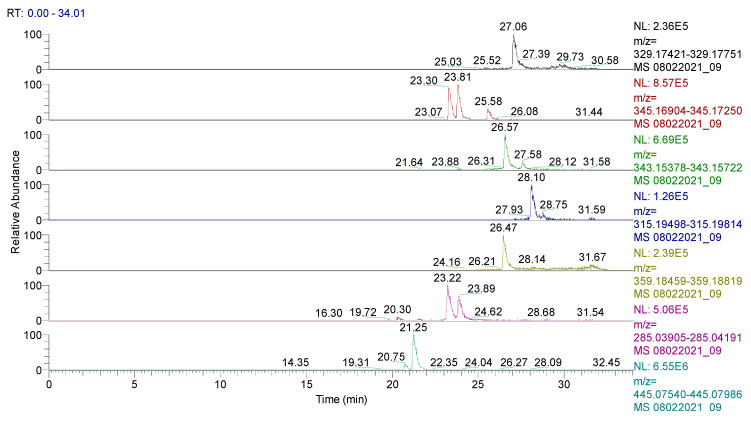
Oxidative stress is among the major triggers for many important human functional disorders, which often lead to various metabolic or tissue diseases. The aim of the study is to obtain five standardized vegetal extracts (-CE, -RE, -TE, -CHE, and -AE) that contain active principles with an essential role in protecting liver cells against free radicals and quantify their antioxidant actions. The compounds of therapeutic interest from the analyzed extracts were identified and quantified using the UHPLC-HRMS/MS technique. Thus, the resulting identified compounds were 28 compounds in CE, 48 compounds in RE, 39 compounds in TE, 43 compounds in CHE, and 31 compounds in AE. These compounds belong to the class of flavonoids, isoflavones, phenolic acids and dicarboxylic acids, depsides, diterpenes, triterpenes, sesquiterpenes, proanthocyanidins, or coumarin derivatives. From the major polyphenolic compounds quantified in all the extracts analyzed by UHPLC-HRMS/MS, considerable amounts have been found for chlorogenic acid (619.8 µg/g extract for TE-2032.4 µg/g extract for AE), rutoside (105.1 µg/g extract for RE-1724.7 µg/g extract for AE), kaempferol (243 µg/g extract for CHE-2028.4 µg/g extract for CE), and for naringenin (383 µg/g extract for CHE-1375.8 µg/g extract for AE). The quantitative chemical analysis showed the highest content of total phenolic acids for AE (24.1528 ± 1.1936 g chlorogenic acid/100 g dry extract), the highest concentration of flavones for RE (6.0847 ± 0.3025 g rutoside/100 g dry extract), and the richest extract in total polyphenols with 31.7017 ± 1.2211 g tannic acid equivalent/100 g dry extract for AE. Several methods (DPPH, ABTS, and FRAP) have been used to determine the in vitro total antioxidant activity of the extracts to evaluate their free radical scavenging ability, influenced by the identified compounds. As a result, the correlation between the content of the polyphenolic compounds and the antioxidant effect of the extracts has been demonstrated. Statistically significant differences were found when comparing the antiradical capacity within the study groups. Although all the analyzed extracts showed good IC50 values, which may explain their antihepatotoxic effects, the highest antioxidant activity was obtained for (IC50 = 0.0147 mg/mL) and the lowest antioxidant activity was obtained for (IC50 = 0.1588 mg/mL). Furthermore, the hepatoprotective potential was evaluated in silico by predicting the interactions between the determined phytochemicals and key molecular targets relevant to liver disease pathophysiology. Finally, the evaluation of the pharmacognostic and phytochemical properties of the studied extracts validates their use as adjuvants in phytotherapy, as they reduce oxidative stress and toxin accumulation and thus exert a hepatoprotective effect at the cellular level.
氧化应激是许多重要人类功能障碍的主要触发因素之一,这些功能障碍常常导致各种代谢或组织疾病。本研究的目的是获得五种标准化植物提取物(-CE、-RE、-TE、-CHE和-AE),这些提取物含有对保护肝细胞免受自由基侵害起关键作用的活性成分,并量化它们的抗氧化作用。使用UHPLC-HRMS/MS技术对分析提取物中具有治疗意义的化合物进行鉴定和定量。因此,在CE中鉴定出28种化合物,在RE中鉴定出48种化合物,在TE中鉴定出39种化合物,在CHE中鉴定出43种化合物,在AE中鉴定出31种化合物。这些化合物属于黄酮类、异黄酮类、酚酸和二羧酸类、缩酚酸类、二萜类、三萜类、倍半萜类、原花青素类或香豆素衍生物类。通过UHPLC-HRMS/MS分析的所有提取物中定量的主要多酚类化合物,已发现绿原酸含量可观(TE中为619.8μg/g提取物 - AE中为2032.4μg/g提取物)、芦丁(RE中为105.1μg/g提取物 - AE中为1724.7μg/g提取物)、山奈酚(CHE中为243μg/g提取物 - CE中为2028.4μg/g提取物)和柚皮素(CHE中为383μg/g提取物 - AE中为1375.8μg/g提取物)。定量化学分析表明,AE中总酚酸含量最高(24.1528±1.1936g绿原酸/100g干提取物),RE中黄酮浓度最高(6.0847±0.3025g芦丁/100g干提取物),AE中总多酚含量最丰富,为31.7017±1.2211g单宁酸当量/100g干提取物。已使用几种方法(DPPH、ABTS和FRAP)来测定提取物的体外总抗氧化活性,以评估它们的自由基清除能力,该能力受鉴定出的化合物影响。结果表明了多酚类化合物含量与提取物抗氧化效果之间的相关性。在比较研究组内的抗自由基能力时发现了统计学上的显著差异。尽管所有分析的提取物都显示出良好的IC50值,这可能解释了它们的抗肝毒性作用,但 获得了最高的抗氧化活性(IC50 = 0.0147mg/mL), 获得了最低的抗氧化活性(IC50 = 0.1588mg/mL)。此外,通过预测所确定的植物化学物质与与肝病病理生理学相关的关键分子靶点之间的相互作用,在计算机上评估了肝保护潜力。最后,对所研究提取物的生药学和植物化学性质的评估证实了它们在植物疗法中作为佐剂的用途,因为它们减少了氧化应激和毒素积累,从而在细胞水平上发挥肝保护作用。