Cardiff University Brain Research Imaging Centre (CUBRIC), Cardiff University, Maindy Rd, Cardiff CF24 4HQ, United Kingdom; Department of Neurosurgery, University Hospital of Wales, Cardiff, United Kingdom; BRAIN Biomedical Research Unit, Health & Care Research Wales, Cardiff, United Kingdom.
Cardiff University Brain Research Imaging Centre (CUBRIC), Cardiff University, Maindy Rd, Cardiff CF24 4HQ, United Kingdom.
Neuroimage. 2022 Oct 15;260:119423. doi: 10.1016/j.neuroimage.2022.119423. Epub 2022 Jul 7.
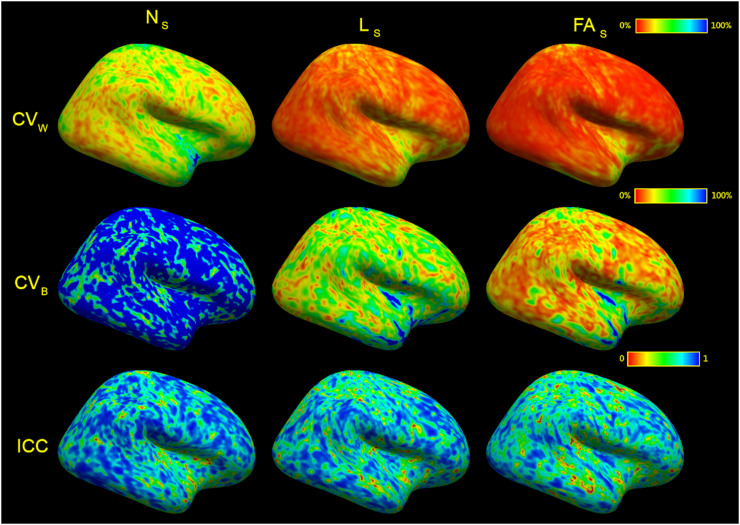
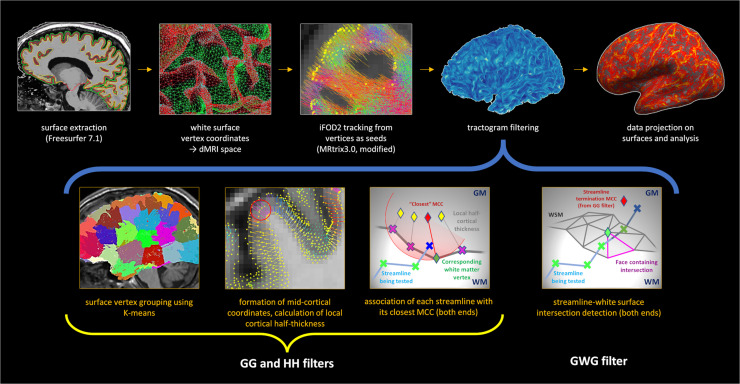
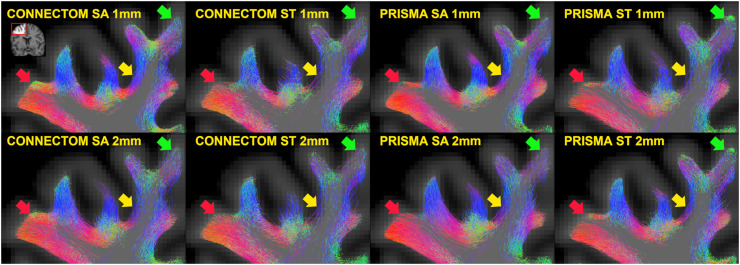
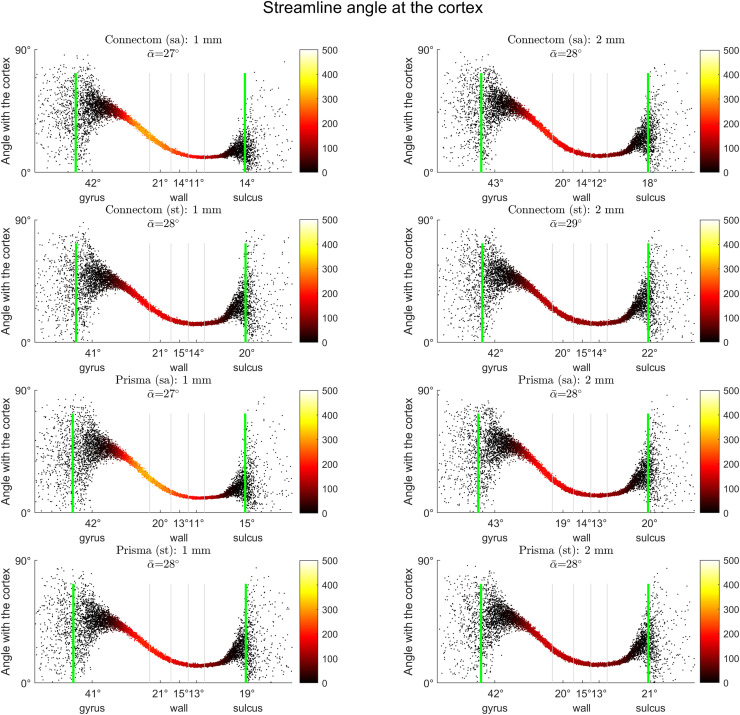
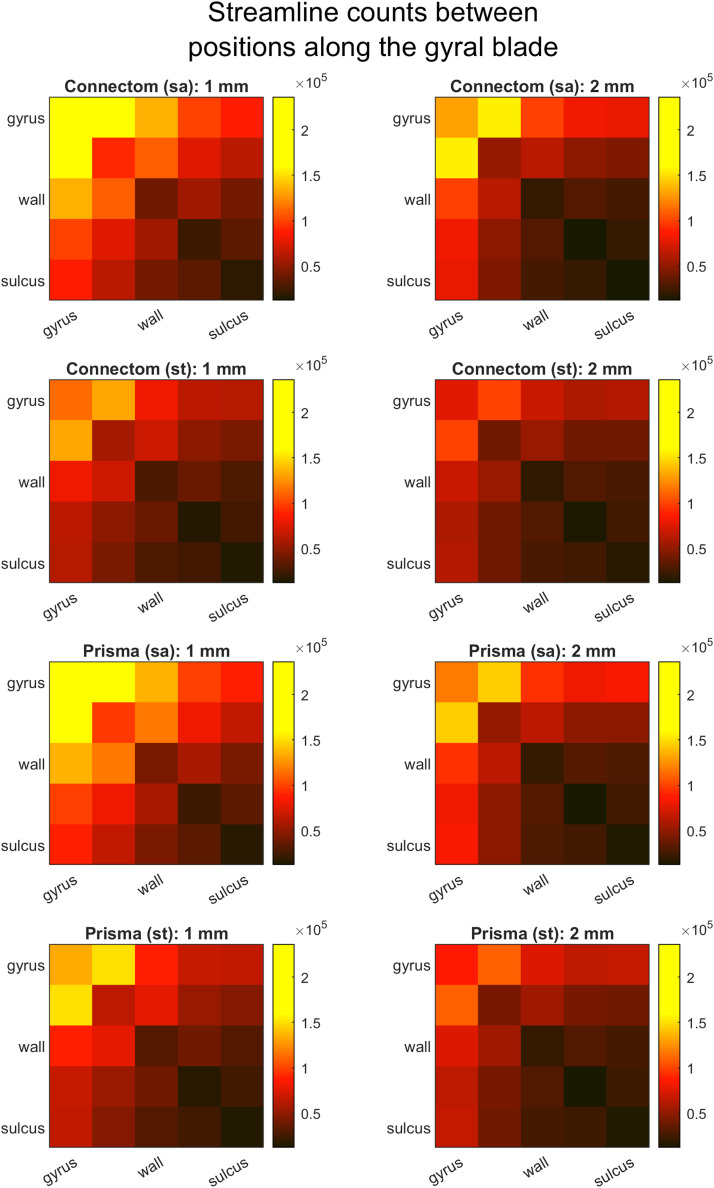
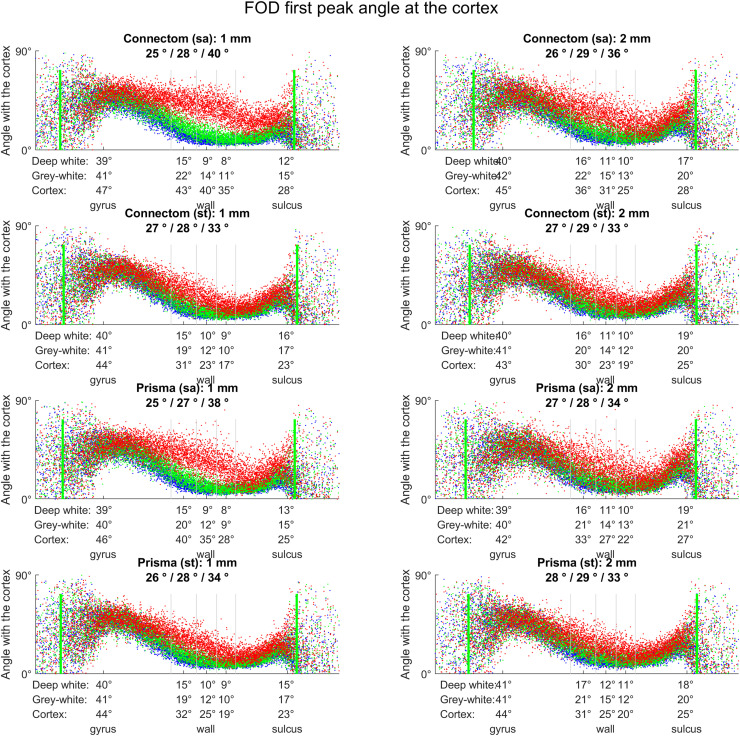
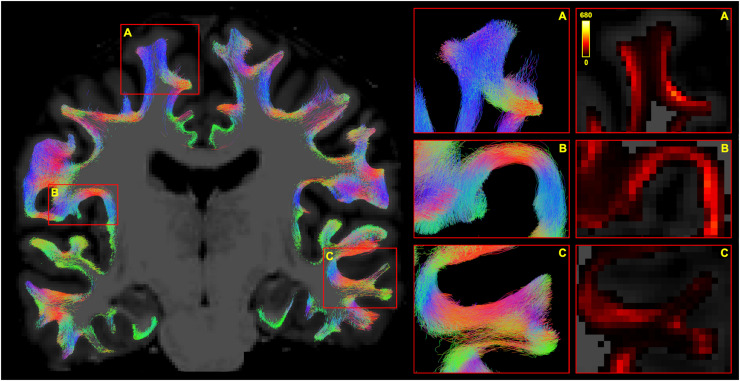
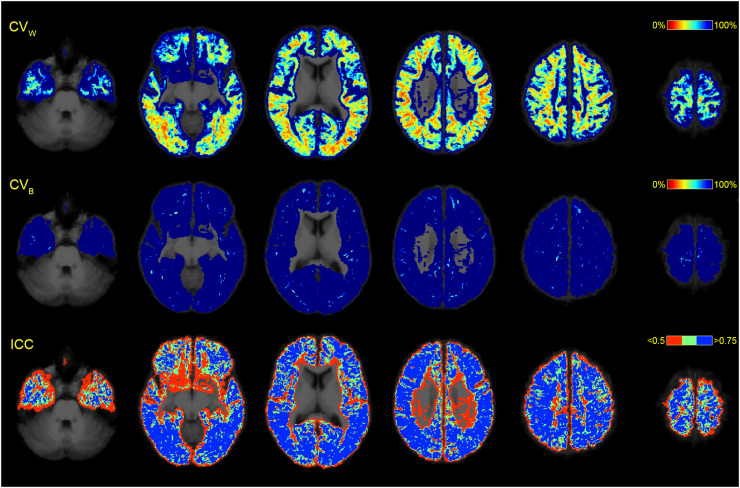
It is estimated that in the human brain, short association fibres (SAF) represent more than half of the total white matter volume and their involvement has been implicated in a range of neurological and psychiatric conditions. This population of fibres, however, remains relatively understudied in the neuroimaging literature. Some of the challenges pertinent to the mapping of SAF include their variable anatomical course and proximity to the cortical mantle, leading to partial volume effects and potentially affecting streamline trajectory estimation. This work considers the impact of seeding and filtering strategies and choice of scanner, acquisition, data resampling to propose a whole-brain, surface-based short (≤30-40 mm) SAF tractography approach. The framework is shown to produce longer streamlines with a predilection for connecting gyri as well as high cortical coverage. We further demonstrate that certain areas of subcortical white matter become disproportionally underrepresented in diffusion-weighted MRI data with lower angular and spatial resolution and weaker diffusion weighting; however, collecting data with stronger gradients than are usually available clinically has minimal impact, making our framework translatable to data collected on commonly available hardware. Finally, the tractograms are examined using voxel- and surface-based measures of consistency, demonstrating moderate reliability, low repeatability and high between-subject variability, urging caution when streamline count-based analyses of SAF are performed.
据估计,在人类大脑中,短连接纤维(SAF)占总白质体积的一半以上,其涉及范围广泛的神经和精神疾病。然而,在神经影像学文献中,对这一纤维群的研究相对较少。这些纤维的一些挑战包括它们的解剖学路径的可变性和与皮质层的接近性,导致部分容积效应,可能影响流线轨迹的估计。这项工作考虑了种子和过滤策略以及扫描仪、采集、数据重采样的选择的影响,提出了一种基于全脑、基于表面的短(≤30-40mm)SAF 束追踪方法。该框架被证明可以产生更长的流线,优先连接脑回,并具有较高的皮质覆盖率。我们还进一步证明,在具有较低角度和空间分辨率以及较弱扩散加权的扩散加权 MRI 数据中,某些皮质下白质区域的代表性不成比例地降低;然而,收集比临床通常可用的梯度更强的数据对我们的框架几乎没有影响,使我们的框架可以转化为在常用硬件上收集的数据。最后,使用体素和基于表面的一致性测量方法对束追踪进行了检查,结果表明具有中等可靠性、低重复性和高个体间变异性,因此在基于流线计数的 SAF 分析时需要谨慎。