Department of Epidemiology, Rollins School of Public Health, Emory University, USA.
Department of Epidemiology, Rollins School of Public Health, Emory University, USA.
Epidemics. 2022 Sep;40:100605. doi: 10.1016/j.epidem.2022.100605. Epub 2022 Jun 30.
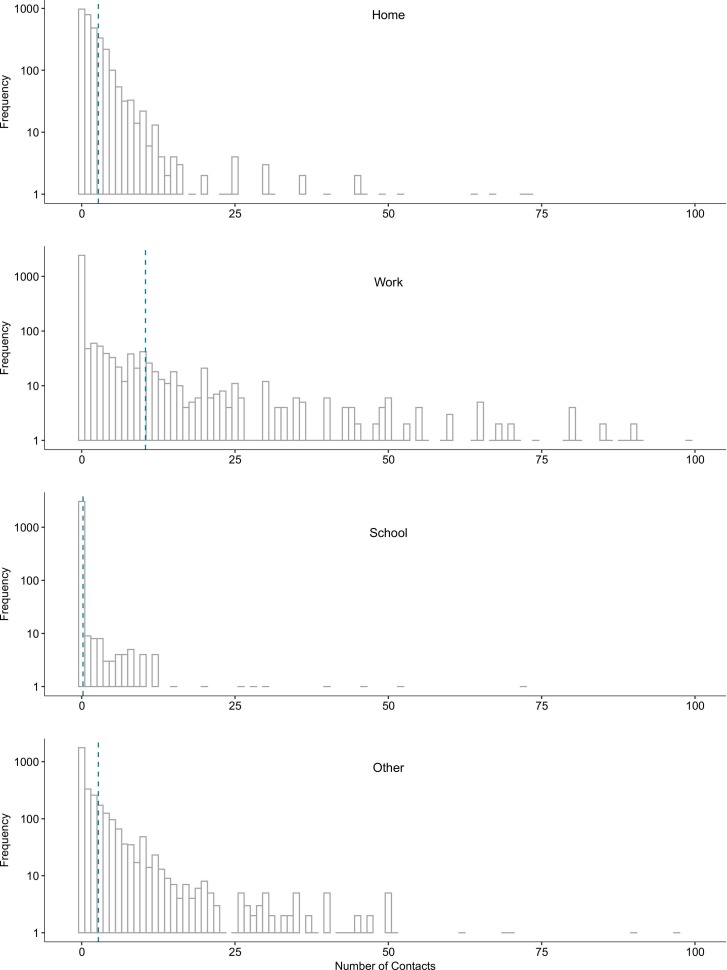
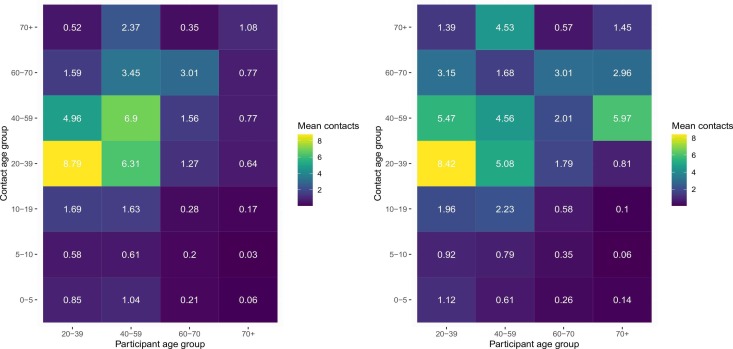
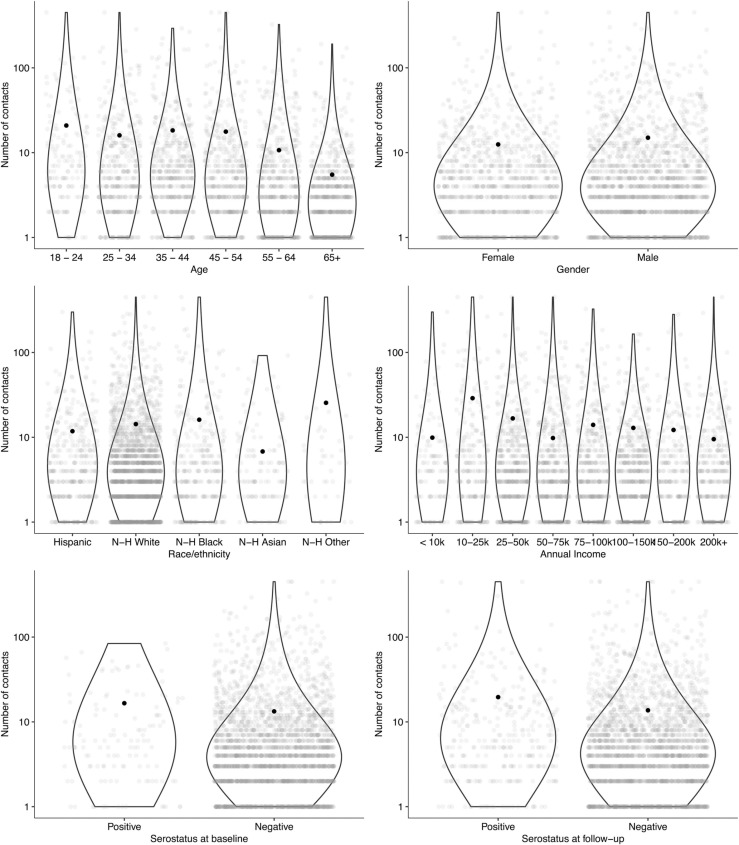
The response to the COVID-19 pandemic in the U.S prompted abrupt and dramatic changes to social contact patterns. Monitoring changing social behavior is essential to provide reliable input data for mechanistic models of infectious disease, which have been increasingly used to support public health policy to mitigate the impacts of the pandemic. While some studies have reported on changing contact patterns throughout the pandemic, few have reported differences in contact patterns among key demographic groups and none have reported nationally representative estimates. We conducted a national probability survey of US households and collected information on social contact patterns during two time periods: August-December 2020 (before widespread vaccine availability) and March-April 2021 (during national vaccine rollout). Overall, contact rates in Spring 2021 were similar to those in Fall 2020, with most contacts reported at work. Persons identifying as non-White, non-Black, non-Asian, and non-Hispanic reported high numbers of contacts relative to other racial and ethnic groups. Contact rates were highest in those reporting occupations in retail, hospitality and food service, and transportation. Those testing positive for SARS-CoV-2 antibodies reported a higher number of daily contacts than those who were seronegative. Our findings provide evidence for differences in social behavior among demographic groups, highlighting the profound disparities that have become the hallmark of the COVID-19 pandemic.
美国对 COVID-19 大流行的反应促使社会接触模式发生了突然而显著的变化。监测不断变化的社会行为对于传染病机制模型提供可靠的输入数据至关重要,这些模型已越来越多地被用于支持减轻大流行影响的公共卫生政策。虽然有些研究报告了整个大流行期间接触模式的变化,但很少有研究报告关键人口群体之间接触模式的差异,也没有报告全国代表性的估计。我们对美国家庭进行了一项全国性的概率调查,并在两个时间段收集了有关社会接触模式的信息:2020 年 8 月至 12 月(疫苗广泛可用之前)和 2021 年 3 月至 4 月(全国疫苗接种期间)。总的来说,2021 年春季的接触率与 2020 年秋季相似,大多数接触发生在工作中。与其他种族和族裔群体相比,自称非白种人、非黑人、非亚洲人和非西班牙裔的人报告的接触人数较多。报告从事零售、酒店和餐饮服务以及运输业的人的接触率最高。检测出 SARS-CoV-2 抗体呈阳性的人报告的每日接触人数高于血清阴性者。我们的研究结果为人口群体之间的社会行为差异提供了证据,突出了已成为 COVID-19 大流行标志的深刻差异。