Feehan Dennis M, Mahmud Ayesha S
Department of Demography, University of California, Berkeley, Berkeley, CA, USA.
Nat Commun. 2021 Feb 9;12(1):893. doi: 10.1038/s41467-021-20990-2.
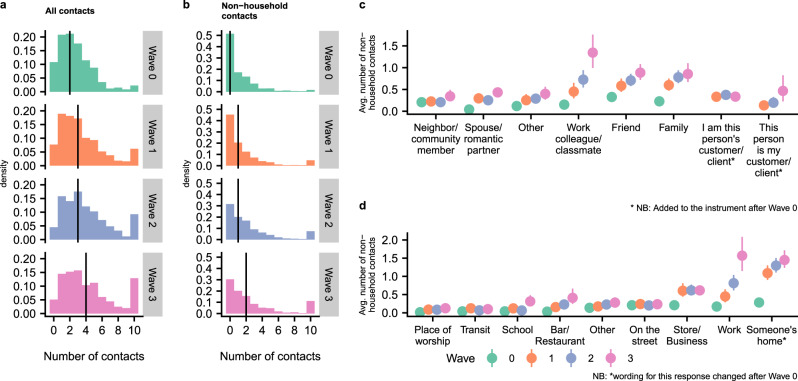
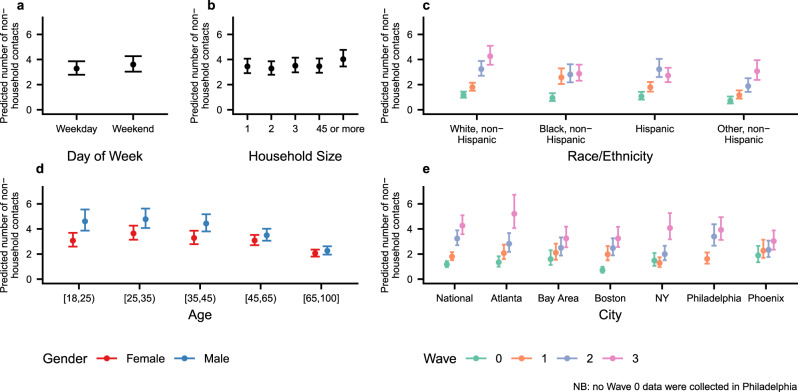
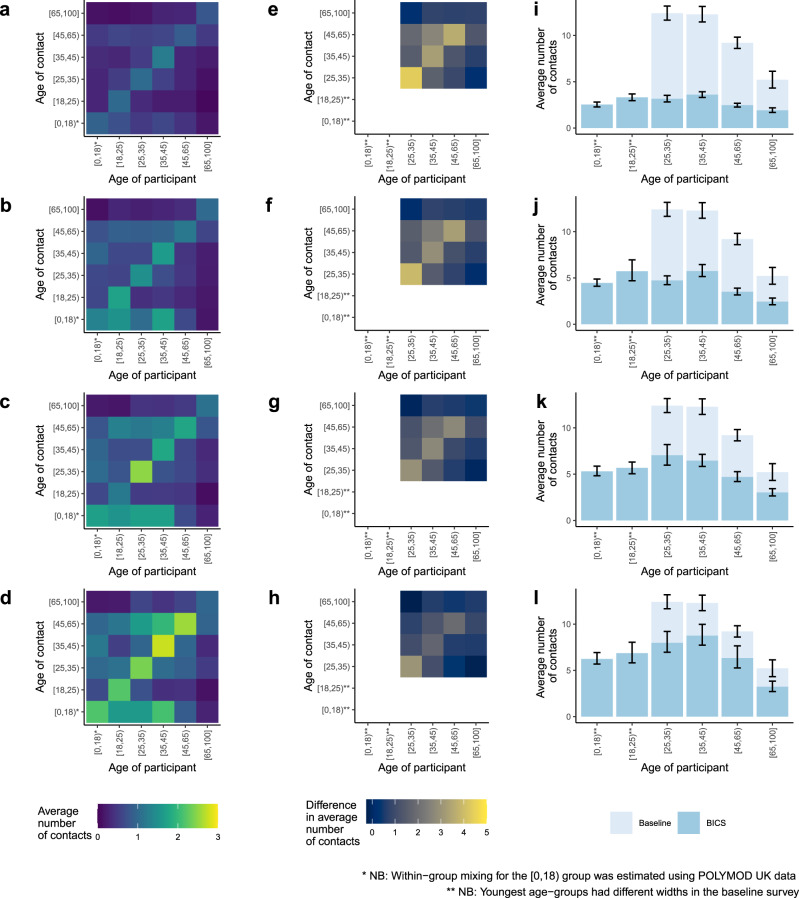
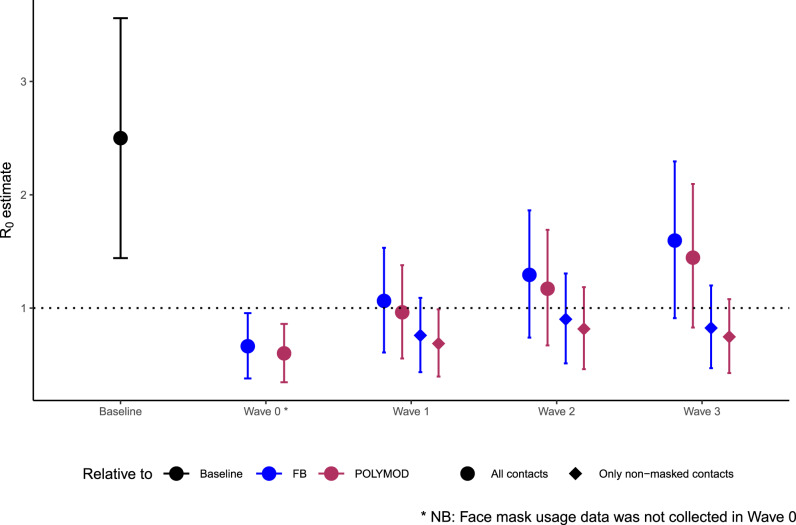
SARS-CoV-2 is transmitted primarily through close, person-to-person interactions. Physical distancing policies can control the spread of SARS-CoV-2 by reducing the amount of these interactions in a population. Here, we report results from four waves of contact surveys designed to quantify the impact of these policies during the COVID-19 pandemic in the United States. We surveyed 9,743 respondents between March 22 and September 26, 2020. We find that interpersonal contact has been dramatically reduced in the US, with an 82% (95%CI: 80%-83%) reduction in the average number of daily contacts observed during the first wave compared to pre-pandemic levels. However, we find increases in contact rates over the subsequent waves. We also find that certain demographic groups, including people under 45 and males, have significantly higher contact rates than the rest of the population. Tracking these changes can provide rapid assessments of the impact of physical distancing policies and help to identify at-risk populations.
严重急性呼吸综合征冠状病毒2(SARS-CoV-2)主要通过密切的人际接触传播。物理距离政策可以通过减少人群中此类接触的数量来控制SARS-CoV-2的传播。在此,我们报告了四轮接触调查的结果,这些调查旨在量化在美国2019冠状病毒病大流行期间这些政策的影响。我们在2020年3月22日至9月26日期间对9743名受访者进行了调查。我们发现,美国的人际接触已大幅减少,与大流行前水平相比,在第一波调查期间观察到的日均接触次数减少了82%(95%置信区间:80%-83%)。然而,我们发现在随后的几轮调查中接触率有所上升。我们还发现,某些人口群体,包括45岁以下的人和男性,其接触率明显高于其他人群。追踪这些变化可以快速评估物理距离政策的影响,并有助于识别高危人群。