Du Xiaoli, He Yue, Lin Wei
Department of Radiology, Chengdu First People's Hospital, Chengdu, China.
Department of Orthopedics, Chengdu First People's Hospital, Chengdu, China.
Front Neurol. 2022 Jun 24;13:882334. doi: 10.3389/fneur.2022.882334. eCollection 2022.
It is difficult to differentiate between a few primary central nervous system lymphoma (PCNSL) and high-grade glioma (HGG) using conventional magnetic resonance imaging techniques. The purpose of this study is to explore whether diffusion-weighted imaging (DWI) can be effectively used to differentiate between these two types of tumors by analyzing the apparent diffusion coefficient (ADC).
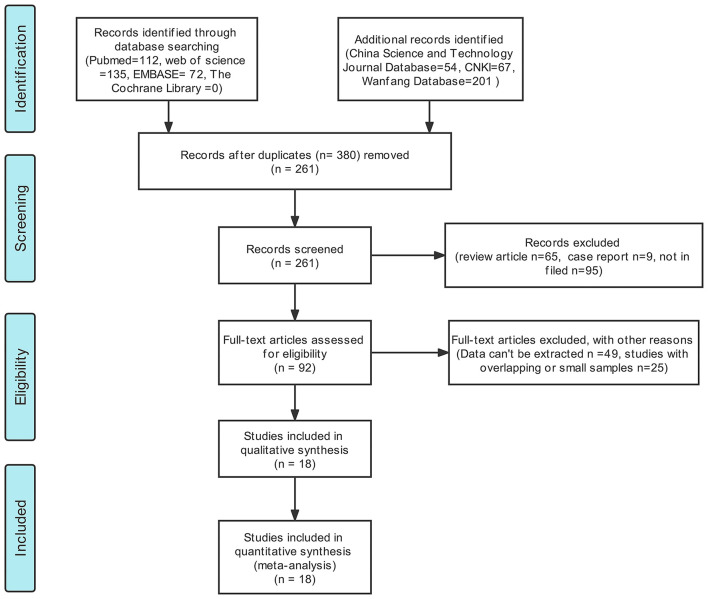
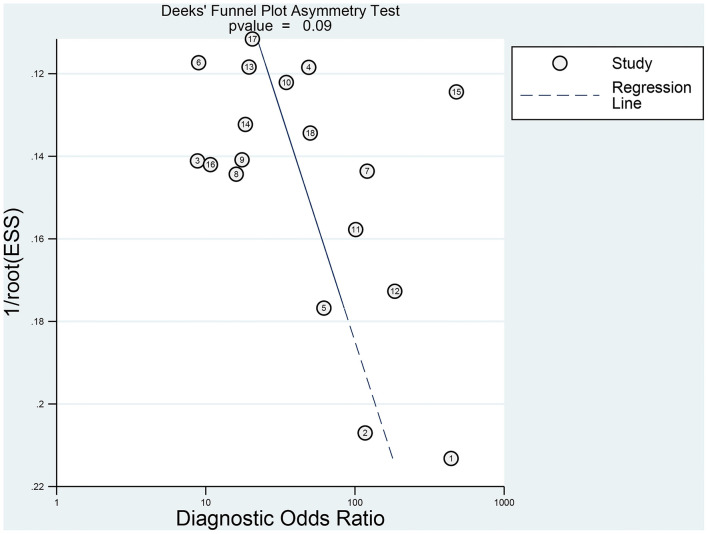
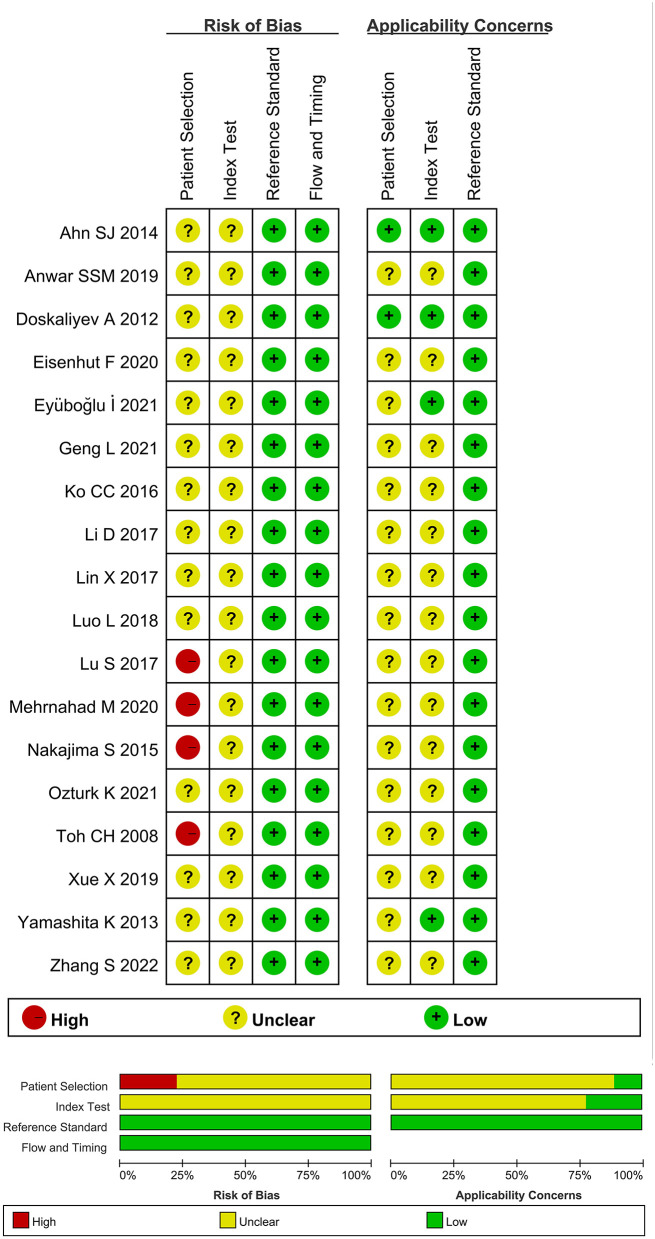
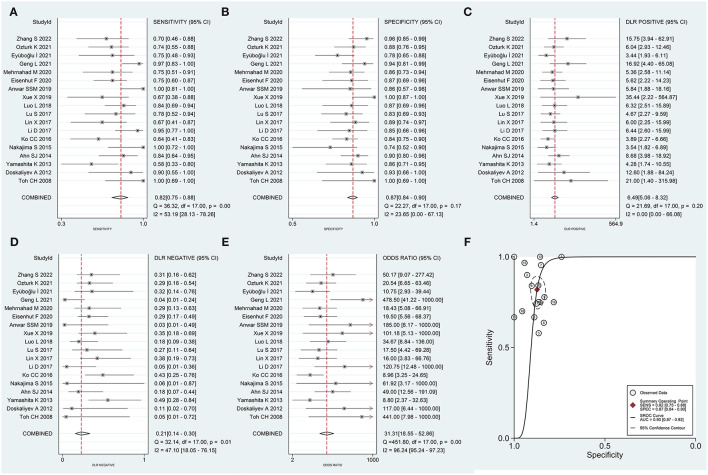
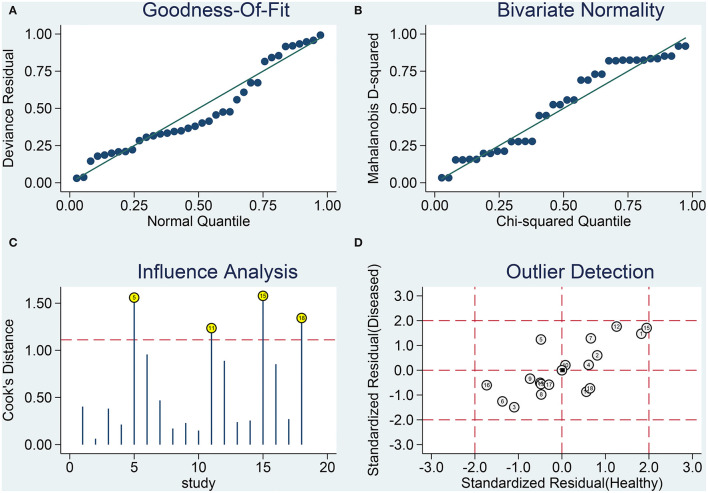
Data presented in Pubmed, Embase, Web of Science, Cochrane Library, China National Knowledge Infrastructure (CNKI), Wanfang Database, and China Science and Technology Journal Database (CQVIP) were analyzed. High-quality literature was included, and the quality was evaluated using the quality assessment of diagnostic accuracy studies-2 (QUADAS-2) tool, and the studies were based on the inclusion and exclusion rules. The pooled sensitivity, pooled specificity, pooled positive likelihood ratio (PLR), pooled negative likelihood ratio (NLR), pooled diagnostic odds ratio (), area under the curve (AUC) of the summary operating characteristic curve (SROC), and corresponding 95% confidence interval () were calculated using the bivariate mixed effect model. Meta-regression analysis and subgroup analysis were used to explore the sources of heterogeneity. The publication bias was evaluated by conducting Deek's test.
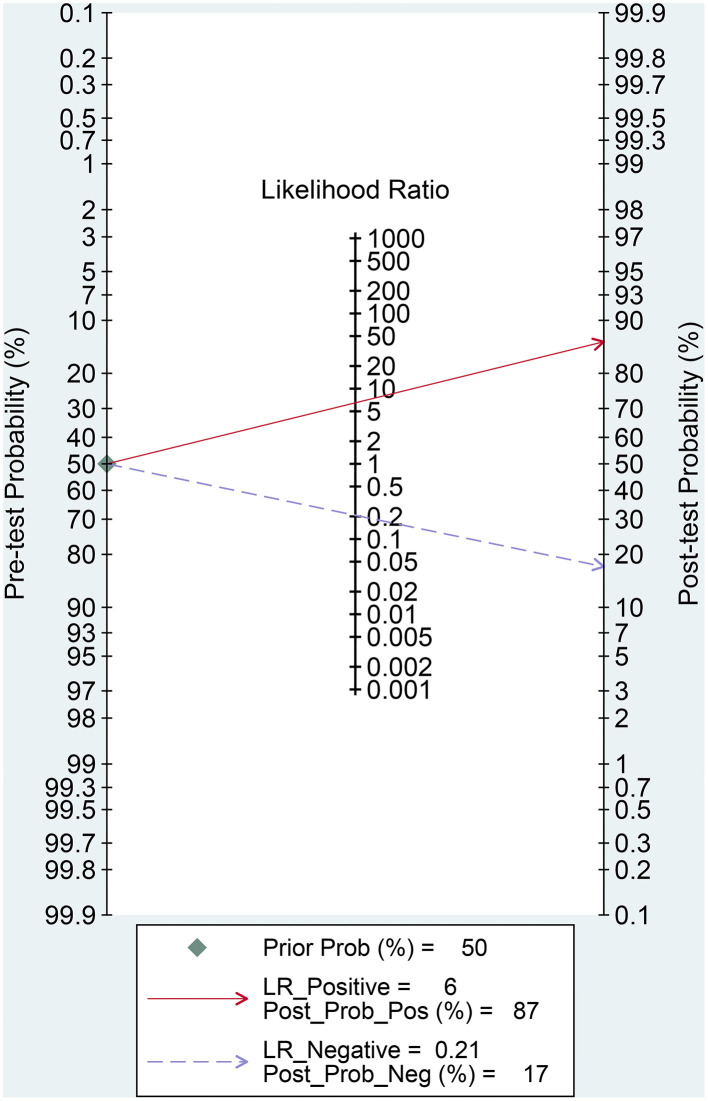
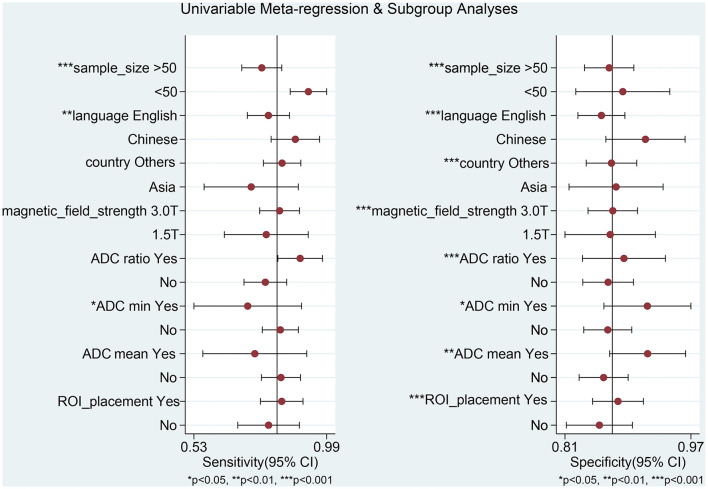
In total, eighteen high-quality studies were included. The pooled sensitivity was 0.82 (95% CI: 0.75-0.88), the pooled specificity was 0.87 (95% CI: 0.84-0.90), the pooled positive likelihood ratio was 6.49 (95% CI: 5.06-8.32), the pooled NLR was 0.21 (95% CI: 0.14-0.30), the pooled was 31.31 (95% CI: 18.55-52.86), and the pooled AUC was 0.90 (95% CI: 0.87-0.92). Sample size, language and country of publication, magnetic field strength, region of interest (ROI), and cut-off values of different types of ADC can potentially be the sources of heterogeneity. There was no publication bias in this meta-analysis.
The results obtained from the meta-analysis suggest that DWI is characterized by high diagnostic accuracy and thus can be effectively used for differentiating between PCNSL and HGG.
使用传统磁共振成像技术难以区分原发性中枢神经系统淋巴瘤(PCNSL)和高级别胶质瘤(HGG)。本研究的目的是通过分析表观扩散系数(ADC),探讨扩散加权成像(DWI)是否能有效用于区分这两种类型的肿瘤。
分析了PubMed、Embase、Web of Science、Cochrane图书馆、中国知网(CNKI)、万方数据库和中国科技期刊数据库(CQVIP)中的数据。纳入高质量文献,并使用诊断准确性研究质量评估-2(QUADAS-2)工具评估质量,研究基于纳入和排除规则。使用双变量混合效应模型计算合并敏感度、合并特异度、合并阳性似然比(PLR)、合并阴性似然比(NLR)、合并诊断比值比()、汇总操作特征曲线(SROC)的曲线下面积(AUC)及相应的95%置信区间()。采用Meta回归分析和亚组分析探讨异质性来源。通过Deek检验评估发表偏倚。
共纳入18项高质量研究。合并敏感度为0.82(95%CI:0.75-0.88),合并特异度为0.87(95%CI:0.84-0.90),合并阳性似然比为6.49(95%CI:5.06-8.32),合并NLR为0.21(95%CI:0.14-0.30),合并为31.31(95%CI:18.55-52.86),合并AUC为0.90(95%CI:0.87-0.92)。样本量、发表语言和国家、磁场强度、感兴趣区域(ROI)以及不同类型ADC的截断值可能是异质性来源。本Meta分析不存在发表偏倚。
Meta分析结果表明,DWI具有较高的诊断准确性,因此可有效用于区分PCNSL和HGG。