Department of Cell and Developmental Biology, University College London, London, UK.
Department of Cell and Developmental Biology, University College London, London, UK.
Curr Biol. 2022 Aug 22;32(16):3505-3514.e7. doi: 10.1016/j.cub.2022.06.046. Epub 2022 Jul 13.
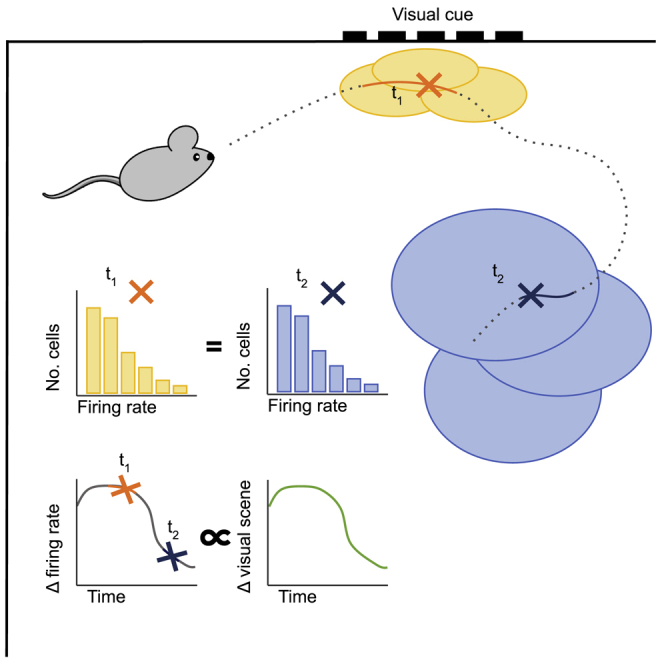
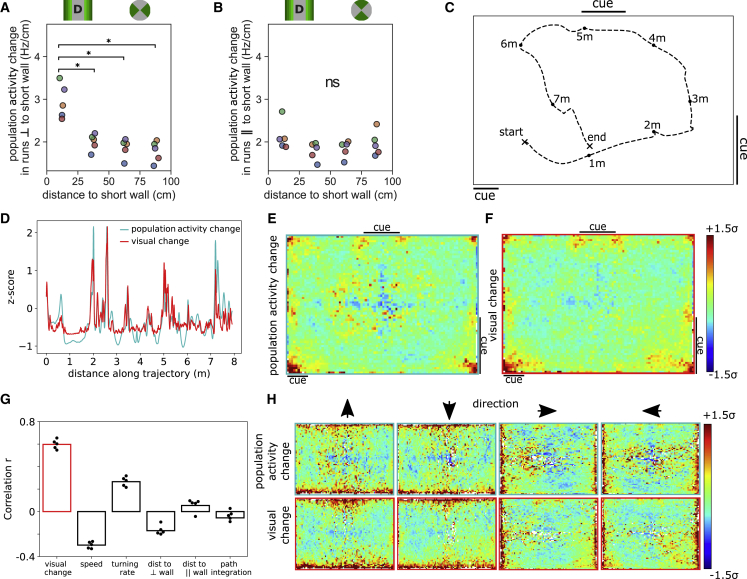
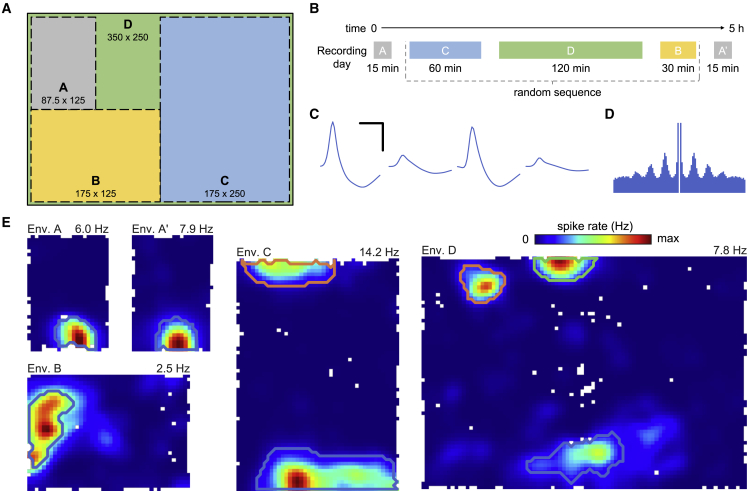
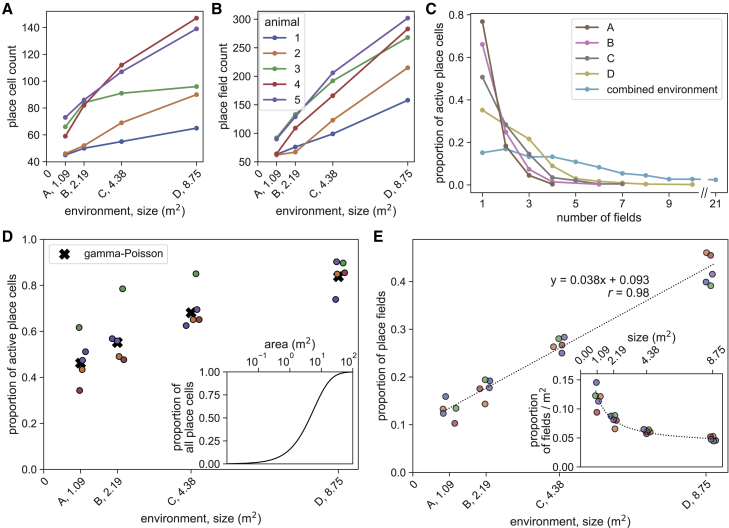
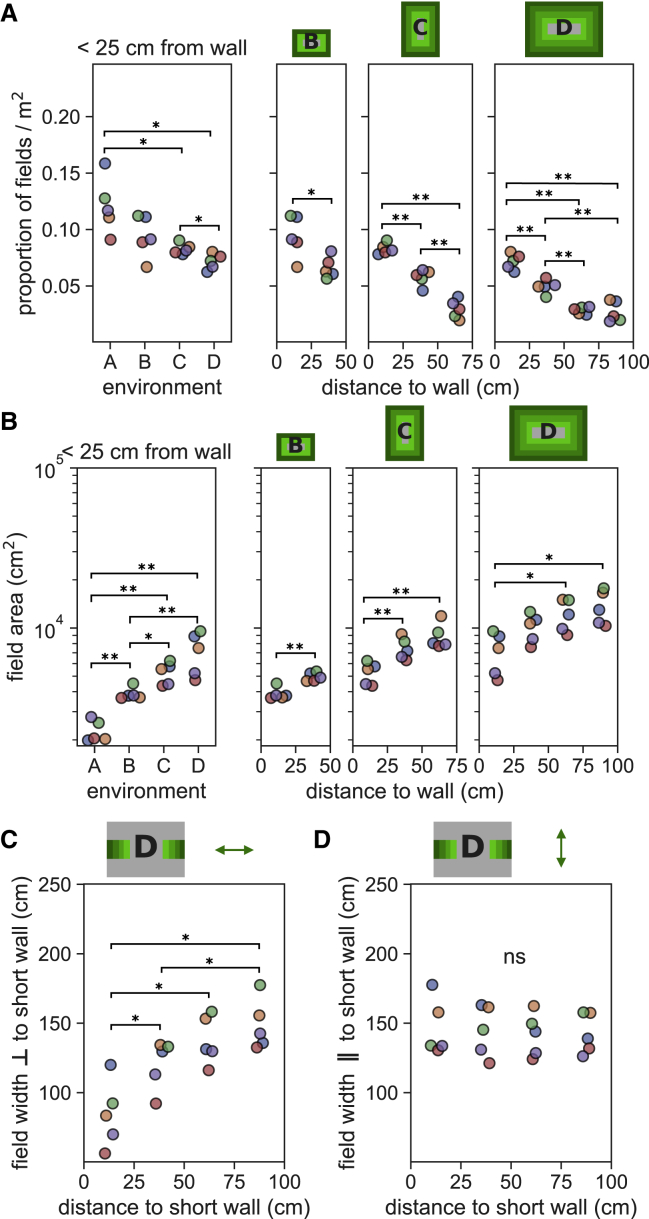
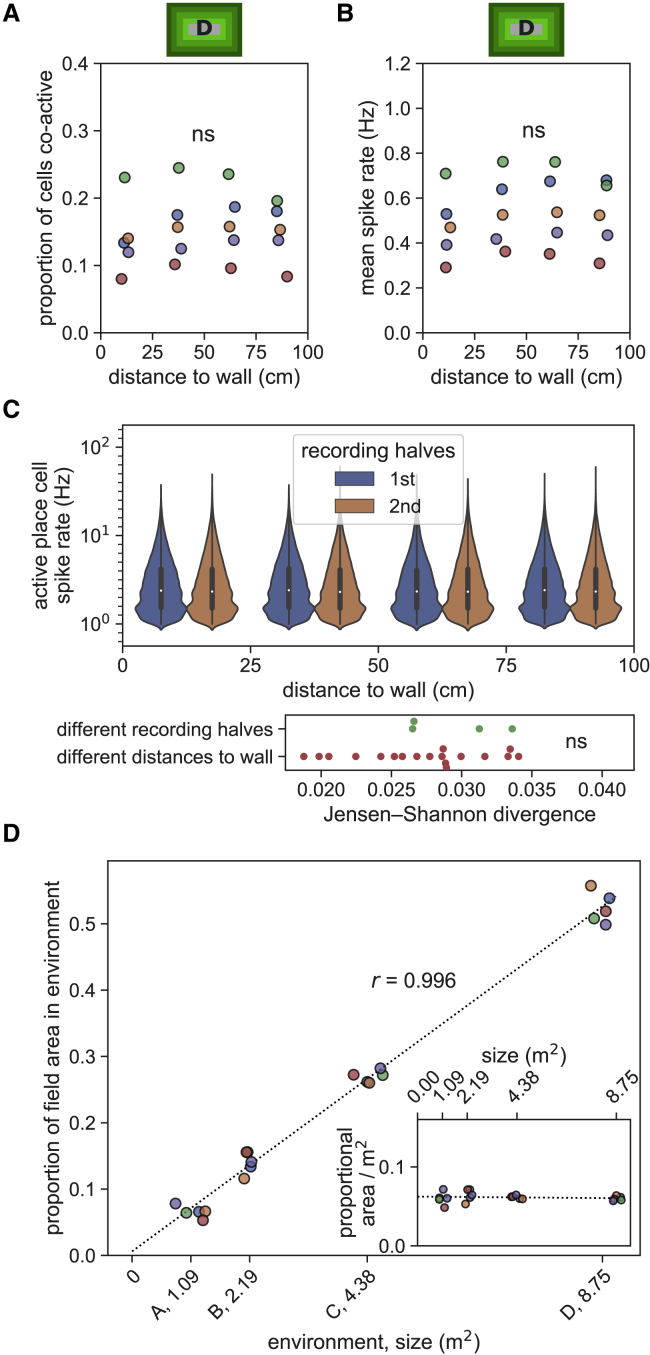
The hippocampus occupies a central role in mammalian navigation and memory. Yet an understanding of the rules that govern the statistics and granularity of the spatial code, as well as its interactions with perceptual stimuli, is lacking. We analyzed CA1 place cell activity recorded while rats foraged in different large-scale environments. We found that place cell activity was subject to an unexpected but precise homeostasis-the distribution of activity in the population as a whole being constant at all locations within and between environments. Using a virtual reconstruction of the largest environment, we showed that the rate of transition through this statistically stable population matches the rate of change in the animals' visual scene. Thus, place fields near boundaries were small but numerous, while in the environment's interior, they were larger but more dispersed. These results indicate that hippocampal spatial activity is governed by a small number of simple laws and, in particular, suggest the presence of an information-theoretic bound imposed by perception on the fidelity of the spatial memory system.
海马体在哺乳动物的导航和记忆中占据核心地位。然而,对于控制空间编码的统计和粒度规则以及其与感知刺激相互作用的理解还很缺乏。我们分析了大鼠在不同大尺度环境中觅食时 CA1 位置细胞的活动。我们发现,位置细胞的活动受到一种意想不到但精确的自稳态的影响——整个群体的活动分布在环境内和环境之间的所有位置保持不变。使用最大环境的虚拟重建,我们表明,通过这个统计稳定群体的转换率与动物视觉场景的变化率相匹配。因此,边界附近的位置场较小但数量众多,而在环境内部,它们较大但分布更分散。这些结果表明,海马体的空间活动受少数简单规律支配,特别是表明存在由感知对空间记忆系统的保真度施加的信息论限制。